Algeria
 Egypt
 Libya
 Morocco
 Sudan
 Tunisia
 Benin
 Burkina Faso
 Cabo Verde
 Côte d'Ivoire
 Ghana
 Guinea
 Liberia
 Mali
 Mauritania
 Niger
 Nigeria
 Senegal
 Sierra Leone
 The Gambia
 Togo
 Cameroon
 Central African Republic
 Chad
 DR Congo
 Equatorial Guinea
 Gabon
 Republic of the Congo
 São Tomé and Príncipe
 Burundi
 Comoros
 Djibouti
 Eritrea
 Ethiopia
 Kenya
 Madagascar
 Malawi
 Mauritius
 Mozambique
 Rwanda
 Seychelles
 Somalia
 South Sudan
 Tanzania
 Uganda
 Angola
 Botswana
 Eswatini
 Lesotho
 Namibia
 South Africa
 Zambia
 Zimbabwe
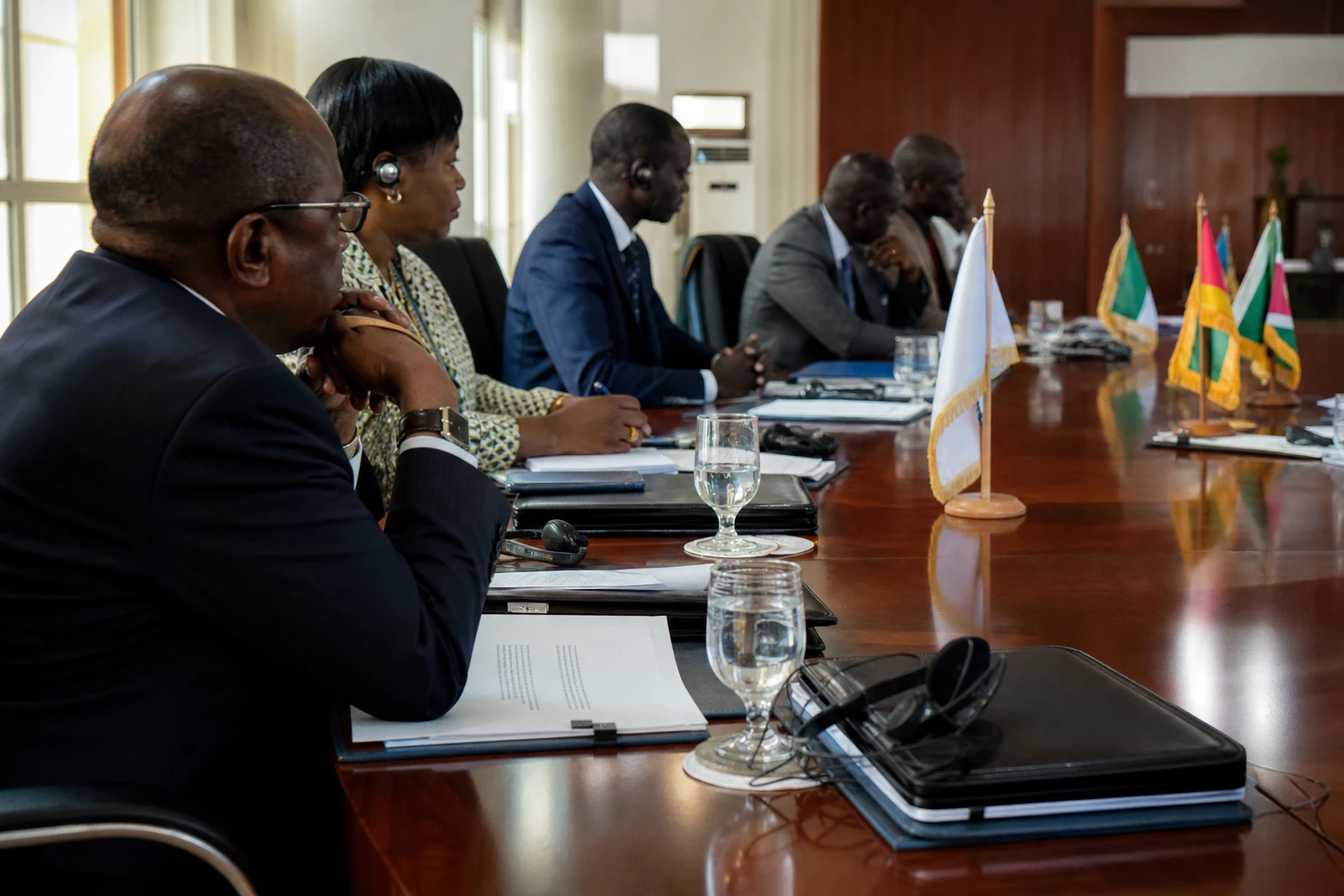
In Bissau, the electoral timetable alone is no longer enough to guarantee a return to constitutional order. Umaro Sissoco Embaló’s announced return now confronts the transition authorities with a central question: will the former president be able to take part in an election organised by the military who overthrew him?
A political return to a country still under transition
Umaro Sissoco Embaló announced on Monday 28 September 2026 that he intended to return to Guinea-Bissau and stand in the presidential election scheduled for 6 December. Speaking from exile in Brazzaville, the capital of the Republic of the Congo, the former head of state confirmed he would be a candidate. His announced return date is 4 October.
The statement comes ten months after the coup of 26 November 2025. On that day, soldiers interrupted the electoral process as results from the presidential and parliamentary elections were due to be announced. Umaro Sissoco Embaló was arrested and then transferred out of the country.
General Horta N’Tam has led a transition announced to last one year ever since. His government says it wants to organise fresh elections and restore civilian rule. However, the 6 December vote must still meet three tests: the security of candidates, fair access to the media and the reliability of the count.
The Economic Community of West African States, or ECOWAS, is following the matter closely. The regional organisation, which is tasked in particular with defending constitutional order in its member states, condemned the army’s seizure of power and called for the restoration of a civilian political framework.
The unresolved election remains at the heart of tensions
The coup took place a few days after the general elections of November 2025. Umaro Sissoco Embaló and his main rival, Fernando Dias, both claimed victory. The National Electoral Commission later said it could no longer finalise the results after tally sheets and electoral material went missing.
The sequence of events left one question unanswered: who had actually won the interrupted election? The military justified its intervention by claiming to have uncovered a plan to manipulate the results. However, no full public demonstration has established these allegations.
Embaló’s return could therefore reignite a contest that was never concluded. His supporters present him as the elected president who was overthrown before the results were declared. His opponents, meanwhile, point out that his term remains associated with deep institutional tensions and repeated clashes with parliament and the government.
The new Constitution adopted in a referendum on 30 August 2026 adds another element to the debate. According to results announced by the National Electoral Commission, the “yes” vote received 70% of the votes, with turnout at 62.6%. The opposition had called for a boycott, arguing that the conditions for a credible vote were not in place.
The new text strengthens the president’s powers and cuts the number of parliamentary seats from 102 to 65. It also reduces the prime minister’s role in running the executive. The transition authorities present the reform as a response to rivalries between the presidency and the prime minister’s office. The opposition sees it instead as a risk of power becoming concentrated.
A candidacy that puts the rules of the transition to the test
Umaro Sissoco Embaló’s announced candidacy first raises a legal question. The transition authorities will have to clarify the eligibility requirements set out in the new Constitution and electoral laws. They will also have to explain which institution will rule on any appeals.
The issue is sensitive because General Horta N’Tam pledged to lead the country towards elections. The credibility of that promise will depend on the military government’s ability to allow both political forces that support it and those that oppose it to compete.
For candidates, the stakes go beyond access to the ballot. They also include freedom of assembly, the protection of campaign teams and the ability to travel around the regions. In Bissau, political parties generally have greater visibility. In rural areas, access to information and transport may have a greater bearing on turnout.
Guinea-Bissau’s civil society will also need to monitor the composition of polling station teams, the transmission of tally sheets and the publication of results by polling station. After electoral documents went missing in November 2025, transparency in the results process will be a decisive test.
An improving economy that remains exposed
The political crisis is unfolding against an economy showing signs of recovery. According to the latest African Development Bank outlook for Guinea-Bissau, real growth reached about 5% in 2025, compared with 4.1% in 2024. The institution forecasts growth of close to 4.9% in 2026.
This improvement is largely based on agriculture and cashew exports. The sector provides income for many households and accounts for a large share of foreign earnings. However, it leaves the economy vulnerable to price fluctuations, harvests and difficulties in marketing produce.
Tax mobilisation remains weak. Public revenues accounted for about 9% of gross domestic product in 2025, according to African Development Bank data. The informal sector plays a significant role, while the country remains heavily reliant on external financing.
For the population, political stability will therefore have very tangible consequences. It can help ensure public-sector salaries are paid, goods circulate and infrastructure receives investment. Conversely, another electoral crisis could disrupt the cashew season, regional trade and access to financing.
The 6 December test for West Africa
The announced election will be watched beyond Guinea-Bissau’s borders. Several West African countries have experienced institutional ruptures since 2020. Guinea-Bissau is therefore a distinctive case: following a coup, a constitutional reform carried out under military rule and an election intended to restore civilian government.
ECOWAS and the African Union will in particular have to verify that the timetable is respected, the contest is open and the results are published in full. The question will not simply be whether the vote takes place on 6 December. It will be whether civilian institutions can truly regain control of the process.
Umaro Sissoco Embaló’s announced return therefore opens a new phase in the crisis. His arrival in Bissau, the registration of his candidacy and the transition authorities’ response will be the next indicators to watch. For the people of Guinea-Bissau, the stakes go beyond the fate of a former president: the question is whether the next election will finally produce an authority that is recognised and durable.