Algeria
 Libya
 Morocco
 Sudan
 Tunisia
 Benin
 Burkina Faso
 Cabo Verde
 Côte d'Ivoire
 Ghana
 Guinea
 Guinea-Bissau
 Liberia
 Mali
 Mauritania
 Niger
 Nigeria
 Senegal
 Sierra Leone
 The Gambia
 Togo
 Cameroon
 Central African Republic
 Chad
 DR Congo
 Equatorial Guinea
 Gabon
 Republic of the Congo
 São Tomé and Príncipe
 Burundi
 Comoros
 Djibouti
 Eritrea
 Ethiopia
 Kenya
 Madagascar
 Malawi
 Mauritius
 Mozambique
 Rwanda
 Seychelles
 Somalia
 South Sudan
 Tanzania
 Uganda
 Angola
 Botswana
 Eswatini
 Lesotho
 Namibia
 South Africa
 Zambia
 Zimbabwe
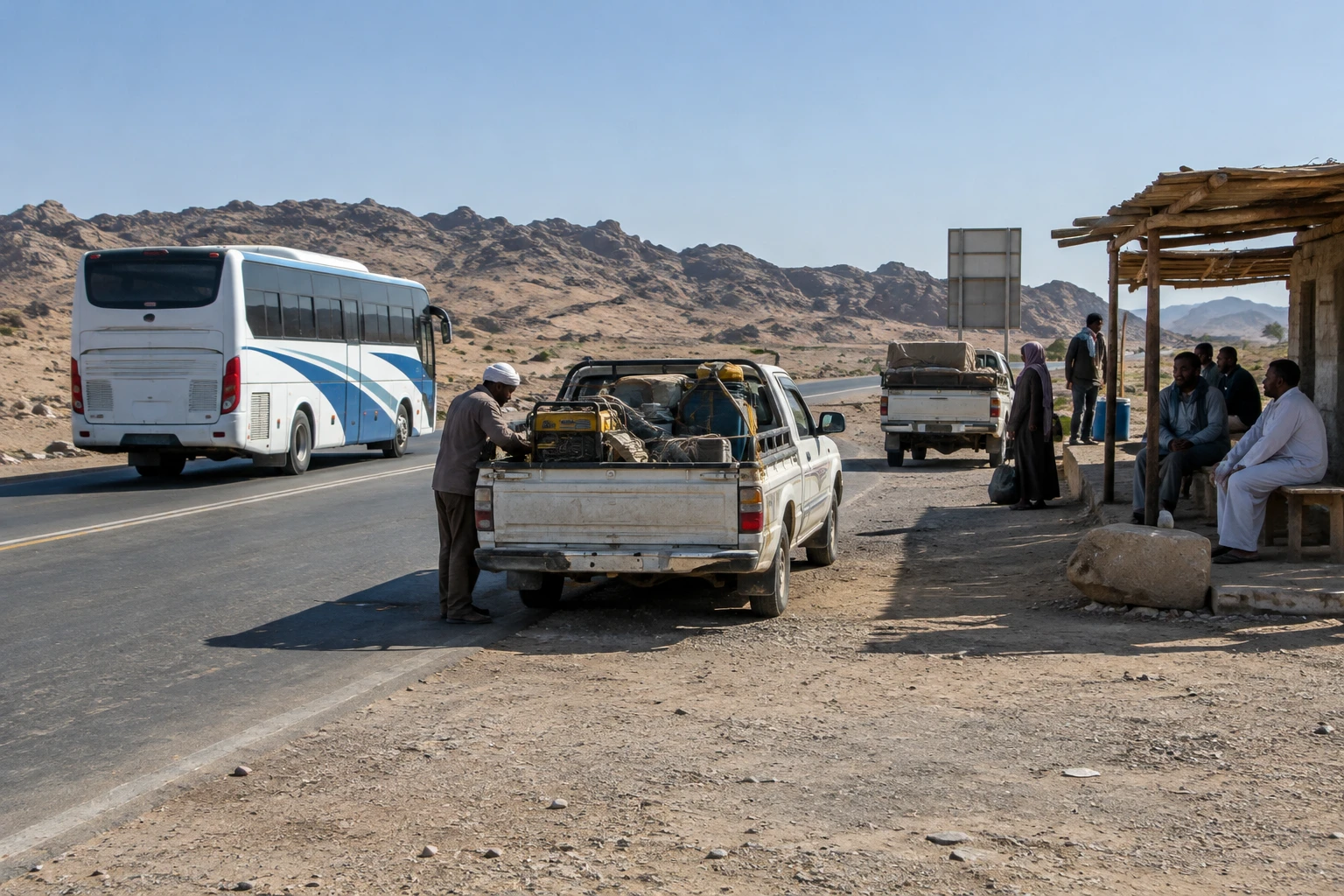
In Egypt’s Eastern Desert, illegal gold extraction is now being treated as a border security issue as much as a matter of resource control. But along the border with war-torn Sudan, the intensification of military operations also raises a decisive question: how can networks be fought without putting the people working at mining sites at risk?
A campaign unfolding along a tense border
The Eastern Desert runs along southern Egypt, facing Sudan. The region is home to gold deposits and cross-border routes. Since war broke out in Sudan in April 2023, the gold trade has played an important role in the war economy and in the revenues of armed networks. Egyptian authorities say clandestine networks smuggle gold, weapons and ammunition through border areas.
The regional context makes the operations sensitive. In Sudan, artisanal mining is a livelihood for many workers, while the war has disrupted economic activity. Across the border, Egypt presents the fight against illegal extraction as a matter of sovereignty and protecting national resources. These two realities meet in an area where territorial boundaries and responsibility for operations can be difficult to verify independently.
Cairo announces a fourth phase
On Thursday 5 November, Egyptian armed forces spokesman Colonel Ahmed Othman Ali announced the launch of a fourth phase of the campaign from Saturday 7 November. The three previous phases took place between 14 June and 29 October, according to information presented by the army and reported by Egyptian media. The announced timetable, the spokesman said, gives those concerned the opportunity to surrender or leave the targeted areas.
The army’s figures show 691 arrests: 151 Egyptian nationals and 540 foreign nationals. It also says that 6 614 people voluntarily presented themselves at checkpoints before the operations. Authorities say they seized 34 firearms, 6 307 rounds of ammunition, 317 vehicles and various pieces of extraction equipment. These figures represent the campaign’s official tally; not all have been confirmed by an accessible independent count.
The military command says it targeted 52 concentrations of armed groups identified during reconnaissance missions. It says weapons and ammunition depots were hit by drones on the basis of intelligence, and insists that no civilians were targeted. Two border guard officers were killed during the campaign, according to the military authorities. The spokesman did not specify when the deaths occurred.
Different accounts to distinguish after October strikes
The campaign took on an added dimension after a deadly strike was reported on 10 October in a mining area near the border. The Sudan Doctors Network had reported at least 13 deaths and 28 injuries. Emergency Lawyers, a Sudanese human rights organisation, later put the death toll at at least 72 and accused the Egyptian air force.
The figures are not equivalent, and responsibility remains disputed. The Associated Press reported that the aircraft involved had not been identified and that the precise location of the strike was contested. On 5 November, Reuters also reported Emergency Lawyers’ accusation, while noting that the Egyptian army had not publicly commented on the deaths at the time of the strike. The military’s claims that civilians were not targeted should therefore be presented as the command’s position, rather than as an independent conclusion about the incident.
Security, local livelihoods and regional cooperation
For the Egyptian authorities, the aim is to curb smuggling and maintain control over territory far from Cairo. The command says gold-mining networks are linked to other criminal activities and fuel tensions around mining sites. However, closing or securing these areas can directly affect workers, transporters and small businesses that depend on this economy, including in regions where incomes are scarce.
The response is not limited to the army: authorities say they are coordinating the campaign with several ministries and security services. They also refer to exchanges of information with Sudan on border security. This cooperation is taking place as Sudanese authorities face an internal war and have limited capacity to maintain control in some areas. However, announcements of coordination do not, in themselves, provide information on civilian protection mechanisms or on how to verify operations conducted near the border.
For the region and the African Union, the case is a reminder that mineral resources can fuel local economies, smuggling networks and conflicts alike. The next phase, announced as beginning on 7 November, will show whether the strategy relies mainly on arrests and strikes or is accompanied by lasting control of sites and economic alternatives for the communities concerned. The fate of those arrested, the transparency of the figures and the establishment of the facts surrounding the October strike also remain to be followed.