Algeria
 Libya
 Morocco
 Sudan
 Tunisia
 Benin
 Burkina Faso
 Cabo Verde
 Côte d'Ivoire
 Ghana
 Guinea
 Guinea-Bissau
 Liberia
 Mali
 Mauritania
 Niger
 Nigeria
 Senegal
 Sierra Leone
 The Gambia
 Togo
 Cameroon
 Central African Republic
 Chad
 DR Congo
 Equatorial Guinea
 Gabon
 Republic of the Congo
 São Tomé and Príncipe
 Burundi
 Comoros
 Djibouti
 Eritrea
 Ethiopia
 Kenya
 Madagascar
 Malawi
 Mauritius
 Mozambique
 Rwanda
 Seychelles
 Somalia
 South Sudan
 Tanzania
 Uganda
 Angola
 Botswana
 Eswatini
 Lesotho
 Namibia
 South Africa
 Zambia
 Zimbabwe
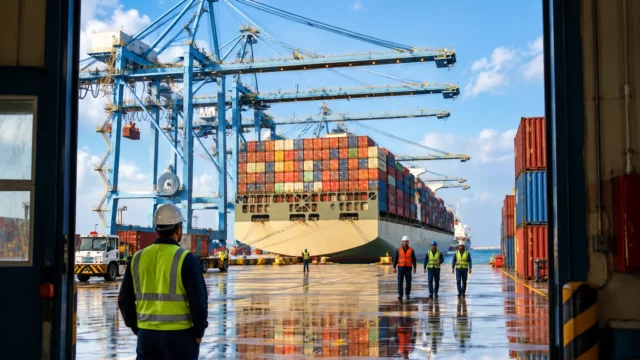
When a ship avoids the Red Sea, the effects are felt far beyond delivery schedules. For Egypt, they affect a major source of foreign currency. For carriers, they are a reminder that an alternative route is useful only if it is safe, reliable and economically viable.
A maritime dependence laid bare by the crisis
The Suez Canal links the Mediterranean to the Red Sea. It is a strategic passage between Europe and Asia, but also an important source of revenue for Egypt. Attacks on ships in the Red Sea from late 2023 prompted several companies to reroute their vessels around the Cape of Good Hope.
The decline in traffic quickly weighed on revenues. The Suez Canal Authority said they had reached $3.991bn in 2024, compared with a record $10.25bn in 2023. Egypt’s presidency, for its part, cited losses of nearly $7bn over the year. These figures come from official Egyptian statements describing the scale of the shock suffered by the country. Egypt’s presidency on losses linked to disruption in the Red Sea ; Canal Authority figures reported by the Associated Press.
The canal is more than a transit route. Its revenues contribute to the country’s foreign currency inflows, while ports, maritime services and logistics activities support employment and trade. A decline in passages therefore affects the state, but also transport-related businesses and workers across the supply chain, from ports to cargo-handling services.
Rail as a complement, not a substitute
Cairo is banking on an electric railway network of about 2,000km, designed to carry passengers and freight. Its first line is due to link Ain Sokhna, on the Red Sea, with Alexandria and Marsa Matrouh, on the Mediterranean. Egyptian authorities present the network as a corridor connecting ports, industrial zones and logistics centres. Siemens Mobility presents Egypt’s railway network ; the National Authority for Tunnels details its lines and equipment.
This infrastructure could provide a land-based option for some flows: unload goods at a Red Sea port, carry them by train across the country, then load them for shipment to the Mediterranean. But rail cannot replace the canal. It cannot carry the volumes of a large container ship and requires several transshipment operations, bringing costs, delays and capacity constraints.
Rather, it is a way to complement maritime routes. In the event of congestion or localised disruption, an operational rail link could serve certain goods or ports. On its own, it cannot bypass a crisis that affects the entire Red Sea for a prolonged period, nor restore revenue lost by the canal.
Figures often cited for the project’s total cost, investment attracted by the Suez Canal Economic Zone and annual freight capacity are not all confirmed by accessible independent sources. They therefore cannot be presented here as established results. The timetable for entering service, financing, operating costs and actual freight volumes will be decisive in assessing the network’s economic reach.
Uneven benefits across regions
Benefits will depend first on practical connections between the railway, ports and production zones. Businesses located near terminals or logistics platforms could gain more direct access to markets. By contrast, a line that bypasses cities without effectively connecting local producers risks concentrating its benefits in a few hubs.
The promise also extends to regions beyond the maritime corridor. Egypt’s railway network is presented as a way to connect industrial and agricultural areas to ports. For small businesses and producers, the issue will be access to the service in practice: freight rates, frequency, links to the existing network and the availability of storage facilities. Without these conditions, large operators could be the first to benefit.
The project is part of a broader infrastructure development policy, pursued amid severe economic pressures and a need for foreign currency. It is therefore important to distinguish stated ambition from measurable results. Costly infrastructure can support trade in the long term, but it does not automatically guarantee local jobs, increased exports or a lasting reduction in dependence on canal revenues.
A regional role still to be built
For North African countries, the challenge is to make ports, roads and railways complementary, rather than compete to capture traffic on their own. The Arab Maghreb Union, which brings together Egypt and four other countries in the region, could provide a forum for dialogue, even though regional economic integration remains limited. At continental level, the African Continental Free Trade Area aims to facilitate trade between African countries; national corridors still need to connect to cross-border networks and compatible customs procedures.
Egypt’s line could strengthen the country’s logistics position between the Mediterranean and the Red Sea. On its own, it will not link North African ports to markets in East or sub-Saharan Africa: such trade requires regional connections, transport agreements and infrastructure on both sides of borders. The point to watch, then, is less the slogan of a “canal on rails” than the network’s actual ability to carry freight at competitive rates while serving Egyptian producers.
The maritime crisis has recalled a simple truth: diversifying routes can reduce some vulnerabilities, but cannot eliminate them. For Egypt, rail represents a complementary option and an industrial bet. Its value will be measured by the goods actually transported, the revenue generated and the share of Egyptian regions and businesses able to benefit.