Algeria
 Libya
 Morocco
 Sudan
 Tunisia
 Benin
 Burkina Faso
 Cabo Verde
 Côte d'Ivoire
 Ghana
 Guinea
 Guinea-Bissau
 Liberia
 Mali
 Mauritania
 Niger
 Nigeria
 Senegal
 Sierra Leone
 The Gambia
 Togo
 Cameroon
 Central African Republic
 Chad
 DR Congo
 Equatorial Guinea
 Gabon
 Republic of the Congo
 São Tomé and Príncipe
 Burundi
 Comoros
 Djibouti
 Eritrea
 Ethiopia
 Kenya
 Madagascar
 Malawi
 Mauritius
 Mozambique
 Rwanda
 Seychelles
 Somalia
 South Sudan
 Tanzania
 Uganda
 Angola
 Botswana
 Eswatini
 Lesotho
 Namibia
 South Africa
 Zambia
 Zimbabwe
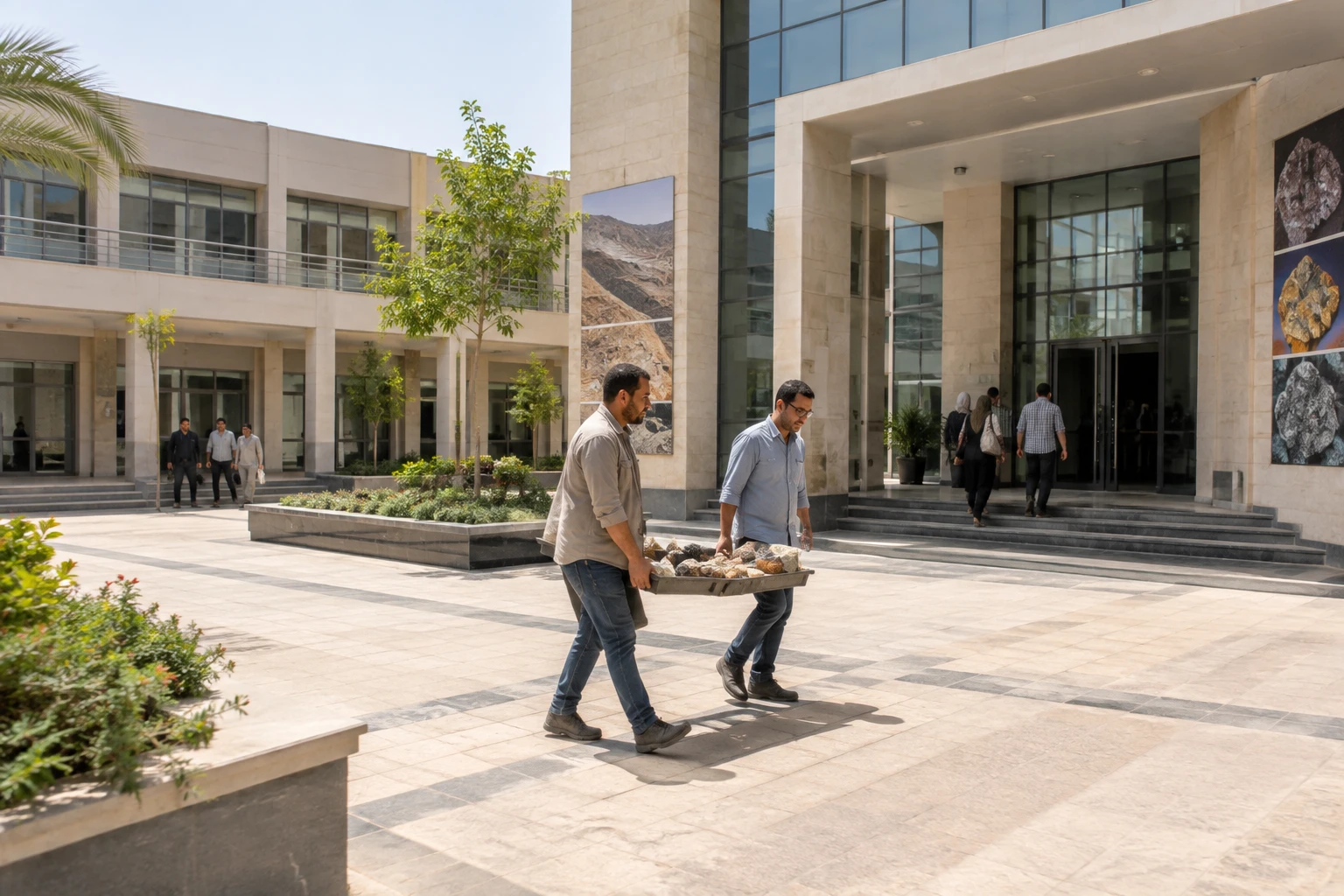
For Egypt, the challenge in mining is not limited to extracting more gold or phosphate. The country wants to turn its resources into industrial activity, jobs and exports. A new international partnership sets an ambitious target: to raise the contribution of minerals to 6% of gross domestic product by 2030.
A target that requires a change of scale
Egypt’s Ministry of Petroleum and Mineral Resources announced a partnership with the World Bank Group on 25 October 2026, along with a national charter to develop the sector. Egypt is joining an initiative launched with seven other countries: Argentina, Bolivia, India, Kazakhstan, Malawi, Mauritania and Zambia.
The 6% figure should be understood as a target, not as an increase that has already been achieved. In September, Petroleum Minister Karim Badawi estimated that mining accounted for less than 1% of GDP. In the 2023-2024 financial year, non-oil mining activities were equivalent to 1.4% of the economy, according to data cited by the US Geological Survey. The scope and time periods differ, so these figures are not directly comparable.
The charter provides for legislative and financial reforms, better geological data, the digitisation of services and the development of mineral processing capacity. The World Bank Group and the European Bank for Reconstruction and Development are also to support governance, institutional capacity and the preparation of projects for investment.
From the ground to value chains
Geological data are essential for investors: they make it possible to assess the presence and quality of resources more accurately before financing exploration. Updating the data, as well as simplifying procedures and tax rules, can reduce uncertainty. But attracting capital alone does not guarantee local benefits.
Processing minerals locally is therefore a central issue. Processing some minerals in Egypt can generate more value than simply exporting them in raw form. This ambition nevertheless requires infrastructure, energy, skills and commercial outlets. It also raises the question of how revenues are shared between the state, companies, workers and the communities concerned.
The government has already begun changing the mining framework, including through a licensing system that is more open to applications from investors. At the same time, the authorities are seeking to modernise the information available on deposits. The charter is part of this reform process, but its impact will depend on the legislation adopted, the investments actually made and their implementation.
Benefits to be measured beyond GDP
For public finances, increased activity could boost tax revenues and exports. For companies, the quality of regulations, the stability of permits and access to infrastructure will weigh on investment decisions. For Egyptian employees and suppliers, the question will be whether projects create skilled jobs and local contracts, rather than concentrating their benefits in extraction and exports.
The effects will not be uniform. Processing centres and specialised services could cluster near major transport routes and industrial hubs. Exploration sites, meanwhile, are sometimes far from major urban centres. Nearby communities will therefore have interests distinct from those of investors and the authorities: access to water and land, safety, jobs, monitoring of environmental impacts and consultation mechanisms.
Measuring the target will also require transparency. It will be necessary to specify which activities are included in the calculation of the “contribution of minerals”: extraction alone, or industrial processing as well? Available statistics do not always cover the same scope. Without consistent public indicators, it will be difficult to distinguish a real increase in locally produced value from growth driven by prices or a change in calculation methods.
A North African and continental issue
In North Africa, Egypt is seeking to strengthen its position in mineral supply chains and processing. The region does not operate as an integrated economic market comparable to those in other parts of the continent. The Arab Maghreb Union, which brings together several North African countries, remains largely inactive. Egypt’s partnerships with international institutions and investors are therefore taking shape in a regional landscape where economic cooperation remains uneven.
At African Union level, the issue forms part of a broader question: how can natural resources become a driver of industrialisation across the continent? The African Continental Free Trade Area aims to facilitate trade between African countries. For this ambition to benefit producers, processing capacity, skills and infrastructure linking mining areas to regional markets will also need to be developed.
The next step will be to monitor concrete measures: legal reforms, the quality of published data, funded processing projects and jobs created. The 2030 target of 6% provides a political benchmark. But it will be the value created in Egypt, how it is distributed and how local impacts are managed that will show whether the sector has truly been transformed.