Algeria
 Libya
 Morocco
 Sudan
 Tunisia
 Benin
 Burkina Faso
 Cabo Verde
 Côte d'Ivoire
 Ghana
 Guinea
 Guinea-Bissau
 Liberia
 Mali
 Mauritania
 Niger
 Nigeria
 Senegal
 Sierra Leone
 The Gambia
 Togo
 Cameroon
 Central African Republic
 Chad
 DR Congo
 Equatorial Guinea
 Gabon
 Republic of the Congo
 São Tomé and Príncipe
 Burundi
 Comoros
 Djibouti
 Eritrea
 Ethiopia
 Kenya
 Madagascar
 Malawi
 Mauritius
 Mozambique
 Rwanda
 Seychelles
 Somalia
 South Sudan
 Tanzania
 Uganda
 Angola
 Botswana
 Eswatini
 Lesotho
 Namibia
 South Africa
 Zambia
 Zimbabwe
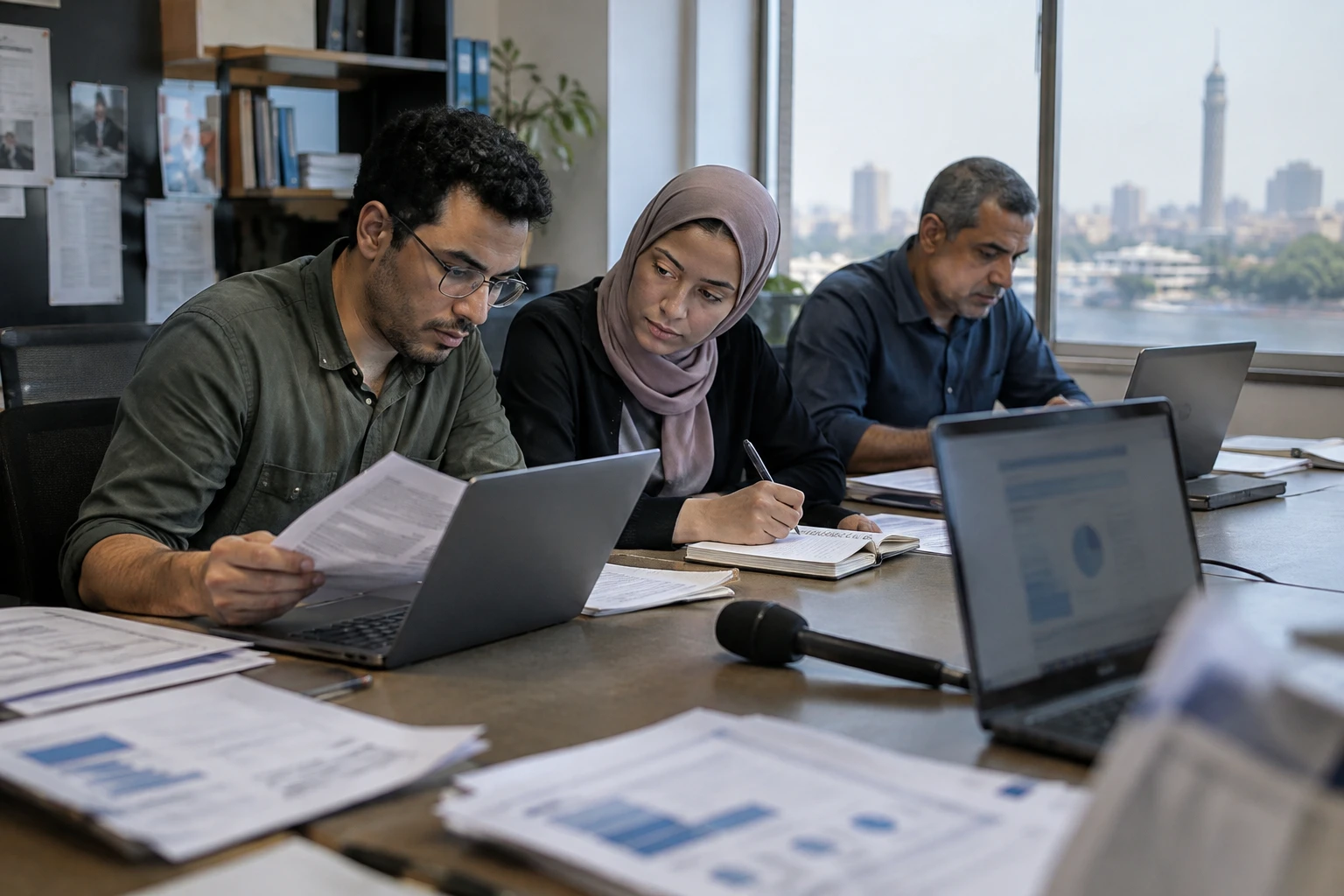
When an entire newsroom is arrested, the issue goes beyond the fate of six journalists: it also affects the Egyptian public’s ability to verify information circulating about institutions and public decisions. The Matsadaash case now pits the national security accusations put forward by the authorities against the challenges raised by the team and its lawyers.
Entire newsroom targeted in Cairo and several regions
Between 28 and 30 September 2026, security forces arrested the six Matsadaash journalists, according to the Egyptian Initiative for Personal Rights (EIPR) and Reporters Without Borders (RSF). The arrests took place in several governorates, including Cairo, Gharbia and Port Said. Electronic devices were also reportedly seized during searches of some journalists’ homes.
The platform, founded in 2018, fact-checks statements and publishes investigations on issues of public interest in Egypt and the region. Its work focuses in particular on remarks by officials and government bodies. The simultaneous arrest of all six journalists leaves the outlet without its entire editorial team in the country, at a time when the accusations against it remain contested.
On 1 October, Egypt’s Interior Ministry acknowledged the arrests. It described Matsadaash as a platform linked to the Muslim Brotherhood, a group banned in Egypt, and accused the journalists of preparing fabricated reports. The platform rejected these accusations. The prosecution later referred to links with Brotherhood officials abroad and transfers in foreign currencies. These are claims made by the authorities: at this stage, they are not facts established by a court ruling.
Terrorism charges and a contested account by investigators
On 4 October, the State Security Prosecution ordered the six journalists to be held in pre-trial detention for 15 days, according to the Egyptian Front for Human Rights. The charges reported include membership of the Muslim Brotherhood, an offence related to terrorist financing, using a website to promote ideas that encourage terrorist acts, and spreading false news.
The authorities maintain that Brotherhood officials abroad had requested the creation of platforms intended to spread rumours, undermine trust in institutions and encourage protests. But on 7 October, the EIPR noted that the prosecution had not identified any specific Matsadaash publication it considered false. The organisation adds that the transfers presented as foreign funding corresponded, according to the journalists, to monthly payments for their work, declared to Egyptian banks.
This difference in accounts is central. On one side, investigators describe activity linked to a banned organisation and suspicious funding. On the other, the lawyers and the EIPR challenge the interpretation of the financial and professional evidence. The journalists’ guilt has not been established by a court; the accusations must therefore remain attributed to the authorities.
Detention and judicial safeguards at the heart of the case
The EIPR says the journalists were denied contact with their relatives and lawyers for several days before being brought before the prosecution. In its response on 7 October, the organisation also reported allegations by some detainees of ill-treatment, threats and coercion. It disputes the prosecution’s response, which reportedly said that no journalist had visible injuries, and called for an investigation into the complaints. These allegations are contested and must be verified through an independent investigation.
The case therefore raises procedural questions beyond the substance of the accusations: prompt access to a lawyer, informing families and judicial oversight of detention. The EIPR says the six journalists appeared before the prosecution only five days after their arrest. It also says their relatives and lawyers filed 18 complaints during that period. The authorities have not publicly responded to each of these points in the material reviewed.
Implications for information in Egypt and beyond
The case comes amid an environment in which independent journalism faces severe restrictions. Human Rights Watch notes that journalists and writers have previously been prosecuted in Egypt for spreading false information or alleged links to a terrorist organisation. This context does not settle the Matsadaash case; it makes the publication of specific evidence supporting the accusations and respect for judicial safeguards all the more important.
The repercussions extend beyond the detained journalists. For readers, fact-checking media help distinguish established facts from political statements and rumours. For other newsrooms, the arrest of an entire team can also influence the choice of subjects and wording, particularly when they concern government action. This effect should not be presumed for every journalist, but it is a tangible concern when criminal proceedings target an information service.
In North Africa, the media operate within different political and legal frameworks; the case therefore does not sum up the region. It is nevertheless of interest to the African Union, of which Egypt is a member, because of the questions it raises about freedom of expression, judicial independence and journalists’ safety. Thirty-four independent organisations and media outlets have called for the team’s release, according to information published on 8 October.
What happens next will depend on court decisions and the response to complaints about detention conditions. Two elements will be particularly important: the presentation of concrete evidence concerning the publications at issue and an independent examination of the allegations of ill-treatment. The investigation is ongoing, and no conviction has been reported at this stage.
Sources consulted: 8 October report on the charges against Matsadaash ; EIPR response to the Egyptian prosecution ; Egyptian Front for Human Rights information on the charges and detention ; RSF account of the timeline of the arrests ; context on press freedom in Egypt, according to Human Rights Watch.