
 Algeria
 Libya
 Morocco
 Sudan
 Tunisia
 Benin
 Burkina Faso
 Cabo Verde
 Côte d'Ivoire
 Ghana
 Guinea
 Guinea-Bissau
 Liberia
 Mali
 Mauritania
 Niger
 Nigeria
 Senegal
 Sierra Leone
 The Gambia
 Togo
 Cameroon
 Central African Republic
 Chad
 DR Congo
 Equatorial Guinea
 Gabon
 Republic of the Congo
 São Tomé and Príncipe
 Burundi
 Comoros
 Djibouti
 Eritrea
 Ethiopia
 Kenya
 Madagascar
 Malawi
 Mauritius
 Mozambique
 Rwanda
 Seychelles
 Somalia
 South Sudan
 Tanzania
 Uganda
 Angola
 Botswana
 Eswatini
 Lesotho
 Namibia
 South Africa
 Zambia
 Zimbabwe
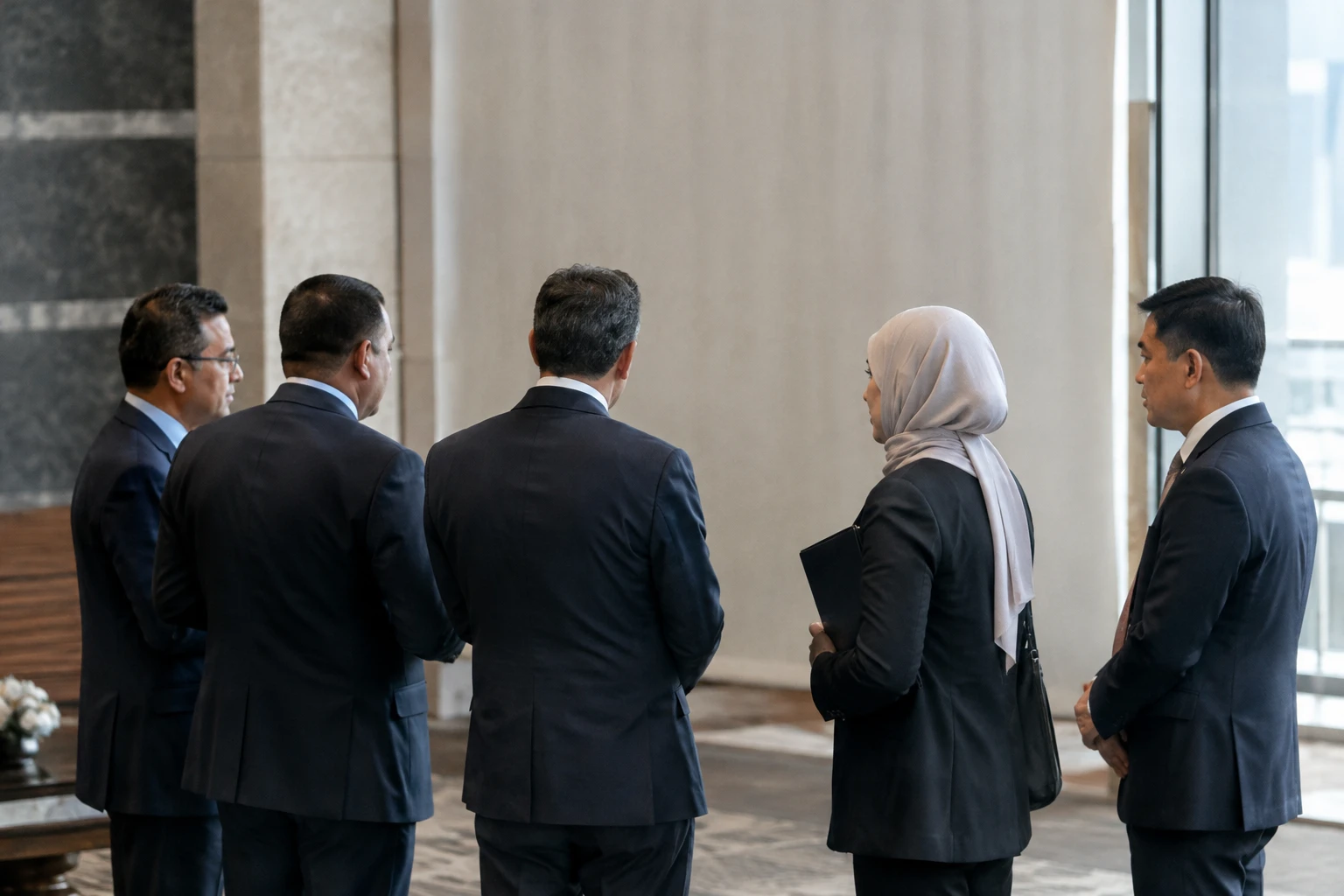
For Cairo, relations with Kuala Lumpur are no longer limited to diplomatic exchanges. Egypt wants to turn its role as a crossroads between Africa, the Arab world and the Mediterranean into concrete economic partnerships. Malaysia, for its part, is seeking to expand its markets and investments.
This ambition took official shape on 10 October 2026. During a state visit to Malaysia, Egyptian President Abdel-Fattah al-Sissi and Malaysian Prime Minister Anwar Ibrahim announced that their relations had been upgraded to a strategic partnership. The challenge now is to turn this declaration into projects, stronger trade and sustained cooperation.
A rapprochement built over time
The two countries have maintained relations for several decades, fostered in particular by academic and religious exchanges. Malaysian students travel to Egypt, especially to Al-Azhar, an Islamic educational institution based in Cairo. Anwar Ibrahim also referred to educational ties with Ain Shams and Alexandria universities.
Al-Sissi’s visit follows Anwar Ibrahim’s trip to Egypt from 9 to 12 November 2024. At the time, the two governments had already expressed their intention to develop trade and investment. The continuity between these meetings shows that the rapprochement goes beyond the diplomatic calendar alone.
Trade nevertheless remains an area that needs strengthening. Malaysia’s foreign ministry said that in 2023 Egypt was Malaysia’s fifth-largest trading partner in Africa, with trade valued at 3.35 billion Malaysian ringgit, in Malaysia’s favour. Anwar also said trade had increased by 74.7% this year, while noting that it had started from a very low level. This percentage, given at the press conference, is therefore not enough to measure its economic weight without knowing the total value for the period concerned.
The two leaders agreed to revive their consultation mechanisms. A second meeting of the joint commission and a second bilateral consultation are to take place “at the earliest opportunity”, according to the statement reported by Malaysia’s Bernama news agency. Anwar, for his part, referred to a joint commission in the first quarter of 2027. That deadline will show whether the new status translates into a precise work schedule.
Priority sectors, with benefits yet to be defined
The sectors highlighted include energy, renewables, manufacturing, electronics, agriculture and food industries. The Malaysian prime minister also cited semiconductors, pharmaceuticals, tourism, air transport and education. These areas bring together Malaysia’s industrial and technological capabilities with Egypt’s infrastructure and geographical position.
The Suez Canal Economic Zone could provide an anchor for investments targeting several markets. For Malaysian companies, Egypt offers a gateway to the Arab world and the African continent. For Egyptian authorities, attracting capital and developing local production can support exports and employment. But the announcements specify neither investment amounts, nor companies involved, nor job-creation targets.
The impact will therefore depend on implementation. Large companies may benefit from new contracts and more diversified supply chains. Agricultural producers, subcontractors and local workers will benefit from this momentum only if projects create local markets, transfer skills and integrate with existing activities. At this stage, official statements set priorities, not yet measurable results.
Transport also matters. Anwar mentioned the regularity of air links, a practical concern for business exchanges, student travel and tourism. Without reliable connections and predictable trade procedures, diplomatic closeness does not automatically translate into increased movement of goods and people.
Regional dialogue, from the Red Sea to Gaza
The meeting also addressed international tensions. Al-Sissi said he wanted to help curb escalation in the Middle East. He said he had discussed the Horn of Africa and the Red Sea with Anwar, advocating a comprehensive political settlement to the region’s crises. This is the position expressed by the Egyptian president; the statement sets out no joint proposal or new diplomatic mechanism.
For Egypt, these issues are directly linked to its geography and interests. The Suez Canal connects the Red Sea to the Mediterranean and is a major maritime trade route. Tensions in the region can therefore affect trade routes and economic activity. The Horn of Africa, on the other side of the Red Sea, is shaped by political and security balances that also concern coastal states and the African Union.
Anwar, for his part, recalled cooperation with Cairo on Malaysian aid to Palestinians, including the transfer of injured people from Gaza to Malaysia for treatment. This humanitarian dimension adds to the economic issues and underlines Egypt’s role as a regional interlocutor, without making the two countries actors with identical means or responsibilities.
At the African level, the rapprochement is significant because of Egypt’s position in North Africa and its links with continental institutions, including the African Union. It also opens a path for cooperation between Southeast Asia and African markets. The real significance of the announcement will be measured by decisions taken by the joint commission planned for 2027, projects that actually receive funding, and the two governments’ ability to maintain dialogue on regional crises.
Sources consulted: Egyptian presidency account of regional discussions, Malaysian news agency Bernama report on the strategic partnership, transcript of the press conference by the Malaysian prime minister’s office, Malaysian foreign ministry on the 2024 visit.



