
 Algeria
 Libya
 Morocco
 Sudan
 Tunisia
 Benin
 Burkina Faso
 Cabo Verde
 Côte d'Ivoire
 Ghana
 Guinea
 Guinea-Bissau
 Liberia
 Mali
 Mauritania
 Niger
 Nigeria
 Senegal
 Sierra Leone
 The Gambia
 Togo
 Cameroon
 Central African Republic
 Chad
 DR Congo
 Equatorial Guinea
 Gabon
 Republic of the Congo
 São Tomé and Príncipe
 Burundi
 Comoros
 Djibouti
 Eritrea
 Ethiopia
 Kenya
 Madagascar
 Malawi
 Mauritius
 Mozambique
 Rwanda
 Seychelles
 Somalia
 South Sudan
 Tanzania
 Uganda
 Angola
 Botswana
 Eswatini
 Lesotho
 Namibia
 South Africa
 Zambia
 Zimbabwe
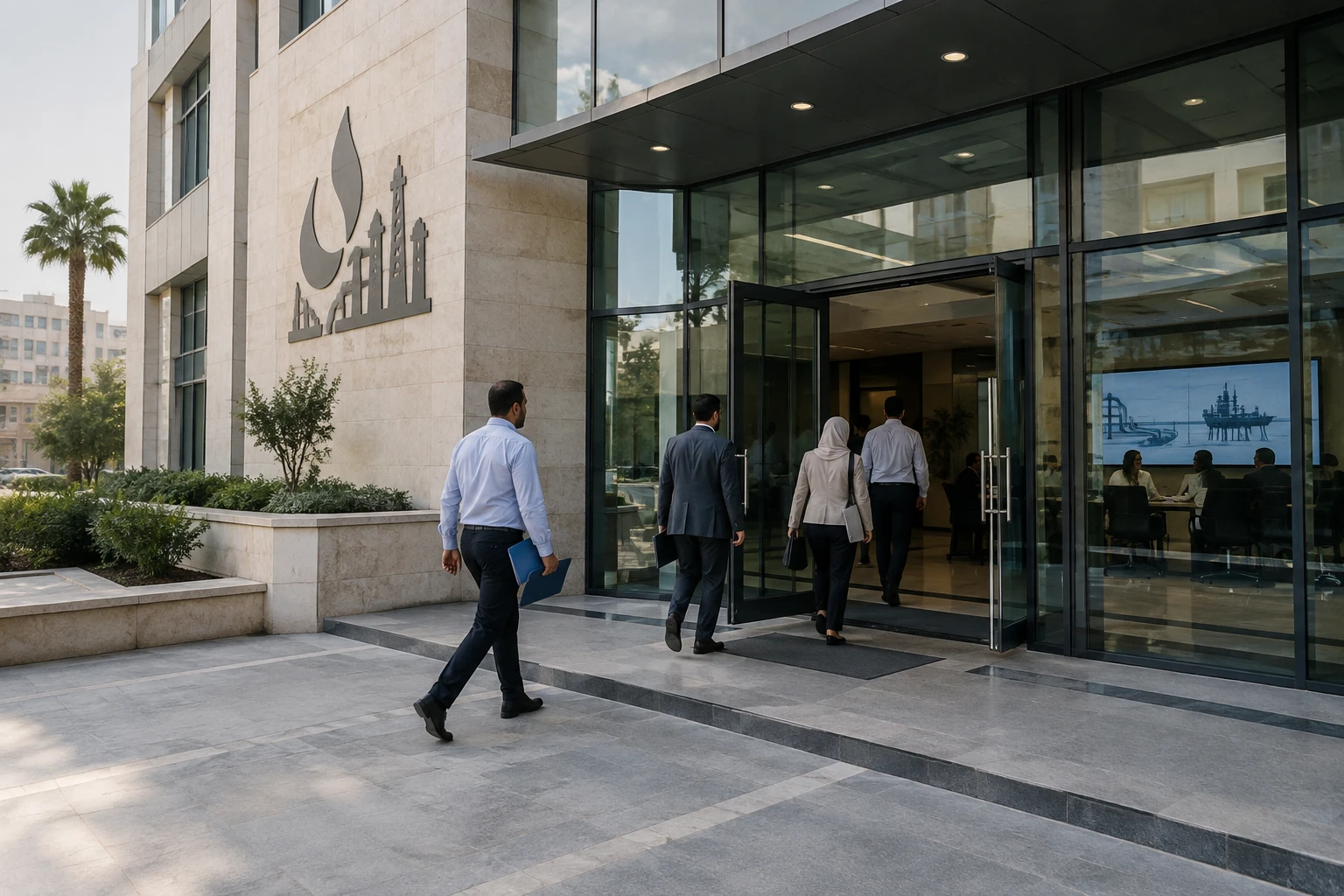
For Iraq, selling oil is not enough: it must also be able to transport it when shipping routes are disrupted. Egypt, Iraq and Jordan are studying industrial and logistics cooperation that could bring Iraqi oilfields closer to markets in the Mediterranean and Red Sea. But for now, the projects remain under consideration.
Three countries with linked energy interests
The rapprochement is taking place within the framework of the Tripartite Coordination Council, established to deepen ties between Cairo, Baghdad and Amman. For Egypt, a North African country whose capital is Cairo, this cooperation extends a strategy of involving its companies in Iraqi infrastructure projects. It adds to exchanges on energy, transport and trade.
The mechanism is not an African economic community such as the Arab Maghreb Union, to which Egypt does not belong. It links three Arab countries, two of which — Egypt and Iraq — are members of the African Union. Its importance for the continent stems in particular from Egypt’s place in energy and trade networks connecting North Africa, the Middle East and the Mediterranean.
The discussions also have a concrete regional dimension. Iraq is seeking to diversify the routes used to transport its hydrocarbons, while Jordan could serve as a land corridor. Egypt, meanwhile, has port facilities and energy infrastructure that could facilitate access to the Mediterranean and the Red Sea. These advantages do not, however, guarantee the feasibility or profitability of the proposed projects.
Projects under discussion, not yet decided
On 1 November 2026, a technical meeting was held by videoconference as part of the trilateral cooperation. According to reports published in Iraq, Ali Warid Hammoud, director-general of the State Company for Oil Projects (SCOP), chaired the meeting of the Iraqi group responsible for monitoring the projects. Participants examined the specifications of a joint petrochemical complex, as well as options for refining, storage and hydrocarbon processing. The report on the Iraqi-Jordanian-Egyptian technical discussions also mentions the Basra-Haditha pipeline project.
The expertise of Egyptian companies in engineering, procurement and construction was discussed. But no contract has been announced. The available information does not specify the complex’s location, cost or timetable, or the volume or nature of the raw materials to be processed. These details are crucial: a petrochemical plant requires regular supplies, commercial outlets and suitable infrastructure.
The discussions are therefore not limited to oil processing. The three countries also considered export routes and storage capacity. An infrastructure project can reduce dependence on a single passage, but it does not automatically eliminate it: its usefulness will depend on connections, transport capacity and trade agreements between states.
Iraq’s vulnerability at the heart of the matter
The question of routes is particularly sensitive for Iraq, whose public revenues depend heavily on oil sales. Disruptions to traffic in the Strait of Hormuz have shown the possible consequences of concentrating exports on a few routes. In August 2026, Baghdad and Ankara concluded a one-year agreement to transport crude through the pipeline linking Kirkuk to the Turkish port of Ceyhan, with a stated minimum volume of 750,000 barrels per day. The initiative illustrates the search for additional options, without by itself replacing exports from southern Iraq. The Iraqi-Turkish agreement on the Ceyhan route is evidence of this diversification.
On 19 October, Iraqi Oil Minister Basim Khudair said the country’s exports exceeded 3.4 million barrels per day during the month. He cited several routes: the Strait of Hormuz, Ceyhan and transport by truck through Syria. The figure, reported by the Iraqi News Agency and carried by Kurdish media outlet Rudaw, reflects a ministerial statement and not a detailed final breakdown by route. Rudaw’s report on Iraqi exports clarifies this attribution.
Diversification also comes at a cost. Overland transport by truck can be more expensive and less efficient than flows by pipeline or sea. A cross-border pipeline likewise requires investment, lasting agreements and technical coordination. Any benefits would therefore not be shared equally: authorities and companies could gain new outlets, while construction and operating costs would weigh on budgets and transport charges.
For Egypt, an industrial ambition to be realised
Cairo has already expressed interest in transporting Iraqi oil to regional and international markets via Egyptian facilities. A petrochemical complex would add another ambition: processing some hydrocarbons into higher-value industrial products, rather than relying solely on crude exports. This could open up markets for Egyptian engineering companies and industrial operators.
This prospect remains conditional. It will be necessary to determine who will finance the project, who will supply the raw materials, where the products will be sold, and how revenues and risks will be shared. The location will also affect the jobs created and the benefits for the areas concerned. Without precise answers, the announcement of a complex is not yet enough to assess its impact on the Egyptian economy or consumers.
At the regional level, the project shows how states are seeking to bring together security of supply, infrastructure and industrial processing. For Egypt, it is also a way to strengthen its role as a hub between Africa, the Arab world and the Mediterranean. The next step to watch for will be the publication of feasibility studies or agreements specifying a location, financing and timetable for the projects. Until then, the petrochemical complex and pipeline remain proposals under discussion, not accomplished facts.



