Algeria
 Libya
 Morocco
 Sudan
 Tunisia
 Benin
 Burkina Faso
 Cabo Verde
 Côte d'Ivoire
 Ghana
 Guinea
 Guinea-Bissau
 Liberia
 Mali
 Mauritania
 Niger
 Nigeria
 Senegal
 Sierra Leone
 The Gambia
 Togo
 Cameroon
 Central African Republic
 Chad
 DR Congo
 Equatorial Guinea
 Gabon
 Republic of the Congo
 São Tomé and Príncipe
 Burundi
 Comoros
 Djibouti
 Eritrea
 Ethiopia
 Kenya
 Madagascar
 Malawi
 Mauritius
 Mozambique
 Rwanda
 Seychelles
 Somalia
 South Sudan
 Tanzania
 Uganda
 Angola
 Botswana
 Eswatini
 Lesotho
 Namibia
 South Africa
 Zambia
 Zimbabwe
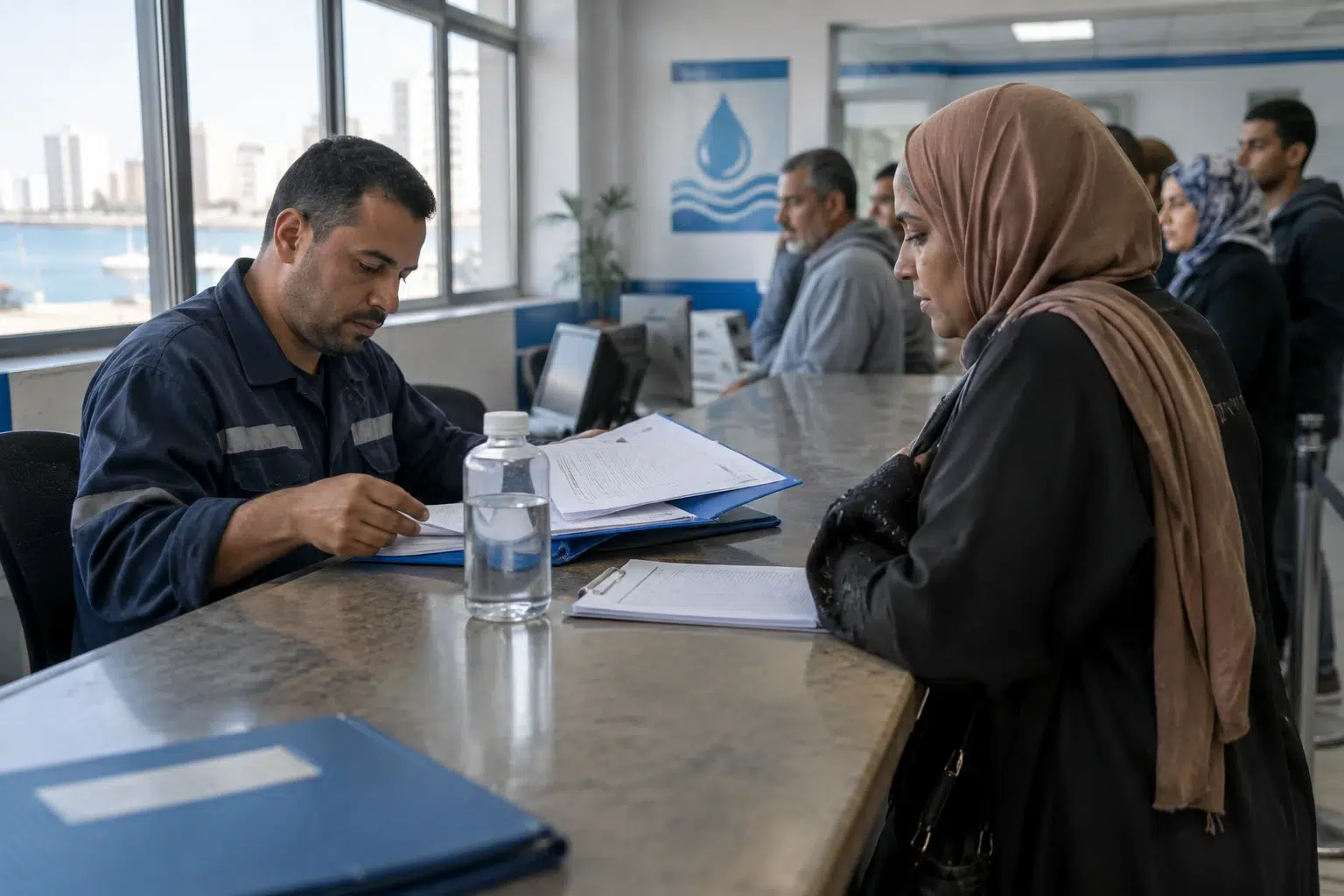
In Egypt’s coastal cities, having a desalination plant is not enough: breakdowns must also be prevented, energy consumption controlled and water quality kept consistent. This is where the Egyptian state is relying increasingly on private operators, while retaining public oversight.
Contracts to keep facilities running
On 18 October 2026, the Egyptian authorities signed operation and maintenance contracts for 11 seawater desalination plants. Their combined design capacity is 485,000 cubic metres a day. The announced cost is 4.6 billion Egyptian pounds, or an average of about 1.2 billion pounds a year. Egypt’s Ministry of Housing confirmed these figures; Egyptian media outlet Daily News Egypt also reported on the agreement.
The facilities are located in three coastal governorates. Seven plants are spread across North and South Sinai, with a total capacity of 240,000 cubic metres a day. Three others are in Matrouh, with a capacity of 165,000 cubic metres. The Red Sea plant accounts for the remaining 80,000 cubic metres.
The contracts were awarded to several companies and consortia, including San Misr, Proserve, Orascom Construction, Metito-Orascom, Contrac for Services Management and Elsewedy Utilities. The Holding Company for Drinking Water and Wastewater, which coordinates the sector’s public companies, is to monitor performance and check water quality, equipment availability and energy efficiency.
The challenge: producing water and ensuring continuity
The intended change concerns maintenance. The authorities want to move from work triggered mainly by breakdowns to preventive maintenance, scheduled before equipment fails. In theory, this approach can limit interruptions, extend the life of facilities and stabilise production. The results will nevertheless depend on compliance with contractual commitments and the state’s ability to verify performance.
Private-sector participation does not mean, according to the holding company’s chairman, Mostafa El-Cheimi, that public companies are withdrawing. They are to remain responsible for asset monitoring and technical oversight. This division of responsibilities will be crucial: private operators will carry out specialised tasks, while public bodies retain a supervisory role and responsibility for guaranteeing the service.
Energy will also weigh on the overall results. Desalination, which removes salts from seawater to make it usable, requires substantial equipment and energy supplies. Increased production therefore does not automatically improve water security if operating costs become difficult to fund or plants consume too much electricity. Performance will have to be measured in terms of cubic metres produced, reliability and cost.
A national strategy focused on the coast
The agreements are part of Egypt’s 2020–2050 desalination plan. According to figures released by the authorities and reported by the Egyptian State Information Service, the country has about 129 operating plants, with a total capacity of nearly 1.4 million cubic metres a day. Another 19 are under construction, which will add 687,000 cubic metres a day. The official target is close to 10 million cubic metres a day by 2050.
This expansion is aimed in particular at coastal areas and regions far from major freshwater networks. In Sinai, Matrouh and along the Red Sea, demand comes from cities, economic activity and tourism. Residents and local services need a regular supply; businesses need predictability. But coastal desalination alone cannot replace water resource management across the country.
Egypt depends heavily on the Nile for its water supply. Desalination can diversify the resources available in coastal areas, but it does not directly address the needs of agriculture inland. Water security therefore also requires managing networks, reducing losses, reusing water and balancing competing uses. Industrial and urban projects will only deliver results if they form part of this broader policy.
A test for the state and operators
The programme also has an industrial dimension. The authorities want to develop the manufacture in Egypt of desalination-related equipment, including the membranes used in reverse osmosis, a technology that filters water under pressure. Producing more components locally could reduce some dependencies and build technical expertise. Whether this ambition is realised remains to be assessed as investment progresses and installed capacity takes shape.
At regional level, Egypt’s experience is of interest to North African countries facing growing needs and unevenly distributed resources. It highlights a choice that goes beyond infrastructure funding alone: how can private companies be involved alongside public oversight without undermining access to services or cost control? For Egyptians in the governorates concerned, the first measure will be tangible: available plants, water that meets standards and fewer interruptions.
The next steps to watch will be the implementation of the contracts and the publication of measurable results on plant availability, energy consumption and water quality. The 2050 target is ambitious; its credibility will also be built through the daily maintenance of plants already in service.