Algeria
 Libya
 Morocco
 Sudan
 Tunisia
 Benin
 Burkina Faso
 Cabo Verde
 Côte d'Ivoire
 Ghana
 Guinea
 Guinea-Bissau
 Liberia
 Mali
 Mauritania
 Niger
 Nigeria
 Senegal
 Sierra Leone
 The Gambia
 Togo
 Cameroon
 Central African Republic
 Chad
 DR Congo
 Equatorial Guinea
 Gabon
 Republic of the Congo
 São Tomé and Príncipe
 Burundi
 Comoros
 Djibouti
 Eritrea
 Ethiopia
 Kenya
 Madagascar
 Malawi
 Mauritius
 Mozambique
 Rwanda
 Seychelles
 Somalia
 South Sudan
 Tanzania
 Uganda
 Angola
 Botswana
 Eswatini
 Lesotho
 Namibia
 South Africa
 Zambia
 Zimbabwe
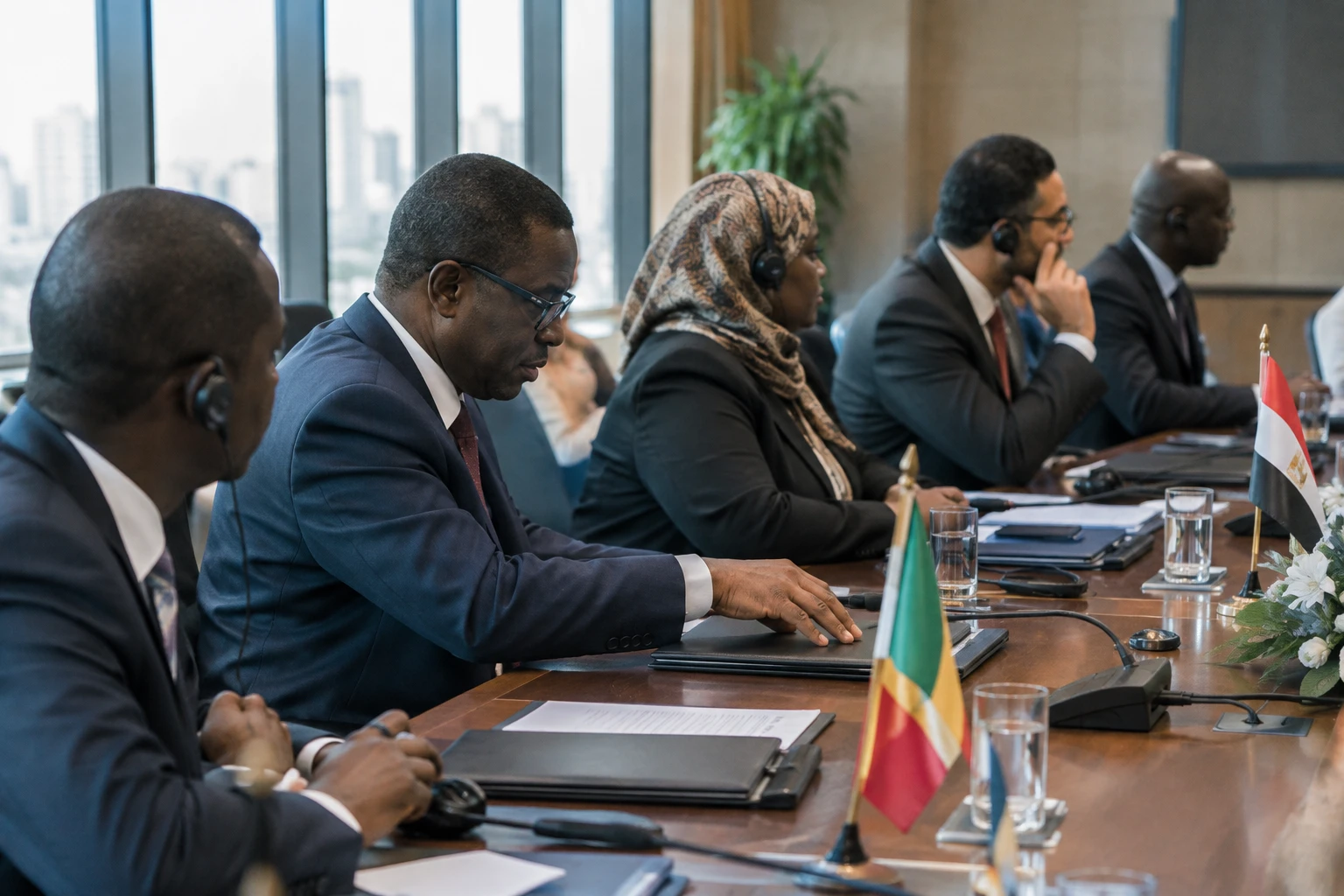
For Egypt, helping Saudi Arabia defend itself without entering the war in Yemen is a delicate balancing act. Cairo wants to demonstrate solidarity with Riyadh while drawing a line against an intervention that could pull its forces into a long-running conflict that remains active.
Support announced, but limits made clear
On 21 October 2026, President Abdel Fattah al-Sissi said the military support under consideration would be aimed at defending Saudi territory and borders, not conducting offensive operations in Yemen. He said Egypt was not in the habit of fighting beyond its borders and wanted to contribute to regional stability. His remarks were reported by Ahram Online.
This distinction is central. The support could involve protecting the kingdom, but its precise form has not yet been publicly defined. At this stage, therefore, this is not an announcement that Egyptian troops will be deployed to Yemen. The president presented the assistance as conditional on a request from Riyadh and approval by Egypt’s institutions.
Parliament must still examine the scope of this possible assistance. After debates, MPs postponed their decision until 26 October. Some called for details on the objectives, duration, cost and risks to Egyptian military personnel. The vote is therefore a decisive political step, not a mere formality. Al Jazeera also reported the postponement of the vote.
The weight of history and the strait
Cairo’s caution is partly explained by Egypt’s experience in North Yemen. In the 1960s, under Gamal Abdel Nasser, Egypt committed a large force to the civil war between republicans and royalists. The campaign involved tens of thousands of soldiers and placed a heavy strain on the country’s military resources. US diplomatic archives from the period describe a prolonged and costly intervention, often likened to “Egypt’s Vietnam”.
The precedent remains sensitive, but Egypt has never completely withdrawn from the Yemeni conflict. In 2015, Cairo joined the coalition led by Riyadh, providing naval and air support in particular. The Red Sea and the Bab el-Mandeb strait, a strategic passage between the Red Sea and the Gulf of Aden, are directly important to Egyptian maritime security and access to the Suez Canal. Attacks and threats in the area can therefore affect trade routes far beyond the Arabian Peninsula.
The current context extends beyond a bilateral relationship. The war in Yemen pits the Houthis against forces linked to the internationally recognised government, while strikes and reprisals threaten to spill across borders. The Associated Press reports a recent escalation and attacks targeting Saudi territory. Responsibility for, and casualty figures from, specific incidents should nevertheless remain attributed to the parties making those claims.
Cairo and Riyadh step up coordination
Also on 21 October, Egyptian Foreign Minister Badr Abdelatty and intelligence chief Hassan Rashad travelled to Riyadh. They met Crown Prince Mohammed bin Salman. Abdelatty handed him a written message from al-Sissi for King Salman. Egyptian and Saudi authorities confirmed the meeting and spoke of strengthening relations and regional consultation, as reported by the Egyptian State Information Service and the Saudi Press Agency.
The sequence highlights the importance attached to diplomatic and security channels. For the leaders, the aim is to consolidate a strategic partnership and respond to threats against the kingdom. For the Egyptian public, the issue also concerns the cost of any commitment, the risks to soldiers and the possibility of the conflict spreading. Concerns raised in parliament bring these issues into view, even if the debate alone cannot gauge public opinion across the country.
A decision to provide defensive assistance could also limit Egypt’s direct exposure without eliminating the risk of escalation. An air or maritime protection mission would not have the same consequences as a ground operation in Yemen. However, no detailed mandate or operational timetable has been publicly announced. The promise’s real scope will therefore depend on the conditions set by parliament and any request from Riyadh.
A regional issue watched beyond the Arab world
For North Africa, stability in the Red Sea affects trade, port infrastructure and revenues linked to the Suez Canal. It also concerns the countries in the Horn of Africa, on the other side of these maritime routes. But Egypt does not belong to a single regional economic community covering this entire area: its decisions here are shaped primarily by relations between Arab states, the African Union’s mechanisms and security dynamics in the Red Sea.
The next immediate milestone is the parliamentary debate scheduled for 26 October. The precise nature of the authorisation, the geographical and operational limits adopted, and any official Saudi request will need to be monitored. For the African Union, the episode is a reminder of how crises in North Africa’s neighbourhood and the Red Sea can affect the continent’s security and trade. For Cairo, the stated position is clear; how it will be implemented remains to be defined.