Algeria
 Libya
 Morocco
 Sudan
 Tunisia
 Benin
 Burkina Faso
 Cabo Verde
 Côte d'Ivoire
 Ghana
 Guinea
 Guinea-Bissau
 Liberia
 Mali
 Mauritania
 Niger
 Nigeria
 Senegal
 Sierra Leone
 The Gambia
 Togo
 Cameroon
 Central African Republic
 Chad
 DR Congo
 Equatorial Guinea
 Gabon
 Republic of the Congo
 São Tomé and Príncipe
 Burundi
 Comoros
 Djibouti
 Eritrea
 Ethiopia
 Kenya
 Madagascar
 Malawi
 Mauritius
 Mozambique
 Rwanda
 Seychelles
 Somalia
 South Sudan
 Tanzania
 Uganda
 Angola
 Botswana
 Eswatini
 Lesotho
 Namibia
 South Africa
 Zambia
 Zimbabwe
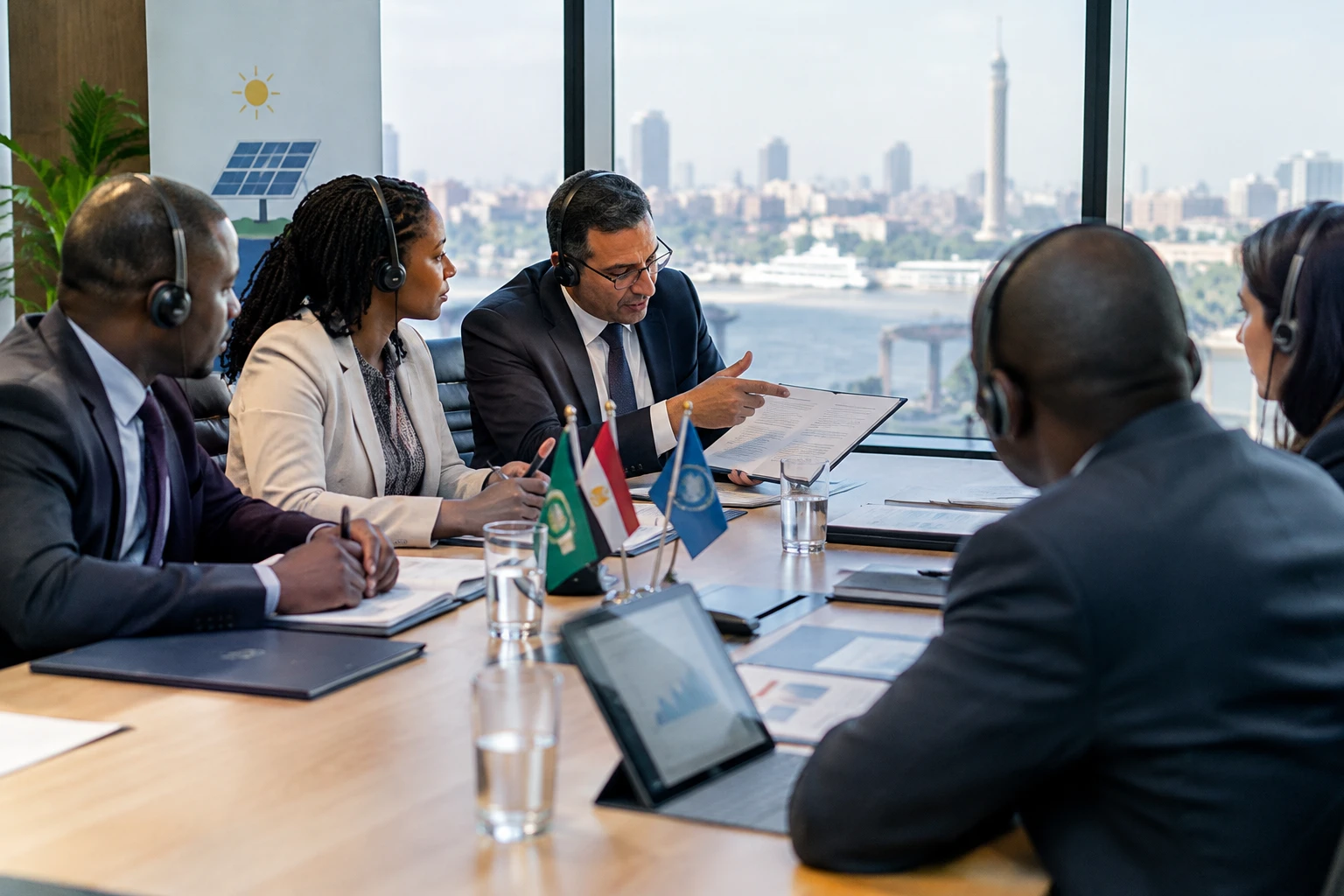
For an aluminium plant, electricity is no secondary expense: it directly affects production costs and the ability to sell in overseas markets. In southern Egypt, a new solar project is set to supply a substantial share of this power, while raising a practical question: how can variable generation be integrated into the national grid ?
An industrial project rooted in southern Egypt
On 26 October 2026, agreements relating to the Dandara project were signed in the presence of Prime Minister Mostafa Madbouly. The site is planned for Nagaa Hammadi, in Qena governorate, in Upper Egypt. The installation is to combine 1 000 megawatts of solar panels with batteries capable of storing 200 megawatt-hours.
The project will be built in two stages. Each provides for 500 megawatts of solar power and 100 megawatt-hours of storage. Once completed, Dandara is expected to cover about a third of EgyptAlum’s electricity needs, according to the Egyptian authorities. The Egyptian Aluminium Company operates a major industrial complex in Nagaa Hammadi.
The announced consortium brings together Norwegian developer Scatec, the European Investment Bank, the European Bank for Reconstruction and Development (EBRD) and the African Development Bank (AfDB). The National Bank of Egypt is also expected to take a stake in the project company. The agreements also cover connection to the electricity grid. The total announced cost is close to $650 million.
This is, however, a financing and implementation milestone, not the commissioning of an already completed power plant. In July, the AfDB had approved up to $66 million for the first phase, estimated to cost more than $290 million. At the time, the bank expected it to come online in early 2028. It estimates that this first tranche could generate 1 373 gigawatt-hours a year. These figures relate to the first phase, not the whole project.
Storage, the linchpin of supply
Solar power is not generated at the same pace as the needs of a factory, which may operate continuously. The batteries must therefore store some of the electricity generated during the day, then release it when solar output falls, particularly in the evening. They can also help limit fluctuations in the power sent to the grid.
The first phase is to sell its electricity to EgyptAlum under a 25-year power purchase agreement. Such a contract sets the terms of supply over the long term. The AfDB says the agreement will be complemented by an arrangement to transmit electricity through the national grid. This means the power plant can be located far from the buyer’s facilities without requiring a direct private line.
For EgyptAlum, the stakes are both energy-related and commercial. Access to lower-carbon electricity could reduce its exposure to fuel-price fluctuations and strengthen the position of Egyptian aluminium in markets where carbon footprints are becoming more important. The EBRD notes that about 60 % of the company’s aluminium exports go to the European Union. This alone does not guarantee a commercial advantage: the actual cost of electricity, the reliability of supply and the rules governing imports will remain decisive.
The construction project is also expected to create temporary jobs in Qena governorate, followed by a smaller number of permanent operational roles. These local benefits will depend in particular on recruitment, the training offered and the share of work awarded to Egyptian companies. AfDB documentation cites about 2 500 jobs during construction and 23 permanent positions; these estimates should not be confused with jobs already created.
An ambitious energy transition constrained by the grid
Dandara is part of Egypt’s drive to increase the share of renewables in its electricity supply. On 22 October, Electricity Minister Mahmoud Esmat announced a target of 45 % renewables by 2028, brought forward from the previous target of 42 % by 2030. According to Ahram Online, the country then had 10.5 gigawatts of renewable capacity connected to the grid and 1.1 gigawatts of storage.
These ambitions face a technical challenge: connecting new power plants quickly, transmitting electricity and balancing supply with demand. Solar power is generated mainly during the day, while industrial and residential needs do not necessarily follow the same timetable. Dandara therefore combines a power plant and batteries with a grid connection agreement, but does not by itself address the need to expand and modernise the grid.
The project adds to Scatec’s other investments in Egypt, including Obelisk, also located in the Nagaa Hammadi region. This concentration of projects could support local activity and accelerate the development of expertise in storage. It also increases the importance of shared infrastructure: power lines, rules for grid access and the capacity to manage multiple energy sources.
Stakes that extend beyond Egypt’s borders
Egypt is a member of the Arab Maghreb Union (AMU), a regional organisation in North Africa, and the African Union. Dandara is not a regional project in the sense of an interconnection between countries. Its continental significance lies instead in its model: bringing together an industrial buyer, a solar power producer, batteries and public and private financing to decarbonise an export-oriented activity.
The AfDB presents the first phase as an example of a renewable electricity contract for a large company. Other African countries may find this model relevant for industries with high and steady consumption. It nevertheless requires bankable agreements, a reliable grid and guarantees suited to financing risks. The National Bank of Egypt’s level of participation and the full allocation of financing had not been detailed in the public information consulted.
The next steps to watch are therefore clear: finalising financing, connecting to the grid, starting construction and meeting the early 2028 deadline announced for the first phase. It will also be necessary to verify the output actually delivered to EgyptAlum, rather than relying solely on planned capacity. For Egypt, Dandara will test its ability to turn renewable-energy targets into reliable power for industry, without overlooking the needs of the grid and the population.
Sources for verification: Egyptian State Information Service, Al-Ahram Business, African Development Bank, EBRD, Ahram Online and Reuters.