Algeria
 Libya
 Morocco
 Sudan
 Tunisia
 Benin
 Burkina Faso
 Cabo Verde
 Côte d'Ivoire
 Ghana
 Guinea
 Guinea-Bissau
 Liberia
 Mali
 Mauritania
 Niger
 Nigeria
 Senegal
 Sierra Leone
 The Gambia
 Togo
 Cameroon
 Central African Republic
 Chad
 DR Congo
 Equatorial Guinea
 Gabon
 Republic of the Congo
 São Tomé and Príncipe
 Burundi
 Comoros
 Djibouti
 Eritrea
 Ethiopia
 Kenya
 Madagascar
 Malawi
 Mauritius
 Mozambique
 Rwanda
 Seychelles
 Somalia
 South Sudan
 Tanzania
 Uganda
 Angola
 Botswana
 Eswatini
 Lesotho
 Namibia
 South Africa
 Zambia
 Zimbabwe
In Cairo, Beijing is looking for more than a ceremonial photo
In relations between major powers, symbols matter. But in Cairo, Xi Jinping’s visit chiefly underscored a more concrete reality: Egypt wants to broaden its room for manoeuvre, while China is advancing its interests in a country that matters for its population, its geographical position and its diplomatic role in the Middle East and North Africa. The visit took on particular significance in 2026, the 70th anniversary of diplomatic relations between the two countries.
The visit is part of a long-established trajectory. In 1956, Egypt became the first Arab and African country to recognise the People’s Republic of China and establish diplomatic relations with it. Since 2014, the two capitals have described their ties as a comprehensive strategic partnership, a framework that now spans the economy, infrastructure, finance, culture and security cooperation. The visit on 1 and 2 September 2026 did not open a new chapter from scratch. It chiefly accelerated an already packed agenda.
What the two capitals agreed
The joint statement published in Cairo first confirms closer political ties. Cairo and Beijing say they want to deepen their comprehensive strategic partnership, strengthen industrial and financial cooperation, and work towards a better balance in trade. The two presidents also highlighted common ground on sensitive issues, from sovereignty to regional security, as well as the Palestinian question and the protection of Egypt’s interests related to the Nile.
The economic dimension is highly tangible. According to official Egyptian figures cited after the visit, bilateral trade reached about $20.78 billion in 2025, up from $17.37 billion in 2024. In the first half of 2026, trade between the two countries rose by a further 21.5% to $11.3 billion, while Egyptian exports to China surged by 199.8% to $840.8 million. The figures show a relationship that is imbalanced but expanding rapidly.
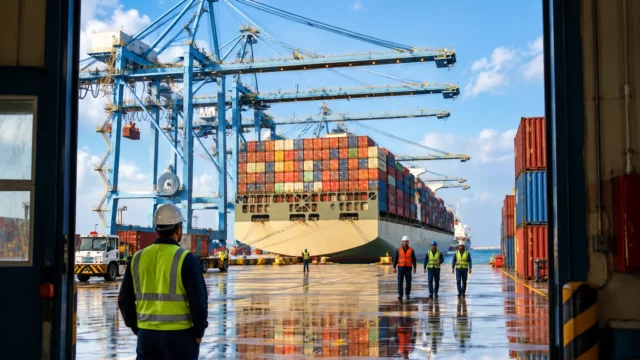
China is also stepping up its presence in Egypt’s industrial zones, particularly around the Suez Canal. In recent months, Egyptian authorities have reported talks with Chinese delegations on new investments, including an aluminium industrial complex worth up to $2 billion in the Suez Canal Economic Zone. The Egyptian government also says Chinese investment in the country exceeds $10 billion.
Why Cairo is investing so much in this partnership
For Egypt, Xi Jinping’s visit cannot be viewed through Beijing alone. It is also part of a diversification strategy. The country remains tied to the United States through decades of military and diplomatic cooperation, but for several years it has been seeking to broaden its sources of funding, export markets and industrial partners. Amid budgetary pressure, foreign-currency needs and major infrastructure projects, diversification is no luxury. It is an economic policy necessity.
The logic applies to China as well. Beijing wants to secure footholds along trade routes, extend its industrial chains and strengthen its image as a partner of the “Global South”, the term used in the joint statement. Egypt offers it three advantages: a gateway to Africa, access to the Arab world and a foothold near the Mediterranean and the Red Sea, two areas that have become strategic for global trade.
The issue is not only commercial. It is political too. The statement refers to the Nile, a crucial issue for Egypt, which regards the river as vital to its economy, agriculture and water security. The text also reaffirms Egypt’s support for the one-China principle, while Beijing highlights Cairo’s strategic stability. This kind of exchange shows how the two countries link domestic issues to their bilateral relationship.
A signal that reaches beyond Egypt
The visit also has continental significance. First, because Egypt is one of China’s main entry points into Africa. Second, because it illustrates a broader trend: many African states are seeking to avoid exclusive dependence, whether on the West, China or regional powers. Cairo therefore wants to appear as an actor able to engage with everyone, without being locked into a single alignment.
The message is also clear from an African perspective. Cairo presents Sino-Egyptian ties as a development partnership spanning finance, industry, tourism, education and technology. For the Egyptian authorities, the aim is to attract capital, increase local exports and establish more production on the ground. For businesses and workers, the promise is jobs and technology transfers. But that promise depends on one essential point: rebalancing trade, which is still dominated by Chinese imports.
At the African level, the visit also confirms that the contest for influence is not played out only at summits. It is played out in ports, special economic zones, banks, logistics corridors and public contracts. In this field, Egypt serves as a testing ground. If the announced commitments translate into factories, exports and jobs, other African capitals will watch the model closely. Otherwise, the relationship will remain a major political partnership that is still unequal in productive terms.