Algeria
 Libya
 Morocco
 Sudan
 Tunisia
 Benin
 Burkina Faso
 Cabo Verde
 Côte d'Ivoire
 Ghana
 Guinea
 Guinea-Bissau
 Liberia
 Mali
 Mauritania
 Niger
 Nigeria
 Senegal
 Sierra Leone
 The Gambia
 Togo
 Cameroon
 Central African Republic
 Chad
 DR Congo
 Equatorial Guinea
 Gabon
 Republic of the Congo
 São Tomé and Príncipe
 Burundi
 Comoros
 Djibouti
 Eritrea
 Ethiopia
 Kenya
 Madagascar
 Malawi
 Mauritius
 Mozambique
 Rwanda
 Seychelles
 Somalia
 South Sudan
 Tanzania
 Uganda
 Angola
 Botswana
 Eswatini
 Lesotho
 Namibia
 South Africa
 Zambia
 Zimbabwe
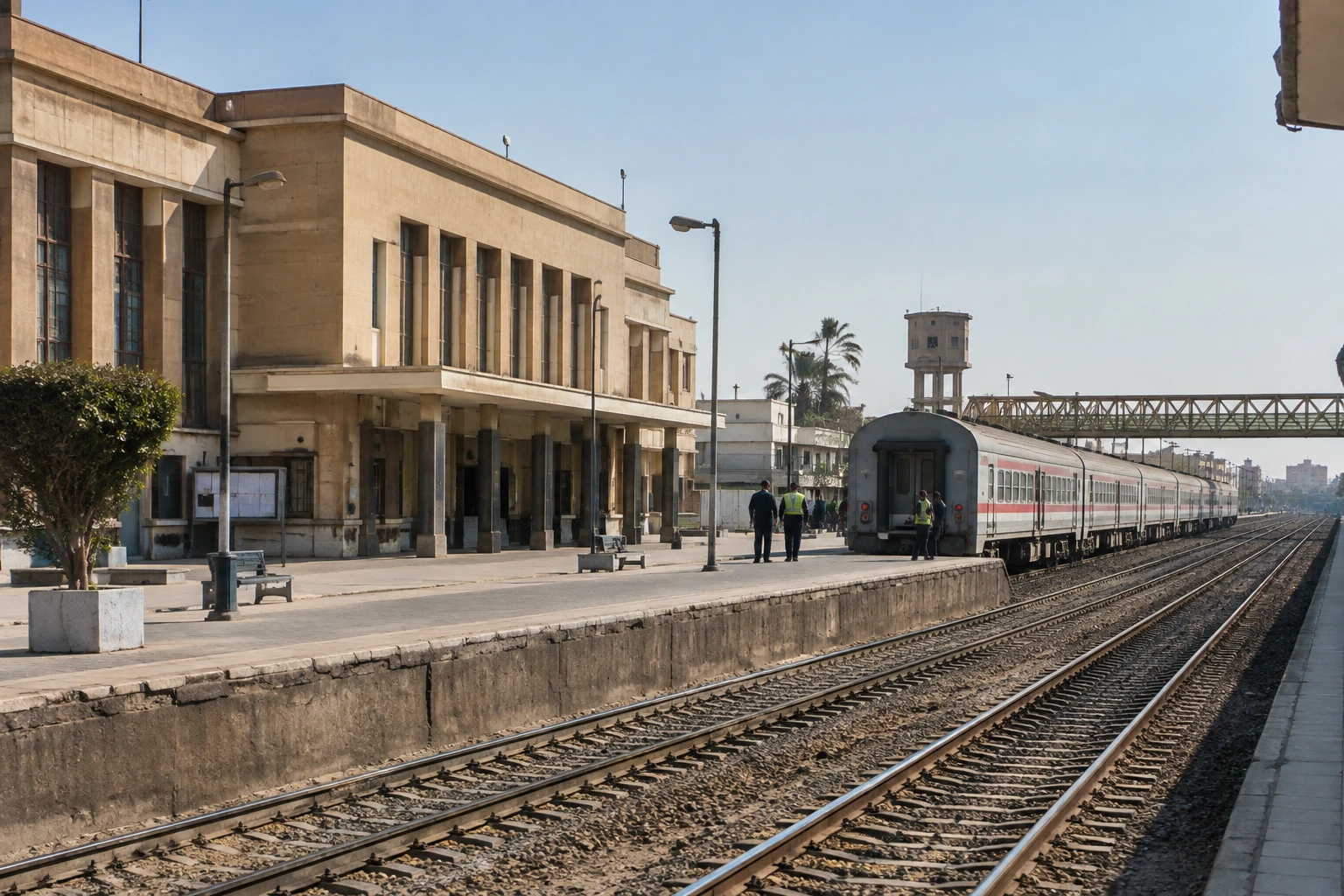
For thousands of passengers, trains link Cairo with the cities of the Nile Valley every day. On 8 November 2026, a collision south of the capital brought a stark reminder of the cost of these routine journeys when the safety of the network fails.
A vital network, a deadly crash
In the district of Al-Ayyat, in Giza governorate, a train travelling from Giza to Fayoum struck the rear of a train that had left Cairo for Aswan. The collision derailed several carriages. The toll reported by Egypt’s health ministry was four dead and 88 injured. These figures were also reported by the Egyptian outlet Ahram Online and the Anadolu Agency.
Rescue workers took the injured to several facilities in the region. Teams used cranes to clear the carriages. Initially, state media had reported a higher number of injuries. The figure of 88 reflects the ministry’s count, later reported by several outlets. The authorities had not yet publicly established the cause of the collision.
President Abdel Fattah al-Sisi said he was following the accident “with great concern” and called for an urgent investigation. He also said those responsible should be held to account if negligence were established. His statement does not prejudge the investigation’s findings, which will have to establish the circumstances and any potential responsibility.
Past disasters loom over the investigation
Al-Ayyat is a place with a railway history. In 2002, a train fire south of Cairo killed more than 300 people, according to widely reported figures. In 2009, a collision in the same area also claimed dozens of lives. These precedents heighten scrutiny of railway operations and safety, but do not in themselves establish a link to the 2026 crash.
Rail remains a major means of transport in Egypt, particularly for journeys between the capital and cities in the south. Passengers with few alternatives depend directly on its regularity and safety. Disruption also affects families, workers and businesses that rely on long-distance connections. After the crash, the railway company announced delays and alternative transport arrangements for some passengers, according to Ahram Online.
The impact of the crash therefore extends beyond the human toll. It affects service continuity and passengers’ confidence. Residents in rural areas crossed by the tracks are also affected by train traffic, level crossings and disruption. But the investigation will have to distinguish any local failures from wider problems with maintenance, signalling or management.
Modernisation needs verifiable results
For several years, the Egyptian state has presented rail modernisation as a priority. The programmes under way include work on infrastructure and signalling systems. The World Bank describes a project aimed at improving the safety and reliability of rail services. These investments give an indication of the scale of the challenge, but on their own do not show that every line has already been modernised or that risks have disappeared.
The question raised by the crash is therefore a practical one: what will prevent a moving train from hitting a stationary train or one travelling on the same track? The findings of the investigation into the condition of signalling systems, operating instructions and communications between staff must be awaited. It is also important to establish whether any warnings were issued before the collision and what corrective measures will be made public.
The president has called for responsibility to be established if negligence is proven. For bereaved families and the injured, the response will not be measured solely by the opening of an investigation. It will also depend on the transparency of its findings, the remedies planned and the effective implementation of safety measures.
A national and regional issue
For Egypt, a North African country whose railway lines connect Cairo with the Nile Valley and Upper Egypt, rail safety is a matter of both everyday transport and territorial cohesion. The consequences differ for passengers in the capital, residents of the governorates served and people who depend on less frequent services. Investment policy must therefore be assessed on the ground: reliability, maintenance, safety and the quality of information provided to passengers.
Across the continent, the crash is a reminder that transport projects are about more than building or modernising infrastructure. Sustainable operation requires inspections, trained staff, consistent maintenance and credible investigations after disasters. The African Union promotes regional links, while the Arab Maghreb Union provides a North African regional framework, even though the network concerned here is primarily national. The immediate priority is therefore Egypt’s: publish the investigation’s findings and show, through verifiable changes, how train safety will be improved.