Algeria
 Egypt
 Libya
 Morocco
 Sudan
 Tunisia
 Benin
 Burkina Faso
 Cabo Verde
 Côte d'Ivoire
 Ghana
 Guinea
 Guinea-Bissau
 Liberia
 Mali
 Mauritania
 Niger
 Nigeria
 Senegal
 Sierra Leone
 The Gambia
 Togo
 Cameroon
 Central African Republic
 Chad
 Equatorial Guinea
 Gabon
 Republic of the Congo
 São Tomé and Príncipe
 Burundi
 Comoros
 Djibouti
 Eritrea
 Ethiopia
 Kenya
 Madagascar
 Malawi
 Mauritius
 Mozambique
 Rwanda
 Seychelles
 Somalia
 South Sudan
 Tanzania
 Uganda
 Angola
 Botswana
 Eswatini
 Lesotho
 Namibia
 South Africa
 Zambia
 Zimbabwe
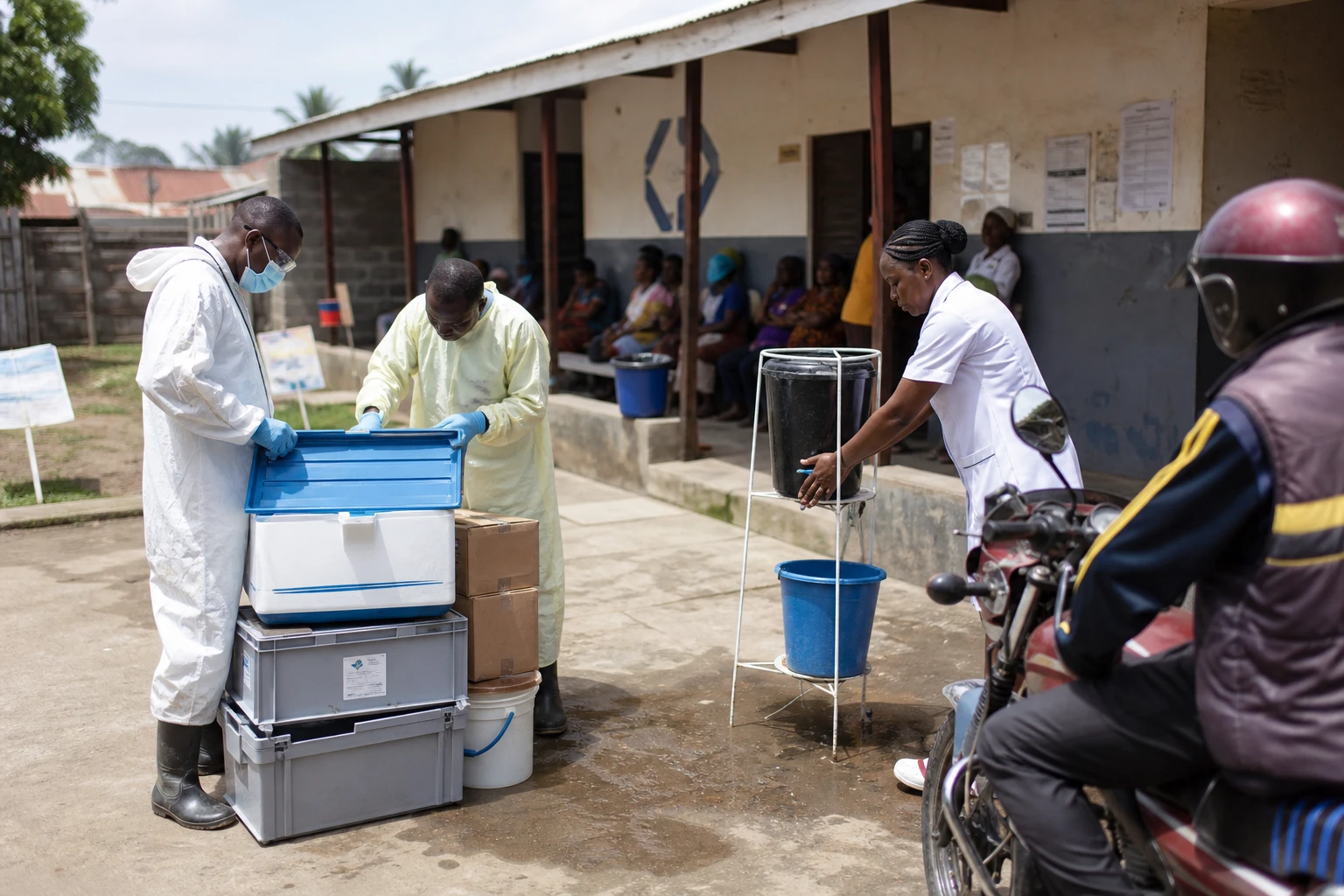
An outbreak putting eastern Congo to the test
In the east of the Democratic Republic of the Congo, Ebola is never spreading in a vacuum. The virus is advancing in areas where roads are difficult, travel is frequent and health facilities are often under strain. In Ituri, North Kivu and neighbouring provinces, every delay in diagnosis can have a major impact on the chain of transmission.
The current situation also points to a wider reality: the response involves not only patients, but also families, health workers, children separated from their relatives and communities that must keep up their daily activities. The WHO and UNICEF say the humanitarian context, insecurity and population movements are complicating efforts to contain the epidemic.
What the latest figures show
As of 15 July 2026, the WHO reported 2,124 confirmed cases and 828 deaths in the Democratic Republic of the Congo. The organisation also said that 390 patients had recovered and that the epidemic had reached 46 health zones across five provinces: Ituri, North Kivu, South Kivu, Haut-Uele and Tshopo. Meanwhile, 12,693 contacts were being monitored.
These figures should be treated with caution, but they point to a clear trend: the outbreak is spreading, although some of the increase may reflect expanded surveillance, testing and diagnostic capacity. The WHO has said so explicitly. Since 3 July 2026, a further 664 confirmed cases and 376 confirmed deaths have been reported in the country.
Ituri remains the centre of the crisis. The province accounts for 1,904 of the 2,124 confirmed cases, or 89.6% of the national total, and 692 of the 828 deaths. The health zones of Bunia, Rwampara, Mongbwalu, Nizi and Nyankunde are among the worst affected.
This is not the first alert of the year. On 15 May 2026, Africa CDC declared the ongoing Bundibugyo Ebola outbreak a Public Health Emergency of Continental Security, an African alert level that mobilises regional coordination. The WHO subsequently declared a Public Health Emergency of International Concern on 17 May 2026.
Why this strain changes the picture
The current outbreak is linked to the Bundibugyo virus, an Ebola strain for which there is currently no approved vaccine or specific treatment. Care therefore relies on medical support, rapid isolation, contact tracing, infection prevention and safe and dignified burials.
This is a key issue for the DRC. The country has built up considerable experience in responding to Ebola, but each outbreak unfolds in a different environment. In 2026, the alert affects areas with intense cross-border trade, frequent travel linked to mining activities and insecurity that undermines access to healthcare. Africa CDC has emphasised these risk factors, as well as the country’s proximity to Uganda, Rwanda and South Sudan.
The consequences for health workers are immediate. The WHO notes that transmission remains active in 38 health zones and that monitoring must continue for 21 days around every identified contact. When field teams lack access or resources, the virus gains ground before the index case has even been fully documented.
Children and adolescents are also paying a heavy price. On 22 June 2026, UNICEF estimated that 2.95 million children were at risk across 31 affected health zones. The agency also said that 135 orphaned children were receiving support in Ituri, showing how quickly the health impact extends to child protection and social stability.
The Congolese response and its regional reach
The response brings together the Congolese authorities, the WHO, UNICEF, Africa CDC and several partners. On the ground, the challenge is to break chains of transmission without undermining trust within communities. UNICEF says it is working with the authorities to strengthen infection prevention, contact tracing, community outreach and the continuity of essential services, particularly health, education and water.
This approach is crucial, because the fight against Ebola is not won in laboratories alone. It is also waged in neighbourhoods, markets, health centres and funeral ceremonies. Africa CDC has stressed the need for a response led from within the continent, coordinated with the countries concerned and adapted to local realities.
For the DRC, the issue therefore extends beyond the national level. An outbreak in the east of the country can quickly become a regional concern, particularly for countries in the East African Community, of which the DRC is a member. Population movements, trade and porous borders require shared vigilance. This is precisely why the WHO is calling for cross-border preparedness and Africa CDC has launched a continental response plan.
The next phase will depend on two practical factors: the ability to expand contact monitoring in the worst-affected provinces, and how quickly health teams can secure areas that are difficult to access. If surveillance holds, the curve may stabilise. If it breaks down, the virus will immediately exploit gaps on the ground.