
 Algeria
 Egypt
 Libya
 Morocco
 Sudan
 Tunisia
 Benin
 Burkina Faso
 Cabo Verde
 Côte d'Ivoire
 Ghana
 Guinea
 Guinea-Bissau
 Liberia
 Mali
 Mauritania
 Niger
 Nigeria
 Senegal
 Sierra Leone
 The Gambia
 Togo
 Cameroon
 Central African Republic
 Chad
 Equatorial Guinea
 Gabon
 Republic of the Congo
 São Tomé and Príncipe
 Burundi
 Comoros
 Djibouti
 Eritrea
 Ethiopia
 Kenya
 Madagascar
 Malawi
 Mauritius
 Mozambique
 Rwanda
 Seychelles
 Somalia
 South Sudan
 Tanzania
 Uganda
 Angola
 Botswana
 Eswatini
 Lesotho
 Namibia
 South Africa
 Zambia
 Zimbabwe
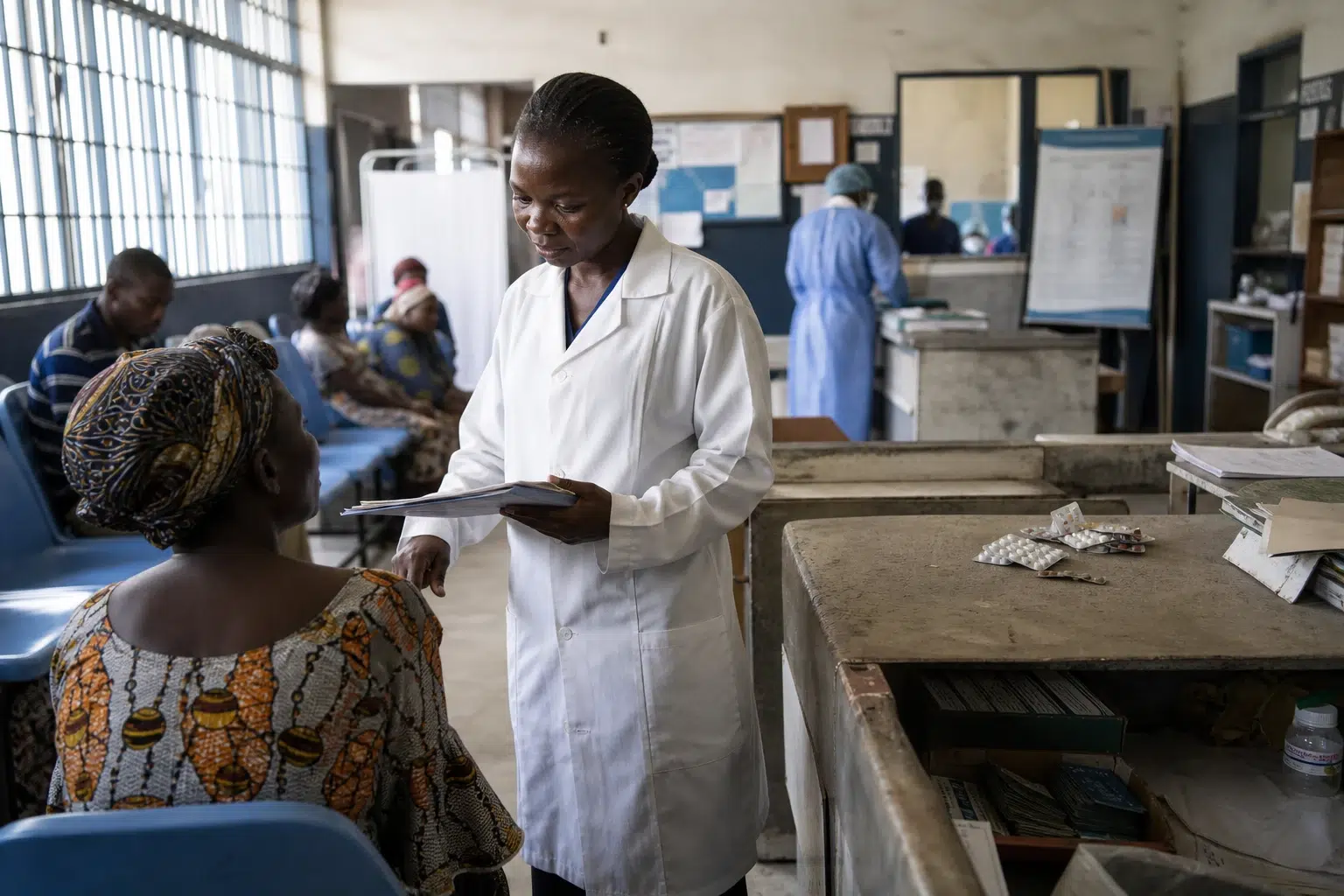
In Logo, a health reprieve amid an outbreak still in flux
In Logo, Mahagi territory, the latest recoveries bring real relief. But in Ituri, every sign of improvement remains fragile as long as the virus continues to circulate elsewhere in the Democratic Republic of the Congo.
Two female patients have been discharged from the Ebola treatment centre at Logo General Referral Hospital after recovering, bringing the total number of people successfully treated at the facility to 15. The medical director, Dr Thomas Eneko, also confirmed that there were no suspected or confirmed cases in the Logo health zone at the time. This local improvement does not, however, change the still serious national picture. The announcement in Logo was confirmed by monitoring data from the Congolese health ministry, consulted in the situation report of 16 September 2026.
A province improving its response, without losing sight of the scale of the crisis
Ituri remains the province worst affected by the 17th Ebola outbreak in DR Congo. According to the official report of 16 September 2026, the province accounted for a cumulative 5,792 confirmed cases and 2,642 deaths, or more than three-quarters of the national total. Over the same period, 18 recoveries were recorded in Ituri in 24 hours, showing that rapid treatment can still make a difference. The ministry also notes that the outbreak was then affecting five provinces, with 54 health zones affected in total. These figures appear in the health ministry’s SitRep of 16 September 2026, published the following day. The official situation report gives a measure of this gradual shift between active outbreaks and areas under heightened surveillance.
This context explains the caution of health workers in Logo. The absence of detected cases in one area does not mean the threat has been extinguished. In an outbreak spreading across a region, the virus can begin circulating again if a transmission chain escapes surveillance, a contact is not traced in time or a patient reaches a treatment centre too late. In Ituri, the response therefore depends as much on medical teams as on community networks, local leaders and the rapid reporting of symptoms.
The heart of the response: rapid isolation, better tracing and community engagement
The situation in Logo illustrates a decisive point: Ebola is fought less with slogans than with precise public health measures. Health authorities stress early screening, the isolation of suspected cases, contact tracing and prompt treatment. The WHO also notes that, in eastern Congo, dialogue with communities has been central to improving acceptance of care, safe burials and surveillance. In a report published in early September, the organisation explained that the progress seen in Ituri was also due to this patient co-operation with families, religious leaders and local networks. The WHO’s account of community dialogue in Ituri shows that trust has become a public health tool in its own right.
This approach matters all the more because the virus involved is not the one behind previous major outbreaks. The 17th Congolese outbreak is linked to the Ebola Bundibugyo virus, a distinct strain. The WHO says the outbreak, declared in May 2026, spread rapidly across several provinces. As of 16 September, the health ministry reported a cumulative 7,475 confirmed cases, 3,605 deaths and 1,798 recoveries. The same report lists 905 patients still in isolation or hospital. The figures therefore confirm a simple reality: people are recovering, but the pressure on the health system remains high. The revised 180-day plan launched in Kinshasa on 4 September 2026 by the government and its partners is specifically aimed at curbing this trend. The revised response plan announced in Kinshasa conveys the urgency and logistical scale of the operation.
What these recoveries mean for DR Congo and Central Africa
Across Congo, the discharges of recovered patients in Logo are first and foremost a sign that treatment is working. They show that care is effective when patients arrive in time and contact tracing holds firm. They are also a reminder that public health is not decided only in administrative capitals. In Mahagi, as in Bunia or Beni, the response depends on the rapid flow of information, access to treatment centres and residents’ compliance with health guidance.
For the population, the stakes are tangible. Health centres must continue to monitor fevers, vomiting, bleeding and deaths in communities. For the authorities, the goal is twofold: consolidate areas where transmission is declining and prevent the virus from becoming established further afield, particularly in areas with weaker infrastructure. The ministry’s report also shows that, on 16 September, transmission remained concentrated in Ituri and North Kivu, with notable peaks still recorded in both provinces. This geographical concentration is an opportunity for the response, but only if acted on quickly.
The continental implications are clear. DR Congo remains one of the African countries with the most experience in managing Ebola, but also one of the most exposed because of its vast territory, population mobility and proximity to several borders. What is at stake in Ituri also matters to the Great Lakes region, where surveillance systems, laboratories and cross-border co-ordination must work together. The coming weeks will show whether the positive signs seen in Logo and other areas turn into a sustained decline, or prove to be no more than a lull in an outbreak that remains active.



