
 Algeria
 Egypt
 Libya
 Morocco
 Sudan
 Tunisia
 Benin
 Burkina Faso
 Cabo Verde
 Côte d'Ivoire
 Ghana
 Guinea
 Guinea-Bissau
 Liberia
 Mali
 Mauritania
 Niger
 Nigeria
 Senegal
 Sierra Leone
 The Gambia
 Togo
 Cameroon
 Central African Republic
 Chad
 Equatorial Guinea
 Gabon
 Republic of the Congo
 São Tomé and Príncipe
 Burundi
 Comoros
 Djibouti
 Eritrea
 Ethiopia
 Kenya
 Madagascar
 Malawi
 Mauritius
 Mozambique
 Rwanda
 Seychelles
 Somalia
 South Sudan
 Tanzania
 Uganda
 Angola
 Botswana
 Eswatini
 Lesotho
 Namibia
 South Africa
 Zambia
 Zimbabwe
An outbreak that reaches beyond health centres
In eastern Democratic Republic of the Congo, Ebola never strikes alone. When the virus spreads in Ituri, it compounds cut-off roads, disrupted markets, families already displaced and harvests that are difficult to sell. The result is immediate: the disease takes a toll not only on health, but also on what people have to eat. In a province where access to healthcare remains fragile and population movements are frequent, an outbreak can quickly become a food crisis.
The World Food Programme estimates that 26.5 million people in the Democratic Republic of the Congo face acute food insecurity, with nearly 3.6 million in the emergency phase, according to the May 2026 IPC analysis. In the east of the country, the provinces of Ituri, North Kivu, South Kivu and Tanganyika account for much of the food pressure. This is where the new Ebola outbreak is adding to an already severe crisis.
What the response figures show
The outbreak was declared on 15 May 2026 by the Congolese authorities and the World Health Organization. It is caused by the Bundibugyo strain, confirmed in the first samples analysed by the National Institute of Biomedical Research in Kinshasa. The first clusters were identified in Ituri, notably in the Mongbwalu and Rwampara health zones.
Since then, the outbreak has spread to other health zones in Ituri, North Kivu and South Kivu. As of 11 July 2026, the WHO reported 1,926 confirmed cases and 702 cumulative deaths, according to the National Institute of Public Health. The same source said transmission remained intense in the affected areas, despite the gradual reinforcement of field teams.
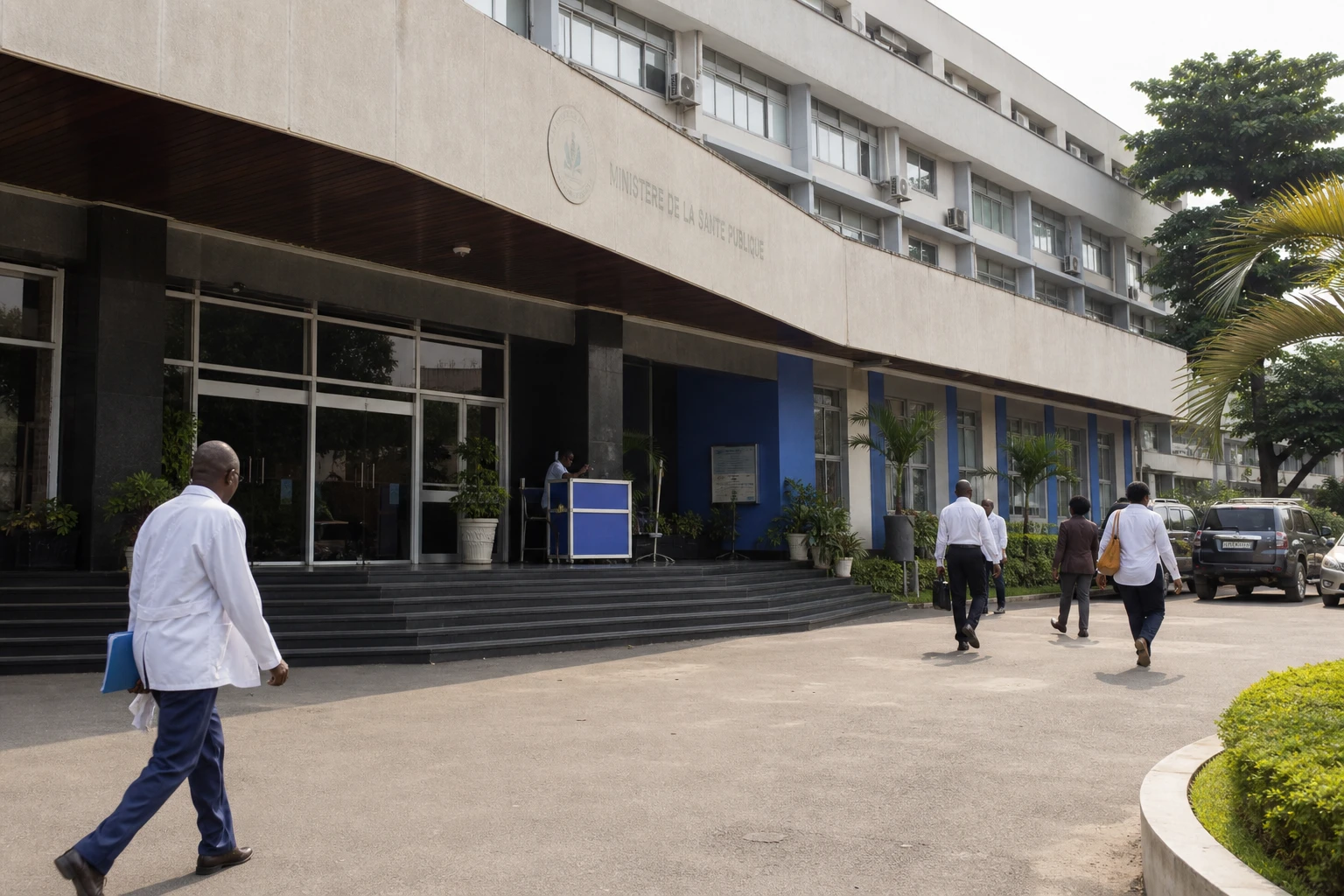
The health response relies on several measures: surveillance, contact tracing, protective equipment, treatment centres, community engagement and faster diagnostics. The INSP has also published situation reports showing the spread to several health zones, while the WHO and its partners have stepped up testing closer to outbreak areas. In this response, the capital, Kinshasa, plays a key role, as reference analyses are centralised there before final validation.
Why the outbreak is driving hunger
The link between Ebola and hunger is not abstract. When an area is affected, families move, farming activities slow, markets close as a precaution and trade routes become more expensive. Households then lose both their income and regular access to food. The WFP says it has distributed more than 160,000 hot meals to patients, contacts and healthcare workers in treatment and isolation centres. At the end of June, the agency also said it had provided more than 36,000 hot meals and takeaway rations in eastern DR Congo, directly supporting the response.
Ituri province sums up the problem. It is an agricultural area, but also a place of movement, tensions and repeated displacement. When insecurity restricts access to fields, routes become more dangerous and healthcare requires quarantines, food availability quickly declines. IPC data also show that some areas in the east, including Djugu and Mambasa in Ituri, remain among those most exposed to severe levels of malnutrition and food insecurity.
The WFP estimates that nearly 10 million people in the east of the country are already facing crisis or emergency levels of hunger. The Ebola outbreak is therefore not creating vulnerability from scratch. It is amplifying it. It is turning a strained situation into a more complex emergency, in which health, logistics and food security are inseparable.
A test for DR Congo and the Great Lakes region
This outbreak says something about the recent trajectory of the Democratic Republic of the Congo: crises do not simply pile up, they feed into one another. Armed conflict, displacement, restricted humanitarian access, disease outbreaks and rising prices form a single block of fragility. In the east, the population is paying the heaviest price. Rural households lose their harvests or their markets. City dwellers, meanwhile, face higher prices and supply disruptions.
The regional dimension also matters. The affected provinces border or lie close to busy routes into Uganda and the rest of the Great Lakes region. That is why agencies speak of a risk of a wider humanitarian crisis if the health response and food aid do not move forward together. Monitoring therefore remains strategic, particularly as the WHO and WFP stress that access to communities, local trust and rapid interventions are essential to containing the outbreak.
For Kinshasa, the challenge goes beyond managing an epidemic. It means sustaining epidemiological surveillance, supporting health zones, maintaining humanitarian corridors and protecting livelihoods at the same time. For Central Africa and the Great Lakes, this crisis is a reminder that a health alert can, within weeks, become a food alert and then an additional source of social instability. This overlap will shape what happens next. The coming weeks will show whether the response remains confined to treatment centres or also protects markets, roads and fields.



