Algeria
 Egypt
 Libya
 Morocco
 Sudan
 Tunisia
 Benin
 Burkina Faso
 Cabo Verde
 Côte d'Ivoire
 Ghana
 Guinea
 Guinea-Bissau
 Liberia
 Mali
 Mauritania
 Niger
 Nigeria
 Senegal
 Sierra Leone
 The Gambia
 Togo
 Cameroon
 Central African Republic
 Chad
 Equatorial Guinea
 Gabon
 Republic of the Congo
 São Tomé and Príncipe
 Burundi
 Comoros
 Djibouti
 Eritrea
 Ethiopia
 Kenya
 Madagascar
 Malawi
 Mauritius
 Mozambique
 Rwanda
 Seychelles
 Somalia
 South Sudan
 Tanzania
 Uganda
 Angola
 Botswana
 Eswatini
 Lesotho
 Namibia
 South Africa
 Zambia
 Zimbabwe
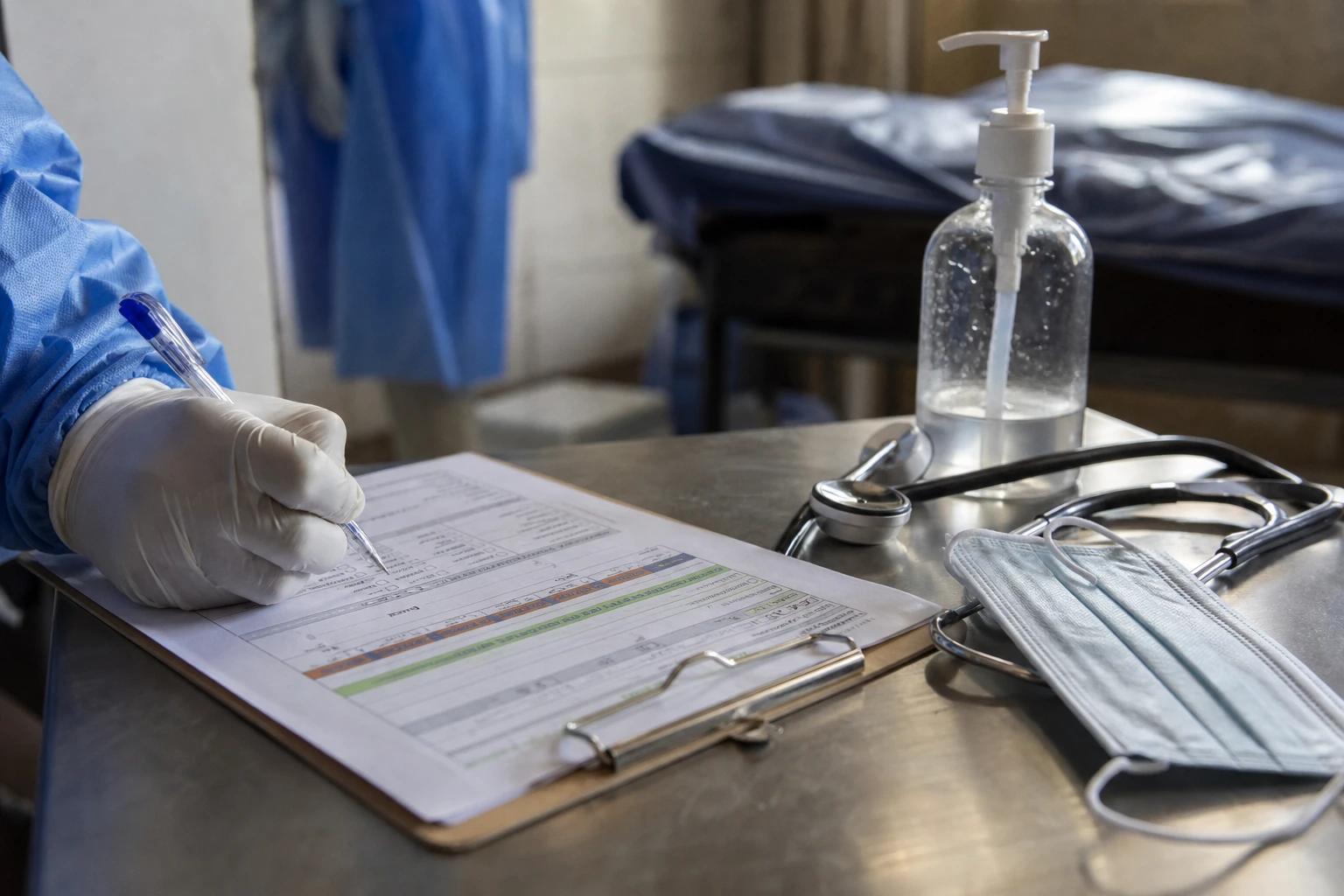
In Butembo, the real danger is not just the virus. It is the moment when healthcare facilities become overwhelmed, patients arrive too late, and health workers have to choose between protecting their unit and admitting a patient without any guarantee of safety. In a commercial city in North Kivu, this pressure is turning a health crisis into a test of resilience for the entire local system.
North Kivu province, in the east of the Democratic Republic of the Congo, has for years faced a rare tangle of challenges: high population mobility, persistent insecurity, fragile trust in health authorities and rapid movement between urban areas and rural territories. The Ebola outbreak declared on 1 August 2018 was already unfolding against this backdrop. According to the World Health Organization, within a few weeks the outbreak had spread to several health zones in North Kivu and Ituri, with a marked advance around Butembo, Katwa and Beni.
In Butembo, treatment capacity remains too limited
The picture is clear: as transmission slowed in part of Ituri, North Kivu was seeing an increase. By late September 2018, the situation in Butembo and Katwa appeared more tense than ever. Field teams reported a recent rise in confirmed cases, to the point that treatment centres could no longer cope. WHO data published on 20 September reported a cumulative total of 142 cases and 97 deaths across the outbreak, with active clusters in seven health zones in North Kivu and one in Ituri.
The problem was not just the number of patients. It was the capacity to absorb them. Facilities in Butembo were operating with limited resources while serving a population of several hundred thousand in the urban area and neighbouring zones. Information gathered from different sources shows that a treatment centre opened in Butembo on 20 September 2018, initially with limited capacity, while another facility was operating in Katwa. In the following weeks, MSF said its centres in Butembo and Katwa had 96 and 52 beds respectively, confirming the scale of the expansion, but also how far behind the epidemic curve it had come.
This overcrowding has a direct impact on patients’ care pathways. When a bed is unavailable, a suspected case remains for longer in a transit facility, or returns to the community. With Ebola, every delay matters. Early isolation, hydration, medical monitoring and protection for health workers reduce the risk of secondary transmission. When these links fail, the outbreak gains ground. This was already central to warnings from WHO and MSF in late 2018.
Mistrust, insecurity and lack of support complicate the response
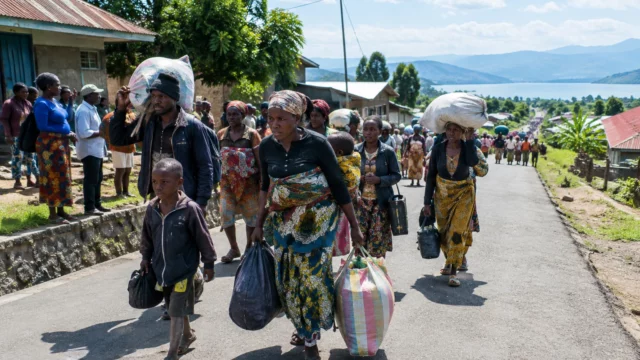
In eastern DR Congo, public health is intertwined with social history. Ebola was not unknown to the people of North Kivu, and that memory shaped local reactions. On the one hand, it encouraged protective and alert responses. On the other, it fuelled fear, rumours and hesitation about going to treatment centres early. WHO had already highlighted Butembo’s high level of mobility: the commercial city is connected to other parts of the country and neighbouring countries, making contact tracing and community follow-up more difficult.
The shortage of humanitarian actors is also a factor. When the response remains concentrated at a few sites, ordinary health centres are left on the front line without enough equipment. Health workers then have to make impossible decisions: provide treatment without full protective equipment, or send a patient through another care pathway, sometimes too late. MSF has stressed that at this stage community engagement is as important as clinical care. Without dialogue and clear explanations about symptoms, treatment and vaccination, the response loses some of its effectiveness.
The North Kivu situation also shows how much public health depends on security. Attacks and tensions in the area have repeatedly disrupted the work of medical teams. In September 2018, WHO warned that violence and instability could prevent contact tracing, delay diagnoses and undermine treatment sites. In a crisis where the virus spreads quickly, insecurity gives the virus time.
A Congolese challenge, but also a regional one
For Congolese people, the immediate priority is to prevent the outbreak from spreading beyond the areas already affected into more rural territories, which are often less well equipped and farther from referral centres. For the authorities in Kinshasa, the challenge is twofold. They must maintain national coordination while supporting provinces where the response still depends heavily on external partners and local teams. In a country as vast as the Democratic Republic of the Congo, centralisation is not enough; the response must be rooted in the provinces, with swift and tailored resources.
The crisis also extends beyond national borders. North Kivu is a transit area towards Uganda, Rwanda and beyond. Any rise in cases in Butembo or Katwa therefore becomes a regional, and then continental, concern. East Africa, African health organisations and neighbouring countries closely monitor such outbreaks, because the slightest weakness in surveillance can restart the chain of transmission. The lesson is well known: an epidemic is never solely a medical matter. It depends on roads, markets, public trust and the speed of decision-making.
Across the continent, the Butembo outbreak is a reminder of an often-overlooked truth: Africa’s response to health emergencies depends first and foremost on strong local health systems, trained teams and credible information. When these three elements are lacking, international aid can provide support, but it cannot replace local networks. That is what makes the situation in North Kivu so sensitive: it measures, in real time, a country’s ability to protect its secondary cities and outlying territories, long before the crisis becomes an international issue.