
 Algeria
 Libya
 Morocco
 Sudan
 Tunisia
 Benin
 Burkina Faso
 Cabo Verde
 Côte d'Ivoire
 Ghana
 Guinea
 Guinea-Bissau
 Liberia
 Mali
 Mauritania
 Niger
 Nigeria
 Senegal
 Sierra Leone
 The Gambia
 Togo
 Cameroon
 Central African Republic
 Chad
 DR Congo
 Equatorial Guinea
 Gabon
 Republic of the Congo
 São Tomé and Príncipe
 Burundi
 Comoros
 Djibouti
 Eritrea
 Ethiopia
 Kenya
 Madagascar
 Malawi
 Mauritius
 Mozambique
 Rwanda
 Seychelles
 Somalia
 South Sudan
 Tanzania
 Uganda
 Angola
 Botswana
 Eswatini
 Lesotho
 Namibia
 South Africa
 Zambia
 Zimbabwe
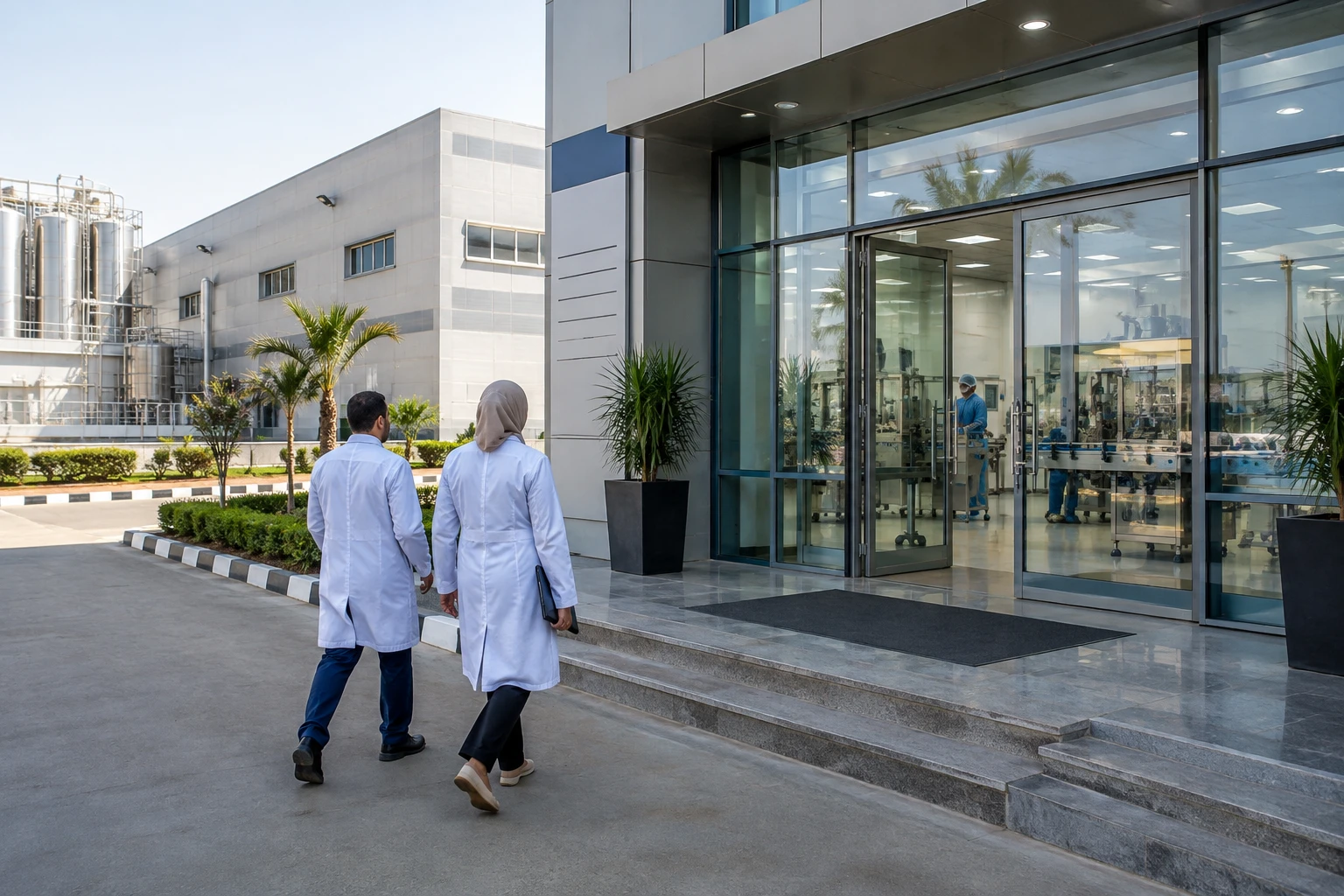
Can a change of ownership at a pharmaceutical factory become a springboard for greater production in Egypt and sales beyond its borders? That is the question at the heart of the rapprochement between Eastpharma and the Egyptian Drug Authority, as Cairo seeks to strengthen local manufacturing and develop exports.
A major market, with gaps in the production chain
Egypt has a large domestic market and an industry that already manufactures a substantial share of the medicines sold in the country. According to the Egyptian Drug Authority (EDA), the market reached 422 billion Egyptian pounds in 2025, up 37% year on year. The institution estimates its value at about $8.5 billion and says the country ranked 26th globally at the time.
Local production accounts for about 91% of pharmaceutical products available on the market, according to the EDA. But this does not mean that all inputs are manufactured locally. Active pharmaceutical ingredients, the components that give medicines their therapeutic effect, are still largely imported. The Authority has said it wants to localise production of 50 of them, accounting for nearly 78% of imports of active ingredients for human use.
This distinction is crucial: assembling or packaging a medicine in the country does not guarantee autonomy across its entire supply chain. Import costs and logistical disruptions can leave manufacturers and patients vulnerable. The challenge for Egypt’s industry is therefore to consolidate existing capacity while moving towards more technically demanding stages of production.
Cairo factory at the heart of the deal
On 20 October 2026, Sanofi Egypt and Eastpharma signed an agreement providing for the transfer of ownership of Sanofi’s Cairo factory to Eastpharma. The signing took place in the presence of Ali El-Ghamrawy, head of the EDA. The Authority describes the deal as a way to keep the site operating, strengthen local manufacturing and open up opportunities for regional expansion.
The financial details of the transaction have not been made public in the information available. The EDA says, however, that Sanofi, which has been present in Egypt for more than 60 years, intends to continue operating in the country. The transfer of industrial ownership therefore does not, in itself, mean that the French company is leaving the Egyptian market.
Five days later, on 25 October, El-Ghamrawy received an Eastpharma delegation led by its chief executive, Philippe Haas. Discussions covered the expansion of production lines, technology transfer and the development of research capabilities. Eastpharma also outlined its interest in complex medicines, which require specialised expertise and equipment. The EDA said the talks also addressed the availability of priority medicines, in accordance with quality, safety and intellectual property rules.
The close timing of the two announcements sketches out an initial phase of the company’s establishment: the takeover of an industrial facility, followed by consideration of further investment opportunities. It does not, however, mean that new funding or projects have already been approved. No figure for additional investment has been announced so far.
Higher production alone will not guarantee access
For the authorities, the goal goes beyond the growth of a single company. Keeping a factory operating can preserve skills, jobs and supply capacity. According to the EDA, nearly 99% of production at the Sanofi site was intended for the Egyptian market. This figure underlines its local importance, but on its own says nothing about the volumes actually available to patients or their price.
For employees, continuity of operations and future investment will matter as much as the change in ownership. For patients, the impact will depend on which medicines are actually produced, their availability and their affordability. For Egyptian manufacturers, the arrival of a foreign investor may bring capacity and technology, while also intensifying competition in a market where several players are seeking to expand.
Egypt’s stated targets are ambitious: the EDA reports about $1.3 billion in pharmaceutical exports and associated medical products in 2025, with a target of $3 billion by 2030. These figures should be read as sector-wide data provided by the Authority, not as a measure of exports of finished medicines alone. The EDA also says it is aiming to increase sales to African markets.
Several initiatives illustrate the different links in the chain that the authorities are seeking to develop. In January 2026, Arab API launched a project for an active pharmaceutical ingredient factory in Ain Sokhna, in the Suez Canal Economic Zone, with an announced cost of $165 million. In July, the EIPICO 3 factory was inaugurated in 10th of Ramadan City to produce biological medicines and biosimilars, products comparable to reference biological medicines. The announced investment exceeded $100 million.
A regional ambition to be realised
Egypt’s strategy thus combines several priorities: attracting investment, transferring expertise, producing complex medicines and reducing reliance on imported inputs. The takeover of the Cairo factory fits into this trajectory, but its impact will depend on future industrial decisions and the ability to maintain standards compatible with export markets.
At African level, regulation is also a key issue. Products made in Egypt cannot gain lasting access to other markets without registration procedures, quality checks and recognition by the relevant authorities. The EDA highlights its World Health Organization Maturity Level 3 certification for medicines and vaccines, a milestone that could help build regulatory confidence. It does not, however, guarantee automatic market access or export growth.
Egypt is a member of the African Union and the Arab League, but does not belong to an African regional economic community such as ECOWAS or SADC. Its export ambitions in Africa and the Middle East will therefore depend on trade and regulatory partnerships with different countries and blocs. The key point to watch will be whether announcements translate into operational capacity: new production lines, actual output, access to medicines and verifiable sales outside Egypt.
The Egyptian Drug Authority on talks with Eastpharma, the transfer of Sanofi’s Cairo factory, market data and the EDA’s targets, Masrawy’s cross-check of market figures, the Arab API factory project in Ain Sokhna and the inauguration of EIPICO 3.



