Algeria
 Egypt
 Libya
 Morocco
 Sudan
 Tunisia
 Benin
 Burkina Faso
 Cabo Verde
 Côte d'Ivoire
 Ghana
 Guinea
 Guinea-Bissau
 Liberia
 Mali
 Mauritania
 Niger
 Nigeria
 Senegal
 Sierra Leone
 The Gambia
 Togo
 Cameroon
 Central African Republic
 Chad
 DR Congo
 Equatorial Guinea
 Gabon
 Republic of the Congo
 São Tomé and Príncipe
 Burundi
 Comoros
 Djibouti
 Eritrea
 Ethiopia
 Kenya
 Madagascar
 Malawi
 Mauritius
 Mozambique
 Rwanda
 Seychelles
 Somalia
 South Sudan
 Tanzania
 Uganda
 Angola
 Botswana
 Eswatini
 Lesotho
 Namibia
 Zambia
 Zimbabwe
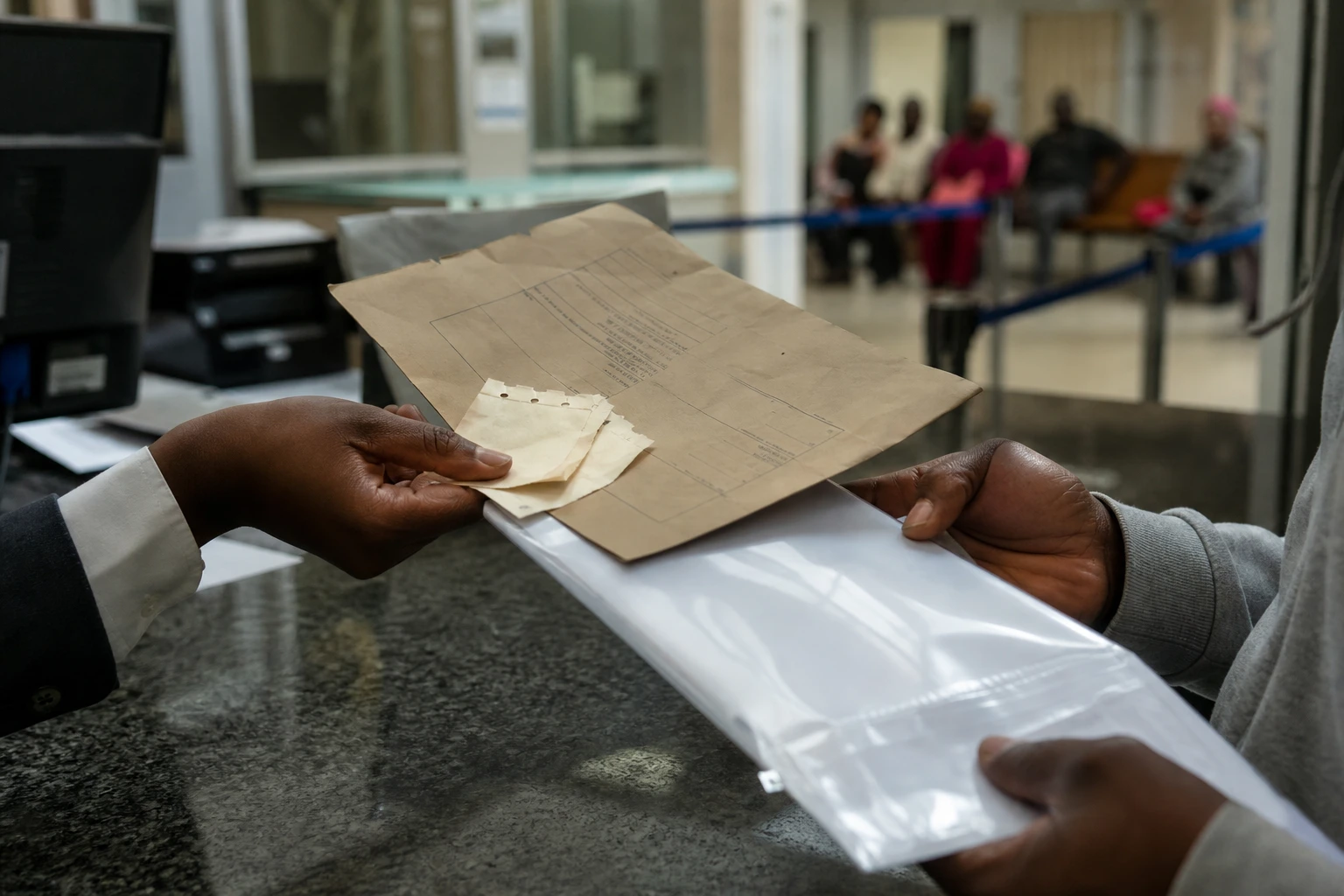
In Durban, social anger spills over into the migration debate
In KwaZulu-Natal’s economic capital, the streets have become a venue for political pressure. In Durban, groups mobilised around March and March have made irregular migration their frontline issue, setting a new deadline of 30 September for undocumented foreigners to leave. The threat is not merely symbolic. It comes amid a period in which protests, document checks and forced departures have already become part of public life.
The rising tensions come as the country seeks to reassert the authority of the state over a sensitive issue. In South Africa, the government has stressed that migration is managed exclusively by public institutions, not by vigilante groups or activists acting outside the law. Pretoria, the seat of executive power, has also warned that the right to protest does not extend to intimidation or violence.
A national issue with regional implications
The issue extends far beyond Durban. On 17 August 2026, the city hosted the 46th ordinary summit of the Southern African Development Community (SADC), a regional organisation that brings Southern African countries together around integration, security and development. The summit also received a briefing on migration governance in South Africa and called for coordinated regional dialogue to address the root causes of migration. In other words, borders, legal status and deportations have now become diplomatic issues for the region as well.
The local context also matters. Durban, a major port and commercial centre, is home to formal and informal economic networks where tensions over jobs, retail trade and access to public services can quickly come to a head. The government has already set up a priority court in Durban to hear immigration cases involving Malawian nationals, after confirming 1,876 cases of unlawful residence in the Sherwood Park area. The figure, cited by the authorities, shows that the debate is not based solely on slogans, but also on administrative action already under way.
What the facts say about 30 September
According to cross-checked information, March and March has already organised several demonstrations in 2026 and has presented itself as a movement calling for tougher measures against migrants in an irregular situation. In June, nationwide protests took place, at times under a heavy police presence. In several cities, demonstrators demanded that undocumented foreigners leave by a deadline of their own choosing. In Durban, some estimates put the 30 June turnout at tens of thousands, while other gatherings elsewhere were smaller.
On 9 September, the South African police said that security arrangements for the 30 June demonstrations had cost 306.2 million rand, including 251.8 million rand in overtime. The figure, disclosed in the public debate, gives an indication of the security and budgetary burden posed by such mobilisation. At the same time, authorities and human rights organisations have condemned the risk of escalation, following incidents of violence, theft and illegal document checks targeting foreign nationals.
On 8 September, the government condemned sporadic violence on Che Guevara Road in Durban, where tensions had flared between anti-immigration protesters and refugees living near the Department of Home Affairs offices. Pretoria reiterated that migration must be managed in an “orderly, humane and constitutionally compliant” manner. The wording matters. It shows that South Africa’s executive is seeking to avoid two pitfalls at once: administrative inaction and the normalisation of street pressure.
Why the mobilisation matters for the economy, politics and working-class neighbourhoods
Migration affects people’s everyday lives in very concrete ways. In Durban’s commercial districts, as in several cities across the country, small shops, informal trading, transport and some local services provide work for South Africans and nationals of other African countries. When anti-immigration rhetoric intensifies, the first effects are often felt in street trading, precarious rentals and queues outside government offices. The authorities themselves acknowledge that pressure on public services, illegal employment and trafficking networks are fuelling social anxiety.
But the security argument does not resolve everything. In June, the African Union, through its African Commission on Human and Peoples’ Rights, condemned threats of expulsion made by vigilante groups against nationals of other African states. The body stressed that everyone on South African territory is entitled to protection of their rights, regardless of nationality or migration status. The position carries considerable weight on a continent where population movements connect economies, families and labour markets.
The accounts of those directly affected also bring the human dimension of the issue into focus. Refugees in Durban have said they sometimes agreed to leave certain sites temporarily for safety reasons, after spending months on the streets. This points to an often-overlooked truth: when the state is slow to act, the streets fill the vacuum, bringing abuses, rumours and fear. In this context, the tension between border control and the protection of people is a test of institutional capacity for South Africa, and a signal for Southern Africa as a whole.
A test for South Africa, and for SADC
30 September is therefore set to be more than just a date for a demonstration. It will reveal the state of dialogue between the authorities, civic organisations, municipalities and migrant communities. If the protests remain under control, the government will be able to point to its legal enforcement strategy, involving the police, priority courts and the Department of Home Affairs. If, however, the streets take over again, the episode will rekindle diplomatic tensions with several neighbouring countries, which are already monitoring cases of intimidation and violence targeting their nationals.
The regional stakes are clear. Southern Africa is a space of intense movement, where SADC, economic integration and labour mobility make a purely national approach to migration impossible. Durban, which hosted the SADC summit in August, is also on the frontline of a debate about sovereignty, security and coexistence. What happens next will depend less on slogans than on the ability of South African institutions to enforce the law without turning migration into a political witch-hunt.