Algeria
 Egypt
 Libya
 Morocco
 Sudan
 Tunisia
 Benin
 Burkina Faso
 Cabo Verde
 Côte d'Ivoire
 Ghana
 Guinea
 Guinea-Bissau
 Liberia
 Mali
 Mauritania
 Niger
 Nigeria
 Senegal
 Sierra Leone
 The Gambia
 Togo
 Cameroon
 Central African Republic
 Chad
 DR Congo
 Equatorial Guinea
 Gabon
 Republic of the Congo
 São Tomé and Príncipe
 Burundi
 Comoros
 Djibouti
 Eritrea
 Ethiopia
 Kenya
 Madagascar
 Malawi
 Mauritius
 Mozambique
 Rwanda
 Seychelles
 Somalia
 South Sudan
 Tanzania
 Uganda
 Angola
 Botswana
 Eswatini
 Lesotho
 Namibia
 Zambia
 Zimbabwe
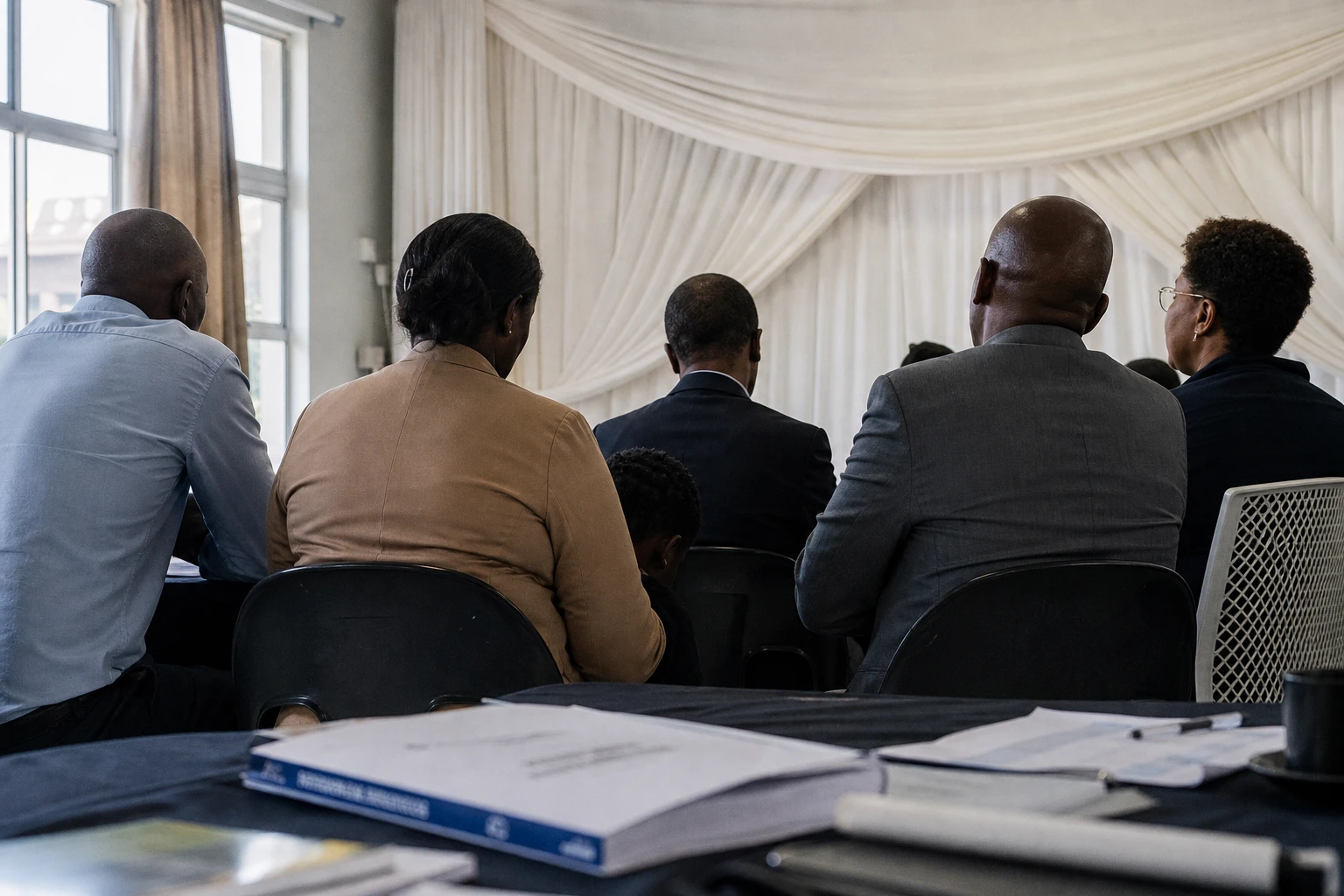
In Durban, the street became a false refuge
In South Africa, the cramped space of a pavement can quickly become a front line. In Durban, foreign families with legal status spent weeks sleeping outdoors under pressure from xenophobic violence and intimidation. The departure for Lindela, west of Johannesburg, was no simple administrative transfer. For many, it was a choice between remaining exposed or accepting a journey to a detention centre with a fearsome reputation.
The case is part of a broader pattern in southern Africa. Durban, the main port in KwaZulu-Natal province, has become a focal point for tensions over migration, unemployment and the presence of workers from other African countries. The South African government itself has acknowledged that conditions at several sites in the city had become untenable, while stressing that South Africa has no refugee camps in the conventional sense.
What the verified facts show
Those affected gathered near the Department of Home Affairs centre on Che Guevara Road in Durban after leaving neighbourhoods where they said they were under threat. The relevant authorities carried out checks, and the administration said that those transferred had valid documents. Officials then offered two options: reintegration into their communities of origin, or transfer to the Lindela Repatriation Centre in Krugersdorp, in Gauteng province.
Lindela is no ordinary site. South Africa’s Department of Home Affairs runs a holding centre there for people awaiting deportation under immigration legislation. Official departmental documents state that the centre is used for the administrative detention of people pending their removal, after the required procedures. The same sources also say the facility can accommodate a significant number of detainees, explaining why it is regularly used during waves of repatriation.
The transfer also has a very tangible physical dimension. The road journey between Durban and Krugersdorp is more than 500 kilometres and is around 600 kilometres, depending on the route. In other words, it involves crossing the country’s economic heartland to move from a local flashpoint to a national migration-control system. The journey says much about how Pretoria is managing the crisis: centralising the response rather than leaving municipalities to improvise lasting solutions.
Why the solution is so divisive
For refugees and asylum seekers, the dilemma is stark. Staying on the street means continuing to face attacks, humiliation and exhaustion. Going to Lindela means entering a system many see as an administrative prison, even though the state presents it as a centre for the lawful processing of migration cases. This contradiction explains the unease: a solution intended to offer protection can also be seen as a form of confinement.
The authorities, for their part, defend a public-order approach. The Inter-Ministerial Committee on Migration said it had visited the Durban sites and stressed that the aim was not to create camps, but to return people to what it considered a more controlled management framework. The eThekwini municipality also backed this approach, presenting a return to Lindela as one possible response. The South African Human Rights Commission, meanwhile, warned against violence and the normalisation of hatred directed at non-nationals.
Beyond the administrative language, the issue is also social. In South Africa, migration is often instrumentalised in public debate. Local officials have pointed to irregular immigration, while rights organisations stress that public anger cannot be used to excuse attacks on people living legally in the country. The tensions affect different groups in different ways: for foreign families, they threaten housing, work and children’s schooling; for municipal authorities, they become a matter of public space, security and crisis management; for informal traders, they further weaken an already precarious economy.
Testimonies gathered on the ground also reveal another reality: many of these people have lived in South Africa for years, sometimes since childhood. This complicates the simplistic narrative of the foreigner merely passing through. In several cases, these are families with deep local roots who remain vulnerable when collective fear turns into a hunt for neighbours. This is one of the most troubling blind spots in South Africa’s migration debate.
A signal for all of southern Africa
This case extends beyond Durban. It raises questions about the ability of South Africa, the continent’s largest industrial economy, to reconcile the right to asylum, migration control and social cohesion. It also concerns the Southern African Development Community, SADC, of which Pretoria is a central player. When tensions rise in KwaZulu-Natal, the effects are felt far beyond the province: neighbours from Malawi, Mozambique, the Democratic Republic of the Congo and Burundi follow these developments with concern, knowing that a local crisis can quickly become regional.
The precedent is familiar. In 2026, rising anti-migrant mobilisation has already led to mass departures, bus transfers and operations coordinated by local and national authorities. Humanitarian organisations and human rights institutions have emphasised a simple point: migration management is the state’s responsibility, but people’s protection cannot depend on the street. In Pretoria, then, the question is not merely how to clear a pavement. It is whether the country can still manage migration without letting fear dictate the law.
For now, Lindela remains the fallback destination offered to those who refuse to stay in Durban or can no longer do so. The choice reflects the fragility of South Africa’s balance: a constitutional democracy with rights affirmed on paper, but an uneven practical ability to protect, house and direct those caught between local hostility and administrative inertia. This is where, far beyond the case of Che Guevara Road, part of South Africa’s regional credibility is at stake.