Algeria
 Egypt
 Libya
 Morocco
 Sudan
 Tunisia
 Benin
 Burkina Faso
 Cabo Verde
 Côte d'Ivoire
 Ghana
 Guinea
 Guinea-Bissau
 Liberia
 Mali
 Mauritania
 Niger
 Nigeria
 Senegal
 Sierra Leone
 The Gambia
 Togo
 Cameroon
 Central African Republic
 Chad
 Equatorial Guinea
 Gabon
 Republic of the Congo
 São Tomé and Príncipe
 Burundi
 Comoros
 Djibouti
 Eritrea
 Ethiopia
 Kenya
 Madagascar
 Malawi
 Mauritius
 Mozambique
 Rwanda
 Seychelles
 Somalia
 South Sudan
 Tanzania
 Uganda
 Angola
 Botswana
 Eswatini
 Lesotho
 Namibia
 South Africa
 Zambia
 Zimbabwe
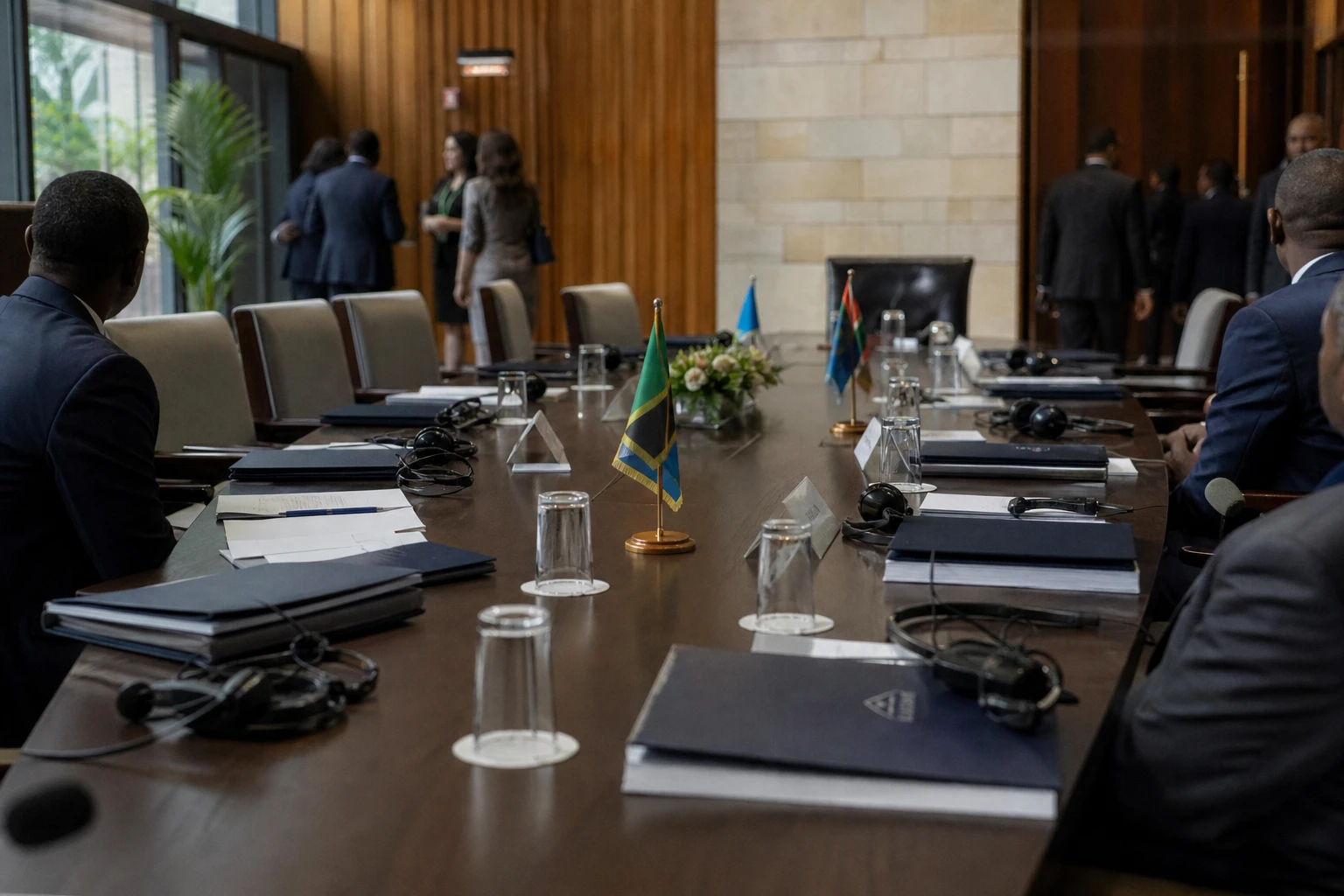
Kinshasa looks to New York without its head of state
In New York, the United Nations platform often serves as a megaphone for African priorities. This year, the Democratic Republic of the Congo again wanted its voice to be heard there. But the Congolese issue will feature in the general debate remotely, with a delegation led by Judith Suminwa, the Prime Minister, while Félix Tshisekedi remains in Kinshasa. The choice is significant: it reflects both the weight of health-related constraints and the diplomatic importance the DRC is seeking to retain on the multilateral stage.
The regional context is challenging. The DRC is now part of the East African Community, the EAC, of which it has been a full member since 11 July 2022, and the SADC, the Southern African Development Community. With these two affiliations, Kinshasa is playing on several fronts: security in the east, economic integration, the movement of people and health coordination. In Central Africa, the country therefore never speaks only for itself; its choices also affect its neighbours, trade corridors and border markets.
Congolese representation maintained, but on a reduced scale
The Congolese government officially confirmed on Sunday 20 September 2026 that the president would not attend the UN General Assembly. According to a statement released by the Prime Minister’s Office, the DRC will be represented in New York by Judith Suminwa and the foreign minister, Thérèse Kayikwamba Wagner. A government source quoted by the Congolese press said the head of government was due to take part in the high-level meetings from 22 to 26 September. The state apparatus will therefore retain a presence at the UN headquarters, but with a smaller delegation.
The absence comes as the 81st session of the United Nations General Assembly opened on 8 September 2026, with the high-level week bringing together world leaders from 22 September. In practice, a head of state’s presence in New York still carries weight in diplomatic corridors: it enables bilateral meetings, political announcements and swift decisions. For the DRC, which also sits on the Security Council in 2026-2027, the stakes go beyond the ceremony itself. The country wants to influence issues of peace, security and the reform of multilateralism.
The difference this year is the health constraint. The government has not provided a detailed explanation, but US restrictions linked to the ongoing Ebola outbreak shed light on the decision. The US State Department says people who have been in the DRC in the 21 days before their arrival may be prevented from boarding flights to the United States. The CDC, for its part, confirms temporary measures for health screening and the management of travellers from the DRC, Uganda and South Sudan.
Ebola reshapes the diplomatic agenda
The health situation is not theoretical. The Congolese health ministry is monitoring the 17th Ebola virus disease outbreak, with a situation report dated 16 September 2026 available on its website. In mid-June, the ministry had already said that Ituri remained the epicentre of the outbreak, which had spread to other eastern provinces. The response has since been stepped up: on 4 September, Kinshasa launched a revised 180-day multisectoral plan, with support from the WHO, the UN and Africa CDC.
Figures provided by the authorities and reported by the local press show that the outbreak is far from over. As of 10 September, a Congolese media outlet reported 7,022 confirmed cases and 3,398 deaths, a reported case fatality rate of 48.4%. The ministry has also reported areas under surveillance and phased response strategies, including targeted vaccination of exposed personnel in Ituri. In such circumstances, every international trip by a Congolese official becomes more complex: health protocols, host-country requirements and security imperatives all have to be taken into account.
The decision not to send the president to New York also says something about the balance between domestic urgency and international visibility. For Kinshasa, the immediate priority remains controlling the outbreak, protecting affected areas and ensuring government action continues. For the population, this means resources focused on public health, but also more difficult official travel and a diplomacy sometimes forced to delegate. For businesses, health restrictions add another layer of uncertainty around connections, overseas missions and exchanges with US and UN partners.
A development to watch beyond the New York episode
The issue extends beyond the General Assembly alone. In Africa, health crises often have immediate political effects: they disrupt agendas, slow mobility and test institutions’ ability to coordinate their responses. In the Congolese case, the episode also involves the African Union, the EAC, the SADC and the United Nations, at a time when the DRC is seeking to make its views heard on security in the east and the governance of natural resources. Health diplomacy is thus becoming a foreign policy issue in its own right.
Finally, the missed trip should be seen as a revealing moment. The DRC is not absent from New York; it will be represented there. But the president’s absence is a reminder that a country engaged on several fronts at once sometimes has to choose between diplomatic prestige and crisis management. For now, Judith Suminwa will carry the Congolese voice at the podium and in UN corridors. Her message will be closely watched, because it will say as much about the DRC’s ability to uphold its standing as it will about how the country is confronting a health emergency at home that is reshaping its diplomacy.