Algeria
 Egypt
 Libya
 Morocco
 Sudan
 Tunisia
 Benin
 Burkina Faso
 Cabo Verde
 Côte d'Ivoire
 Ghana
 Guinea
 Guinea-Bissau
 Liberia
 Mali
 Mauritania
 Niger
 Nigeria
 Senegal
 Sierra Leone
 The Gambia
 Togo
 Cameroon
 Central African Republic
 Chad
 Equatorial Guinea
 Gabon
 Republic of the Congo
 São Tomé and Príncipe
 Burundi
 Comoros
 Djibouti
 Eritrea
 Ethiopia
 Kenya
 Madagascar
 Malawi
 Mauritius
 Mozambique
 Rwanda
 Seychelles
 Somalia
 South Sudan
 Tanzania
 Uganda
 Angola
 Botswana
 Eswatini
 Lesotho
 Namibia
 South Africa
 Zambia
 Zimbabwe
A legal battle that goes beyond the Kinshasa-Kigali face-off
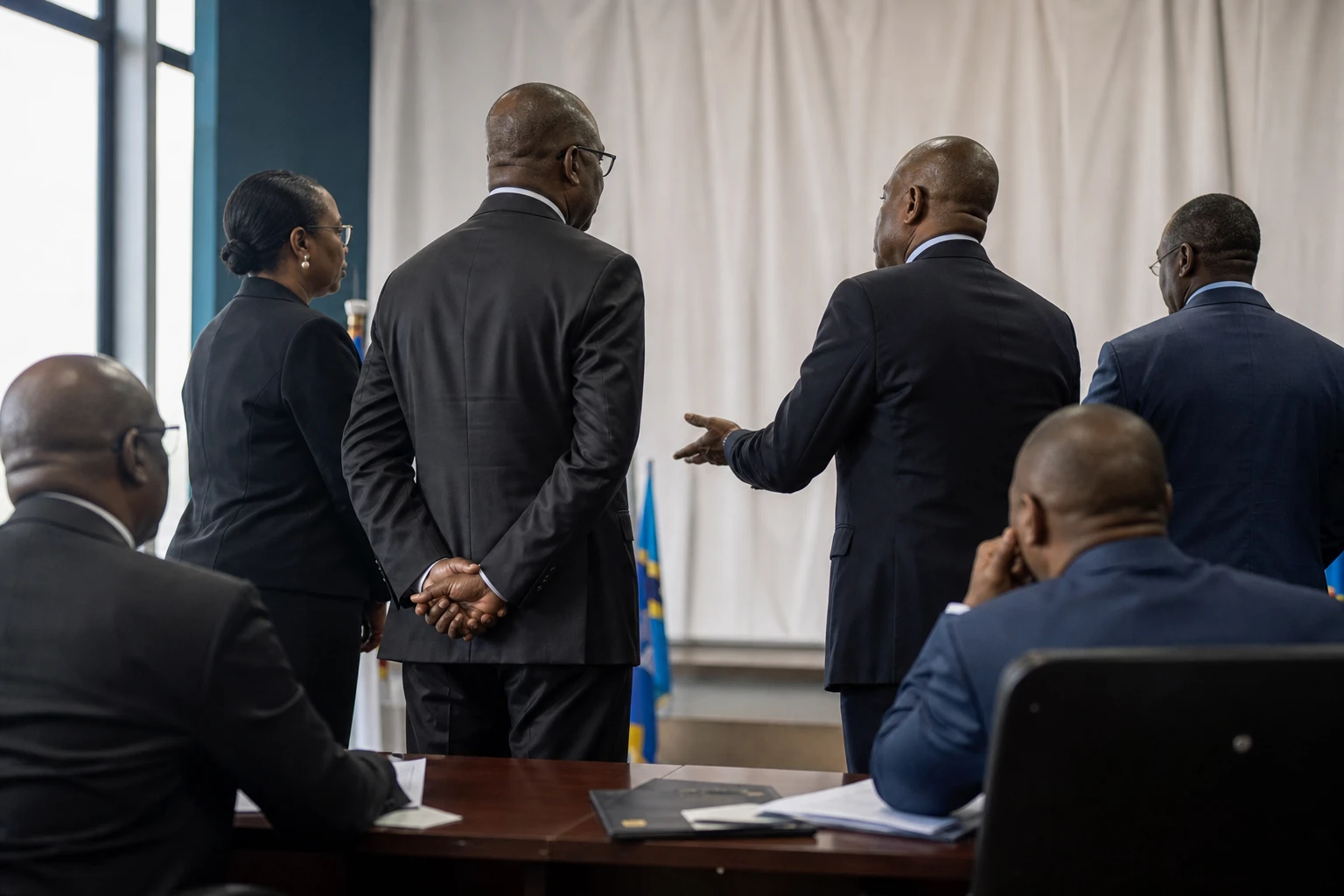
In The Hague, a judicial timetable may seem a long way off. Yet it weighs on daily life in the east of the Democratic Republic of the Congo, where forced displacement, violence and a war economy continue to shape local people’s lives. By reviving legal proceedings before the International Court of Justice, Kinshasa has chosen to shift the conflict to another arena: law, responsibility and reparations.
This case is part of a broader political geography. DR Congo lies at the heart of the Great Lakes region, on the borders of several spheres of influence, between the East African Community, SADC and UN security mechanisms. For years, the country’s east has remained a regional flashpoint, where diplomacy, military operations and peace negotiations often proceed in parallel without entirely cancelling one another out.
What the Court has set, and what it means
The International Court of Justice has placed the case on a written-procedure timetable. According to information published in The Hague, the Democratic Republic of the Congo must file its memorial by 4 October 2027 at the latest. Rwanda will then have just over a year to respond, with a deadline set for 4 December 2028. Oral arguments are therefore not expected until 2029, unless an extension is requested.
This step says nothing yet about the merits of the case. It merely confirms that proceedings are under way. In cases of this kind, the judicial process is often a lengthy one. It gives both states time to submit their arguments, evidence and counterarguments before any public hearing on the merits.
Kinshasa’s application concerns several international instruments: the Genocide Convention, the Convention on the Elimination of All Forms of Racial Discrimination, the Convention on the Elimination of All Forms of Discrimination against Women and the Convention against Torture. In short, DR Congo accuses Rwanda of incurring international responsibility on several counts, ranging from massacres to sexual violence, discrimination and inhuman treatment.
A longstanding case reopened in a new context
This is not the first time DR Congo has tried to bring Rwanda before the ICJ. An earlier case was withdrawn, and another was dismissed for lack of jurisdiction in 2006. The new move in 2026 is therefore part of a long judicial history, but also comes at a different political moment. Congolese leaders say they are targeting an extended period, from 1996 to the present, in order to cover several waves of violence in the country’s east.
The security situation remains highly sensitive. The United Nations has again described the crisis in eastern DR Congo as one of the continent’s most complex and protracted. The conflict pits Congolese forces against a mosaic of armed groups, with the M23 among the most prominent actors. In New York and Kinshasa alike, several reports and statements have fuelled the view that local rebellions, external support and regional rivalries are intertwined.
Diplomacy has not disappeared. On 27 June 2025, a peace agreement was signed in Washington between Kinshasa and Kigali, with the United States acting as mediator. Then, in 2026, the issue remained active at the UN Security Council, showing that military tensions and the diplomatic agenda continue to coexist. For DR Congo, taking the case to the ICJ does not replace these processes: it complements them by adding a legal lever.
The practical stakes for Congolese people and regional stability
For people in eastern DR Congo, the stakes go beyond the rhetoric of foreign ministries. They concern village security, movement along roads, the reopening of markets, the return of displaced people and the credibility of the state. In a region where the informal economy dominates, every military or diplomatic advance has an immediate effect on prices, stocks, rents and families’ movements.
For Kinshasa, the case is also a test of strategy. It shows that the authorities want to engage on all fronts at once: military, diplomatic, regional and judicial. If proceedings go all the way, DR Congo could seek official apologies, the prosecution of those responsible and reparations. But the road is long, and the outcome will depend first on the Court’s decision on jurisdiction, and then on the legal case each side is able to make.
For Kigali, the case opens another arena of confrontation. Rwanda has long rejected accusations that it supports armed groups in eastern DR Congo and invokes its national security. Before the ICJ, it will no longer be a matter simply of rejecting a political account of events, but of responding to a precise, documented legal case spanning several years.
A Congolese case with African implications
Beyond the face-off between two capitals, the case raises questions about how Central Africa handles cross-border crises. It poses a simple question: when bilateral diplomacy is no longer enough, what role can international courts play in constraining the use of force, protecting civilians and clarifying responsibility?
The answer will take time. In the meantime, this case will remain an important marker for the Great Lakes region, as well as for the African Union and regional organisations seeking to stabilise a strategically important area, rich in resources and exposed to persistent rivalries. The next milestones will be mainly procedural: the filing of written pleadings, exchanges of memorials, and then possible hearings in 2029. It is within this slow-moving process that, in part, the credibility of international law in the face of contemporary African conflicts will be tested.