Algeria
 Egypt
 Libya
 Morocco
 Sudan
 Tunisia
 Benin
 Burkina Faso
 Cabo Verde
 Côte d'Ivoire
 Ghana
 Guinea
 Guinea-Bissau
 Liberia
 Mali
 Mauritania
 Niger
 Nigeria
 Senegal
 Sierra Leone
 The Gambia
 Togo
 Cameroon
 Central African Republic
 Chad
 Equatorial Guinea
 Gabon
 Republic of the Congo
 São Tomé and Príncipe
 Burundi
 Comoros
 Djibouti
 Eritrea
 Ethiopia
 Kenya
 Madagascar
 Malawi
 Mauritius
 Mozambique
 Rwanda
 Seychelles
 Somalia
 South Sudan
 Tanzania
 Uganda
 Angola
 Botswana
 Eswatini
 Lesotho
 Namibia
 South Africa
 Zambia
 Zimbabwe
In Kinshasa, peace is negotiated, not decreed
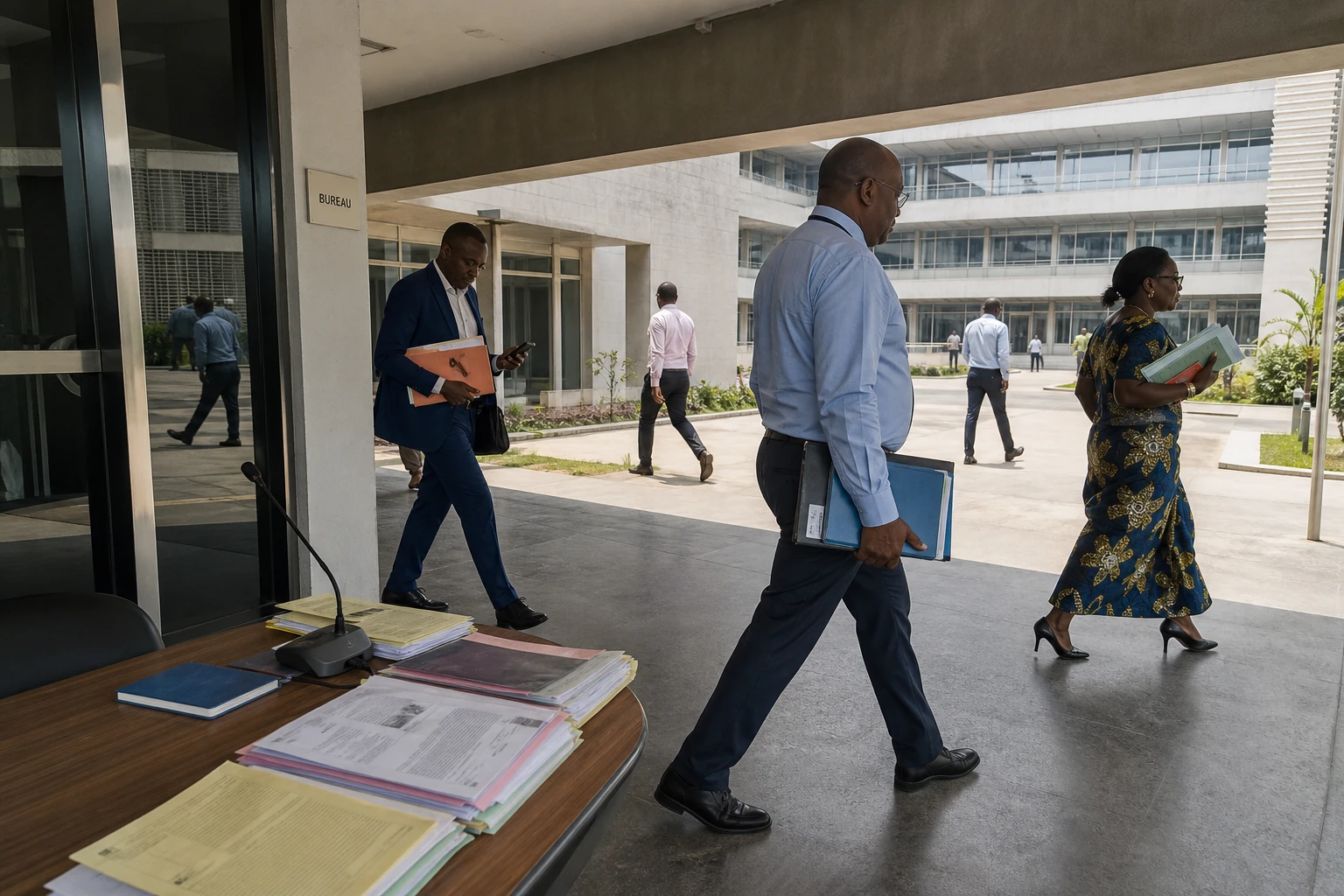
In the Democratic Republic of the Congo, the question is no longer simply whether to hold talks. It is more concrete: who should sit down, with what guarantees, and to achieve what measurable result on the ground. In a country marked by war in the east, political distrust weighs as heavily as weapons on Congolese people’s daily lives.
President Félix-Antoine Tshisekedi Tshilombo has announced the launch of a National Dialogue for Peace, Cohesion and the Refoundation of the State. The format will begin in the 26 provinces before a national conference in Kinshasa, with the aim of producing a National Pact and an implementation strategy. This territorial approach is intended to give the process a broader base than the usual circles of central government.
But in DR Congo, the idea of national dialogue immediately touches on a longstanding fault line: the balance between political reconciliation, institutional legitimacy and the response to the security crisis in the east. Past Congolese experience has shown that dialogue can provide political breathing space, but it can also lose its way if it is not seen as neutral and inclusive, and as capable of producing more than a stopgap compromise.
A vast country, a fragmented crisis, parallel mediation efforts
DR Congo is not operating in a vacuum. The country remains caught up in a web of overlapping peace processes: Doha, African mediation, regional consultations and talks with religious denominations. The African Union has recently approved a harmonised six-month roadmap for the peace process in eastern Congo, while the United Nations has highlighted the continuing deterioration of the situation in the eastern provinces.
At the same time, the UN Security Council continues to flag the actions of AFC/M23, a politico-military movement linked to M23, and the fragility of successive ceasefires. In recent reports, UN experts have described significant territorial gains in the east, the consolidation of parallel administrations and the heavy toll on civilians.
Another factor is the SADC, the Southern African Development Community, which is closely monitoring the region’s stabilisation, while the EAC and the African Union remain engaged in seeking a political way out of the Great Lakes crisis. In other words, the Congolese dialogue will not be solely a domestic gathering. It is part of an already active regional framework, which is sometimes coordinated and sometimes fragmented.
What the proposed format really changes
The heart of the debate is inclusion. The presidency wants an open national dialogue, structured around the provinces, political parties, civil society, traditional authorities, religious denominations, and academic and professional circles. The approach is intended to address a recurring criticism of major Congolese conferences: too much Kinshasa, not enough of the country as it really is.
But the opposition, or some of it, fears that the framework has already been locked down. Reactions reported by the Congolese press indicate that a section of the opposition rejects the proposed format and is calling for stronger guarantees on the process’s neutrality. For these actors, dialogue can have political value only if it escapes the logic of endorsing a line already decided at the top of the state.
The question of AFC/M23 makes the equation more complicated still. The movement remains excluded from the political dialogue announced in Kinshasa, even as the war in North Kivu and South Kivu remains the main knot in the national crisis. This exclusion may be read as a red line on sovereignty. But if it is not matched by a credible peace strategy, it could also limit the reach of an agreement intended to address the conflict’s root causes. This is a reasonable inference from the positions publicly expressed by the Congolese authorities, the UN and the AU.
For the population, the stakes are very real. In the east, security determines travel, farming, markets, schooling and access to healthcare. In Kinshasa, the debate is institutional. In the eastern provinces, it is vital. That is where the process’s real credibility will be tested.
Implications beyond DR Congo
The dialogue sought by Félix Tshisekedi resonates beyond Congo’s borders because the crisis in the east has already become regionalised. Monitoring mechanisms involve African actors, African Union mediators and subregional cooperation frameworks. The message is therefore twofold: Kinshasa wants to regain control of its political narrative while remaining anchored in wider diplomatic dynamics.
The continental implications are clear. If the dialogue leads to a minimum agreement on trust, it could become a test of approach for other African crises in which security, representation and sovereignty are intertwined. If it fails, it will instead reinforce the idea that dialogue launched without shared guarantees is not enough to repair a state damaged by war, political rivalries and territorial fragmentation.
What happens next will depend less on announcements than on the timetable, the rules for participation and the process’s ability to produce commitments that can be monitored. In DR Congo, peace is not a formula. It is a political, security and institutional sequence that must endure.