Algeria
 Egypt
 Libya
 Morocco
 Sudan
 Tunisia
 Benin
 Burkina Faso
 Cabo Verde
 Côte d'Ivoire
 Ghana
 Guinea
 Guinea-Bissau
 Liberia
 Mali
 Mauritania
 Niger
 Nigeria
 Senegal
 Sierra Leone
 The Gambia
 Togo
 Cameroon
 Central African Republic
 Chad
 Equatorial Guinea
 Gabon
 Republic of the Congo
 São Tomé and Príncipe
 Burundi
 Comoros
 Djibouti
 Eritrea
 Ethiopia
 Kenya
 Madagascar
 Malawi
 Mauritius
 Mozambique
 Rwanda
 Seychelles
 Somalia
 South Sudan
 Tanzania
 Uganda
 Angola
 Botswana
 Eswatini
 Lesotho
 Namibia
 South Africa
 Zambia
 Zimbabwe
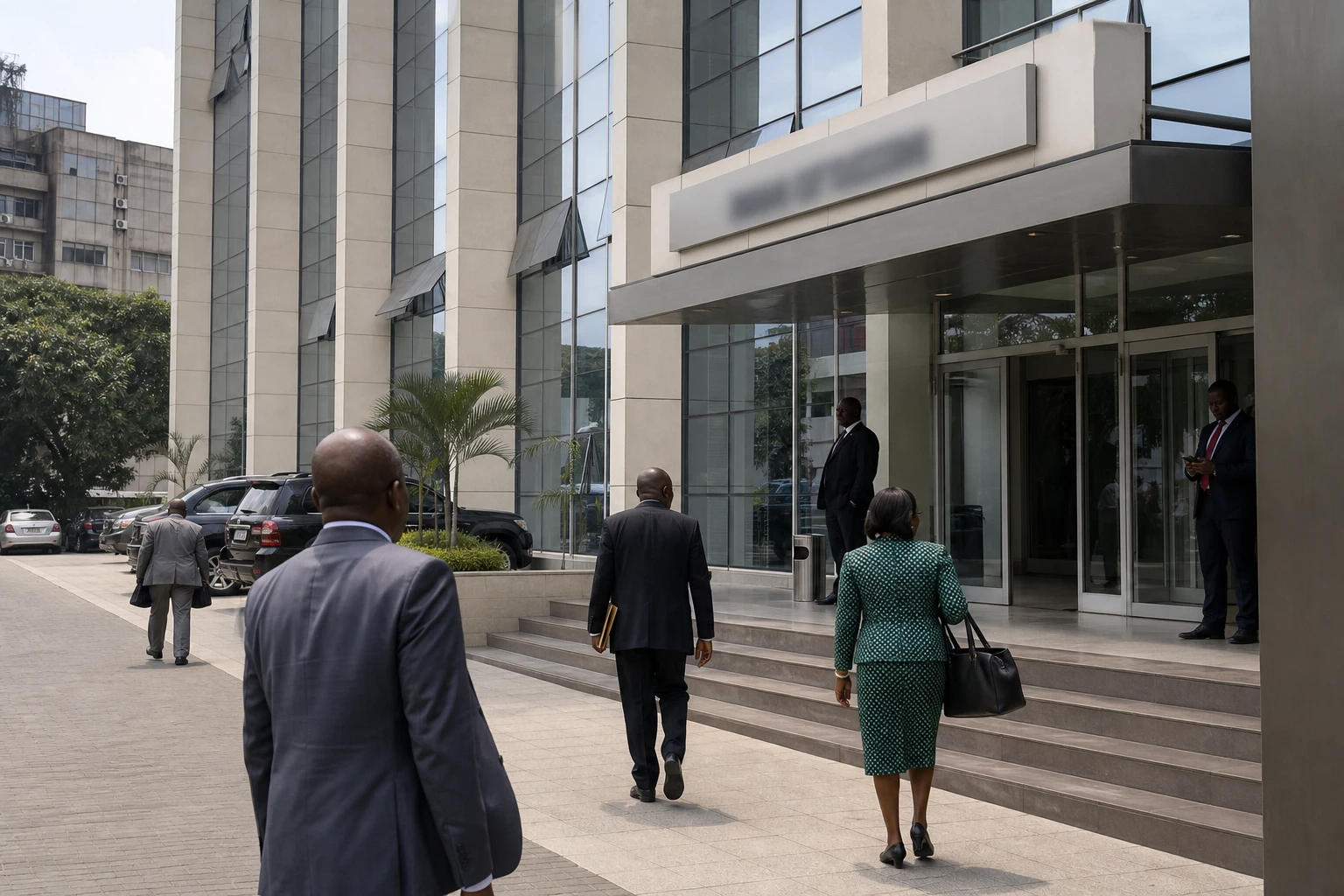
In Jerusalem, Kinshasa was not merely seeking support. The DR Congo above all wanted to show that it intends to choose its security and development partners more methodically, in a Great Lakes region where every alliance affects the diplomatic balance. For a country at war in its east, the stakes are not symbolic: they concern protecting its territory, the credibility of the state and its ability to turn promises of cooperation into visible results.
This visit is part of a broader trajectory. The DR Congo remains engaged in the regional and continental frameworks addressing the Great Lakes crisis, notably the Washington process between Kinshasa and Kigali, the Doha framework for internal Congolese dialogue, and the African Union’s monitoring. At the same time, the SADC, which has a military and diplomatic presence in eastern DR Congo through SAMIDRC, is a reminder that the country’s security is not decided only in Kinshasa or Jerusalem, but also in Pretoria, Addis Ababa, Washington and Doha.
A visit designed as a political signal
President Félix Tshisekedi began his working visit to Israel on 31 August 2026, at the invitation of Isaac Herzog, before holding talks in Jerusalem on 1 September with the Israeli president and then Prime Minister Benjamin Netanyahu. According to the Congolese presidency, discussions covered security, defence, agriculture, infrastructure, energy, water, health, technology and innovation. The Israeli presidency confirmed the 1 September meeting at the head of state’s residence in Jerusalem.
This was not a first contact. Kinshasa says the visit builds on a relationship already strengthened by Isaac Herzog’s trip to Kinshasa in November 2025 and subsequent discussions on the sidelines of the Davos Forum. The Congolese head of state also referred, according to the presidency, to the follow-through on memorandums signed on 27 July 2026 and to the idea of attracting Israeli investment, particularly as part of the Lobito Corridor, a regional logistics route linking the Atlantic to the continent’s inland mining and industrial areas.
Security, agriculture and technology: the most tangible promises
Kinshasa’s message is clear: the DR Congo wants projects, not just declarations. Israel brings recognised expertise in security, water management, agricultural technology and some digital solutions. For the Congolese side, these areas address very practical urgent needs. In a vast country where disparities between the capital and the provinces remain stark, infrastructure, energy and agriculture have a direct effect on prices, transport, harvests and both formal and informal employment.
Security remains the most sensitive issue, however. The Congolese presidency says the discussions covered the protection of institutions, defence and the situation in the east of the country, where the Congolese army, armed groups and cross-border dynamics continue to shape daily life. President Tshisekedi also reaffirmed the DR Congo’s commitment to its sovereignty and territorial integrity. In diplomatic terms, this means Kinshasa wants to retain control of its military choices while seeking outside technical support.
This approach is not neutral. It is part of a strategy to diversify partners, at a time when the DR Congo still depends heavily on several external channels for training, equipment and operational support. But it also raises a question of method: how can security cooperation be prevented from being confined to protecting the central government, at the expense of broader reform of the forces, the logistics chain and parliamentary oversight? In Kinshasa and in the eastern provinces, people are less concerned with announcements than with the practical safety of civilians.
Useful diplomacy, but under constraints
The Jerusalem visit also has regional diplomatic significance. Israel supports implementation of the Washington agreement between the DR Congo and Rwanda, signed in 2025 under US auspices and welcomed by the African Union and several international partners. For Kinshasa, this opens another channel on an issue where mediation efforts overlap: Washington for relations with Kigali, Doha for dialogue with the AFC/M23, and the African Union for the broader political framework.
The issue is all the more delicate because Israel also maintains military cooperation ties with Rwanda. Rwandan media reported in March 2026 on discussions between Rwanda’s Ministry of Defence and the Israeli embassy in Kigali about strengthening existing cooperation. This reality does not negate the rapprochement with Kinshasa, but it is a reminder that Jerusalem is pursuing a balancing act, seeking to preserve several partnerships at once.
The challenge for the DR Congo is therefore twofold. On the one hand, it must secure rapid benefits in food security, water, energy and training. On the other, it must ensure that cooperation with Israel also serves a diplomacy of sovereignty in the Great Lakes, without replacing African mechanisms or commitments already made with Kigali. That is the continental significance of the visit: it shows that an African state can use multiple levers, but will always have to contend with competing regional agendas, security interests and the expectations of a population that now judges diplomacy by its tangible effects.