
 Algeria
 Egypt
 Libya
 Morocco
 Sudan
 Tunisia
 Benin
 Burkina Faso
 Cabo Verde
 Côte d'Ivoire
 Ghana
 Guinea
 Guinea-Bissau
 Liberia
 Mali
 Mauritania
 Niger
 Nigeria
 Senegal
 Sierra Leone
 The Gambia
 Togo
 Cameroon
 Central African Republic
 Chad
 Equatorial Guinea
 Gabon
 Republic of the Congo
 São Tomé and Príncipe
 Burundi
 Comoros
 Djibouti
 Eritrea
 Ethiopia
 Kenya
 Madagascar
 Malawi
 Mauritius
 Mozambique
 Rwanda
 Seychelles
 Somalia
 South Sudan
 Tanzania
 Uganda
 Angola
 Botswana
 Eswatini
 Lesotho
 Namibia
 South Africa
 Zambia
 Zimbabwe
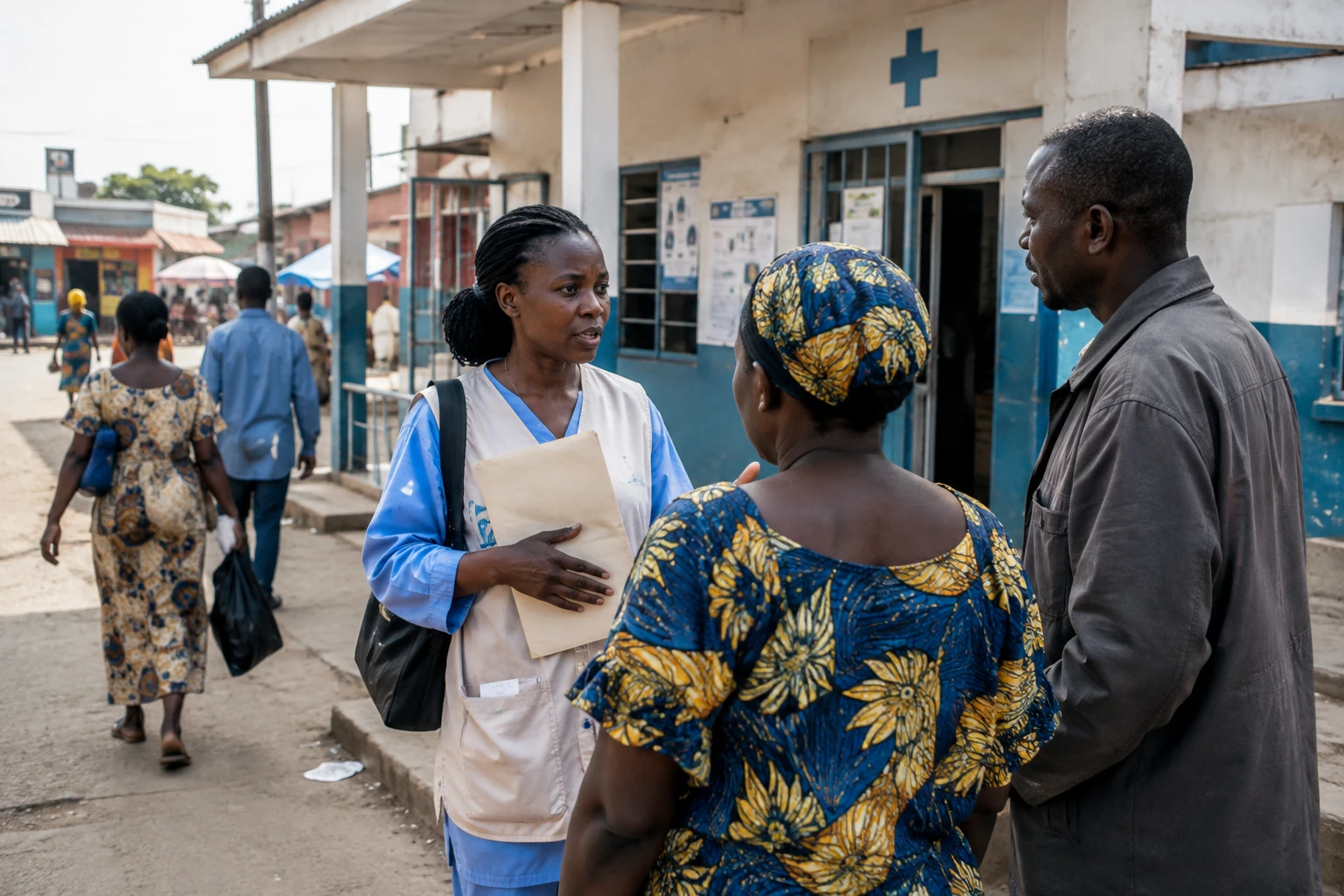
In Ituri, every journey by a medical team can depend on whether a road is accessible or how the fighting is unfolding. This reality is now weighing on an Ebola outbreak that has crossed an unprecedented threshold for the Democratic Republic of the Congo: as of 9 November 2026, available data showed 11,042 confirmed cases and 5,387 deaths.
A health emergency rooted in the east of the country
The current outbreak is the 17th Ebola epidemic recorded in the DRC since the virus was discovered in 1976. It was declared in May 2026, after laboratory confirmation of the Bundibugyo strain. The World Health Organization later classified the event as a public health emergency of international concern, notably because of the risk of it spreading across borders.
Ituri, a north-eastern province, accounts for the largest share of cumulative cases. But the virus is not confined to the province: several provinces are affected, including North Kivu. This spread is forcing the authorities to organise surveillance, testing and care across territories far from one another, while infrastructure and available resources vary widely.
The DRC belongs to the East African Community (EAC), a regional bloc that facilitates coordination between neighbouring states. The movement of people and cross-border trade make this cooperation important: rapidly identifying cases, sharing health information and preparing healthcare facilities matter as much as measures taken in the worst-affected areas.
High figures, but they must be read with their date
The total of 11,042 confirmed cases and 5,387 deaths was reported for 9 November. These are cumulative figures, not the number of new infections in a single day. A tracker compiling epidemiological bulletins from the National Institute of Public Health (INSP) also indicates nearly 3,000 recoveries. These figures describe a changing situation: they should always be accompanied by their reference date.
The case fatality rate calculated from these totals is close to 49%. It does not predict the outcome for each person who falls ill. It nevertheless underlines the severity of this outbreak and the importance of rapid diagnosis, appropriate care and protecting those exposed. Ebola is transmitted through direct contact with the blood or other bodily fluids of an infected person, or with contaminated objects.
The Bundibugyo strain poses a particular challenge. As of the date of the reported information, no vaccine or specific treatment had been approved for this strain. The Ervebo vaccine, used during outbreaks caused by the Zaire strain, therefore cannot be presented as established protection against Bundibugyo. Research into potential vaccine options requires trials and scientific evaluation.
Security determines access to healthcare
In eastern Congo, armed violence is complicating the response. Recent reports describe fighting in parts of Ituri and North Kivu, two provinces where teams must continue surveillance and refer people who are ill. Attacks and population displacement can disrupt health activities or make some areas inaccessible.
A health centre in Lolwa, in Ituri, was set on fire, while violence near Fataki temporarily hampered humanitarian operations, according to information reported in connection with this outbreak. These incidents have very tangible consequences: patients may delay travelling to a care centre, contacts of a confirmed case may be harder to trace, and teams sometimes lose access to communities they need to monitor.
The impact is not the same for everyone. People in remote rural areas depend more heavily on the availability of teams and transport. In urban centres, population density and regular movement also make prevention more difficult. For healthcare workers, physical safety is an additional concern alongside the risk of exposure to the virus. For families, the challenge is to obtain understandable information and prompt care in a context where fear and rumours can deter people from using health services.
A response that also depends on the region
This crisis recalls the 2018-2020 outbreak in eastern DRC, which killed more than 2,200 people, according to widely reported figures. Insecurity hampered public health activities then, too. The comparison highlights a persistent challenge: having medical tools is not enough if teams cannot reach the people concerned or maintain a relationship of trust with communities.
The response therefore depends on the capacities of Congolese institutions, the protection of health workers and cooperation with neighbouring countries. The WHO is monitoring developments across the region, and health authorities must share alerts and coordinate surveillance at borders. This vigilance does not mean that every journey poses a risk, but that early detection remains essential when populations move between provinces and countries.
The next step is to determine whether the number of new cases is slowing sustainably, whether teams can access affected areas and whether care capacity is keeping pace with the outbreak. The cumulative figures show the scale of the crisis. But recent trends, continuity of care and security on the ground will determine whether transmission is genuinely receding.
The figures can be consulted in the Ebola outbreak tracker in the DRC, compiled from situation reports. The INSP publishes its health situation bulletins, while the WHO documents the outbreak linked to the Bundibugyo virus in the DRC.



