Algeria
 Egypt
 Libya
 Morocco
 Sudan
 Tunisia
 Benin
 Burkina Faso
 Cabo Verde
 Côte d'Ivoire
 Ghana
 Guinea
 Guinea-Bissau
 Liberia
 Mali
 Mauritania
 Niger
 Nigeria
 Senegal
 Sierra Leone
 The Gambia
 Togo
 Cameroon
 Central African Republic
 Chad
 Equatorial Guinea
 Gabon
 Republic of the Congo
 São Tomé and Príncipe
 Burundi
 Comoros
 Djibouti
 Eritrea
 Ethiopia
 Kenya
 Madagascar
 Malawi
 Mauritius
 Mozambique
 Rwanda
 Seychelles
 Somalia
 South Sudan
 Tanzania
 Uganda
 Angola
 Botswana
 Eswatini
 Lesotho
 Namibia
 South Africa
 Zambia
 Zimbabwe
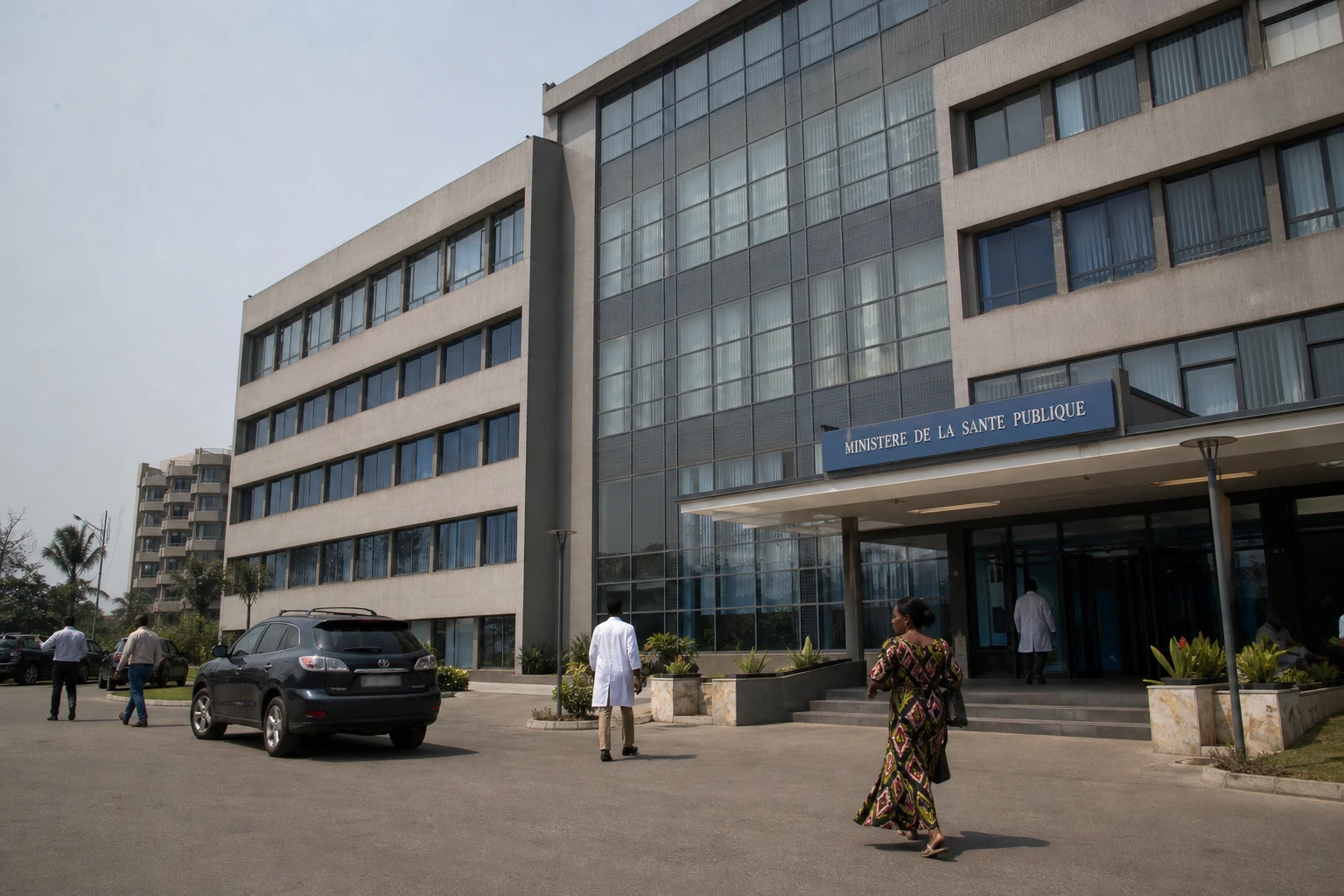
In Kinshasa and the affected provinces, the challenge is not simply the amount announced in New York. For Congolese teams, every funding commitment must quickly translate into beds, laboratories, medicines and surveillance capable of tracking population movements.
On 23 September 2026, a meeting on the Ebola response held on the sidelines of the 81st United Nations General Assembly secured about $2.6 billion in pledges, according to Jean Kaseya, director-general of the Africa Centres for Disease Control and Prevention, Africa CDC. The announcement comes as the Democratic Republic of the Congo faces its 17th Ebola outbreak since the virus was identified in 1976.
An outbreak linked to a different virus
The current outbreak is caused by the Bundibugyo virus. It belongs to the same family as the Ebola virus, but it is not the same strain targeted by the main vaccines used in previous outbreaks.
The World Health Organization says no vaccine or specific licensed treatment is currently available for Bundibugyo virus disease. Care therefore relies on supportive treatment, early detection, isolation, infection prevention, contact tracing and safe burials.
The WHO classified the situation as a public health emergency of international concern on 15 May 2026. The decision highlights the risk of regional spread, particularly along routes between eastern Democratic Republic of the Congo and western Uganda.
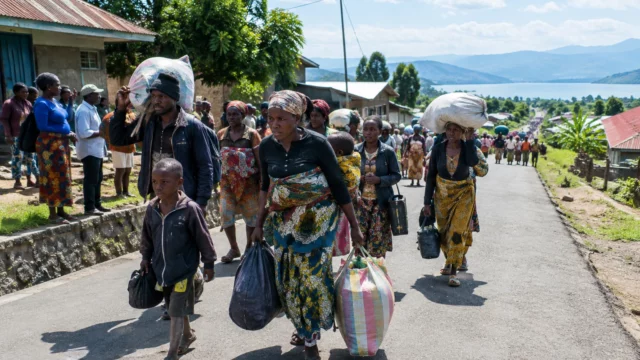
The response is taking place in a challenging environment. Ituri and North Kivu experience high mobility linked to trade, mining and population displacement. Insecurity, internal displacement and irregular access to health services complicate contact tracing and the deployment of teams.
Washington and Tokyo detail their contributions
The United States announced an additional $267 million in aid on 23 September. According to the US State Department, the new funding brings direct health and humanitarian assistance provided by Washington since the start of the outbreak to $887 million.
The funds are intended to support the opening of new treatment units, the deployment of teams responsible for safe and dignified burials, the purchase of personal protective equipment, epidemiological surveillance and the tracing of people exposed to the virus.
US authorities say they have already helped fund the operation of 23 specialised Ebola treatment centres and 235 health facilities in affected areas. These figures illustrate the scale of logistical support, but on their own do not show how fully needs are being met in each province.
Japan has also announced an emergency grant of $5 million. According to the Japanese Ministry of Foreign Affairs, the contribution is intended to strengthen epidemic prevention as well as water, sanitation and hygiene services.
Implementation is planned with the International Organization for Migration, Unicef and the World Food Programme. This assistance supplements a $3.5 million contribution announced by Japan in June for the Democratic Republic of the Congo and Uganda.
Figures are changing rapidly
Tallies change as testing, surveillance and data reporting from hard-to-reach areas progress. As of 7 September 2026, the WHO had recorded 6,757 confirmed cases and 3,267 deaths in the Democratic Republic of the Congo. The crude case fatality rate then stood at 48.3%.
These figures therefore do not match the tally of 7,773 cases and 3,759 deaths cited in the initial material, which appears to come from an earlier epidemiological situation or a different counting scope. To avoid confusion, the figures used here are those published by the WHO on 10 September 2026.
Ituri remains the hardest-hit province. It had recorded 5,406 confirmed cases as of 7 September, accounting for most of the infections reported in the country. North Kivu followed with 1,066 confirmed cases.
The WHO nevertheless reported different trends across areas. As of 7 September, 61 health zones across six provinces had reported cases. Fifty-one of them had recorded an infection in the previous 21 days.
Contact tracing illustrates the pressure on the response system. More than 24,000 people required monitoring as of 7 September. Of these, 21,359 had been seen in the previous 24 hours, representing 85.3% of the contacts due for monitoring that day.
Funding cannot replace local trust
In rural areas, the effectiveness of the response depends as much on the availability of equipment as on the relationship between health teams and communities. Contact tracing, acceptance of care and safe burials require clear explanations and the involvement of local intermediaries.
Displaced people face particular difficulties. They may move several times, lose their health records or avoid official facilities for fear of family separation. Mine workers, traders and cross-border travellers also have distinct mobility patterns.
In urban centres, the main challenge is to maintain early detection and prevent transmission in health facilities. In isolated areas, the urgent priorities are transporting samples, access to care and the regular presence of trained staff.
The WHO says insecurity, population displacement, a lack of water and sanitation, and the overcrowding of some services are slowing operations. These factors can delay diagnosis and increase the risk of transmission in households and healthcare facilities.
A test for African health co-operation
The mobilisation announced in New York places Africa CDC at the centre of a response that cannot rely solely on external donors. Congolese authorities, African teams and communities remain the response’s permanent actors.
The regional dimension is also crucial. The Democratic Republic of the Congo shares significant human and commercial flows with Uganda. The WHO therefore recommends strengthening surveillance at official border crossings while also accounting for informal routes that evade conventional checks.
The next indicator to watch will be the ability to turn financial pledges into visible operations on the ground. This will mean tracking the actual opening of treatment units, the availability of supplies, contact tracing and changes in case numbers in North Kivu and Ituri.
This outbreak is also a reminder of a strategic reality for the continent: preparedness cannot be measured only during a crisis. It depends on laboratories, staff, supply chains and health systems capable of functioning before, during and after an outbreak.