Algeria
 Egypt
 Libya
 Morocco
 Sudan
 Tunisia
 Benin
 Burkina Faso
 Cabo Verde
 Côte d'Ivoire
 Ghana
 Guinea
 Guinea-Bissau
 Liberia
 Mali
 Mauritania
 Niger
 Nigeria
 Senegal
 Sierra Leone
 The Gambia
 Togo
 Cameroon
 Central African Republic
 Chad
 Equatorial Guinea
 Gabon
 Republic of the Congo
 São Tomé and Príncipe
 Burundi
 Comoros
 Djibouti
 Eritrea
 Ethiopia
 Kenya
 Madagascar
 Malawi
 Mauritius
 Mozambique
 Rwanda
 Seychelles
 Somalia
 South Sudan
 Tanzania
 Uganda
 Angola
 Botswana
 Eswatini
 Lesotho
 Namibia
 South Africa
 Zambia
 Zimbabwe
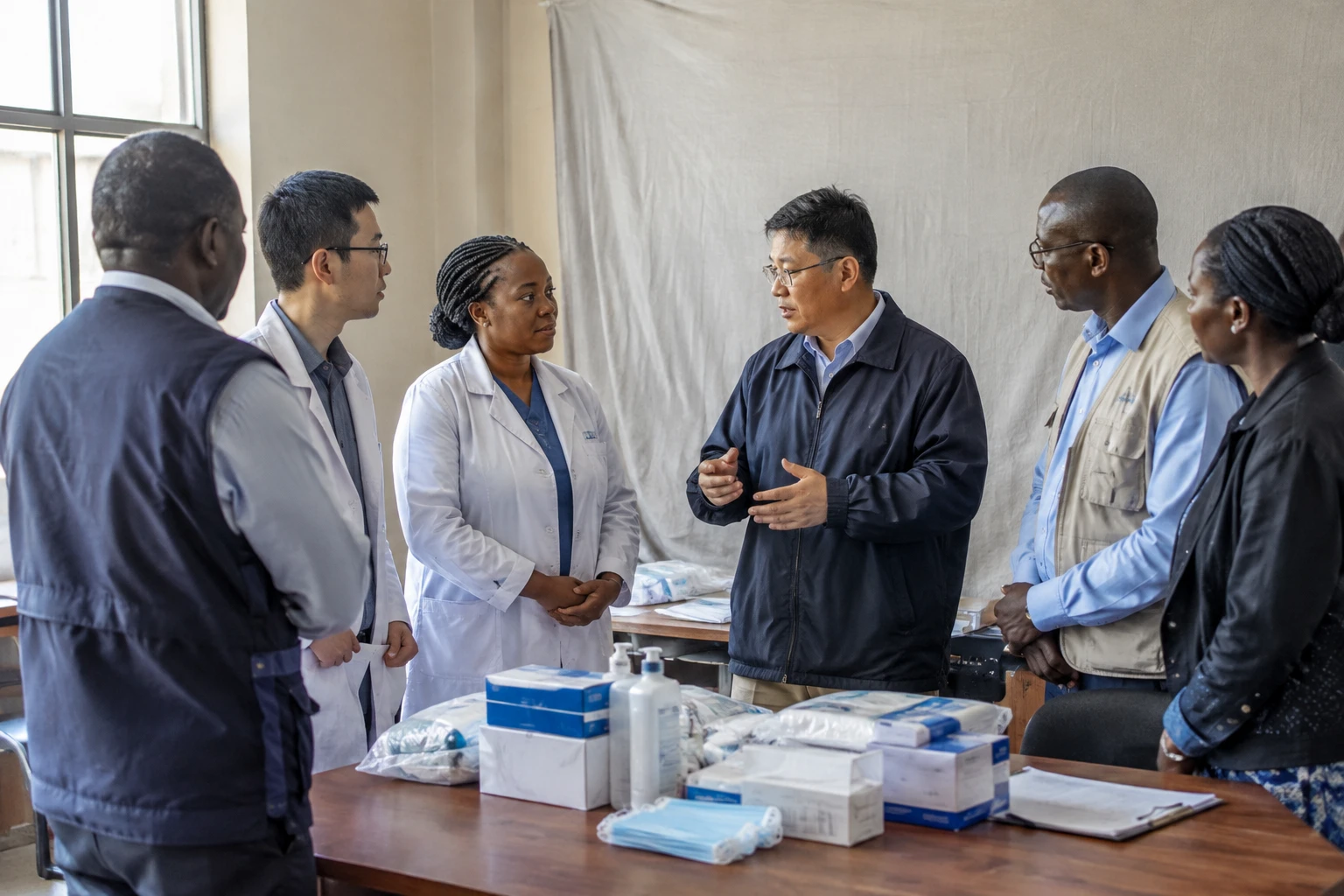
In Bunia, the response to Ebola is not taking place only in treatment centres. It also depends on the ability to deliver equipment quickly, trace contacts and coordinate actors across borders. In this effort, aid from China meets a practical need. It also gives Beijing a more visible role in global health.
A health emergency beyond Ituri
The 17th Ebola outbreak recorded in the Democratic Republic of the Congo was declared on 15 May 2026. It is caused by the Bundibugyo virus, a strain different from the one responsible for most previous outbreaks in the country. The outbreak was detected in Ituri, in eastern DR Congo, before cases were reported in neighbouring Uganda. The World Health Organization (WHO) declared the outbreak a public health emergency of international concern on 17 May. Africa CDC, the African Union’s health agency, classified it as a continental public health security emergency the following day.
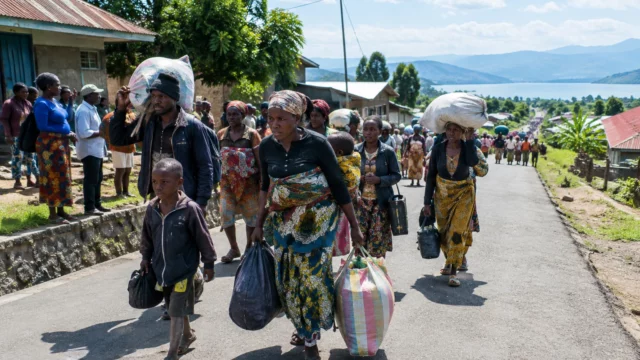
These alerts describe a regional risk, not inevitable spread across the continent. Ituri is linked to Uganda by frequent trade and travel. Bunia, its main urban centre, is also a transport and commercial hub. Cross-border surveillance and access to healthcare therefore matter as much as measures taken in treatment centres. DR Congo belongs to the East African Community and the Southern African Development Community: the regional movement of the virus tests cooperation between these blocs, without displacing Kinshasa’s central role in the national response.
Chinese aid meets immediate needs
In early June, Beijing announced financial assistance and the dispatch of a team of medical experts to DR Congo. China’s health ministry described the mission as support for Congolese prevention and control efforts. Actualité.cd also reported the earlier delivery of 198 000 protective items, including gloves, masks and protective suits. The figure is attributed to the Congolese outlet and information provided by the Chinese authorities; the sources consulted do not allow its logistical details to be independently verified.
For health teams, having equipment available in the right place at the right time can help prevent infections and protect healthcare workers. But a delivery alone cannot contain an epidemic. Laboratories, trained local teams, contact tracing, transport and communication that communities can understand are also needed. The challenges are particularly complex in areas where travel is difficult or health facilities are under pressure.
The response does not depend on a single partner. Africa CDC and the WHO coordinate regional and international efforts, while the Congolese authorities lead the response on their territory. The African agency has highlighted cross-border mobility, access difficulties and gaps in prevention at some facilities as risk factors. This framing is a reminder that African institutions are not simply conduits for foreign aid: they assess needs, organise co-operation and set public health priorities.
Healthcare and diplomatic influence
China presents its aid as a contribution to international health co-operation. The assistance also has a diplomatic dimension: a medical mission, donations and a sustained presence build ties with authorities and raise Beijing’s profile among institutions and the public. The term “soft power” describes this influence, pursued through co-operation, exchanges and image rather than coercion. Humanitarian motives and diplomatic interests can coexist; the existence of one does not automatically rule out the other.
The initiative comes as WHO governance evolves. The United States’ withdrawal from the organisation took effect on 22 January 2026, leaving a funding shortfall that the WHO must absorb. This does not mean that China has simply replaced the US as the leading public-sector contributor: the organisation’s funding combines assessed contributions from member states and voluntary donations, and the amounts are not interchangeable. A WHO budget note had anticipated the absence of the US contribution in its calculations for 2026.
The political calendar is drawing further attention to Beijing. On 8 October 2026, China named Song Li as its candidate for WHO director-general. The next director-general is due to be elected in May 2027, following an initial selection by the organisation’s executive board. The candidacy does not guarantee victory. It nevertheless places Chinese health diplomacy in an institutional contest in which member states weigh experience, political priorities and the ability to build consensus.
What Congolese people can expect from the response
For Congolese people living near the outbreak sites, the immediate priority remains access to reliable information, testing and safe healthcare. Health workers need equipment, but also sustained resources and co-ordinated decisions. In Kinshasa, the government must lead the national response; in the east, its effectiveness depends on teams being present on the ground and on residents’ trust. Case and death figures change as investigations proceed: they should be dated and attributed to the relevant health authorities, rather than presented as a definitive toll.
At regional level, the outbreak is a reminder that alerts do not stop at administrative borders. Africa CDC and the WHO have activated their co-ordination mechanisms, while the experience of the countries concerned must inform international decisions. What happens next will show whether pledges of support translate into useful, sustained resources. It will also show whether competition among powers over global health strengthens local capacity or remains a contest for visibility and positions.