
 Algeria
 Egypt
 Libya
 Morocco
 Sudan
 Tunisia
 Benin
 Burkina Faso
 Cabo Verde
 Côte d'Ivoire
 Ghana
 Guinea
 Guinea-Bissau
 Liberia
 Mali
 Mauritania
 Niger
 Nigeria
 Senegal
 Sierra Leone
 The Gambia
 Togo
 Cameroon
 Central African Republic
 Chad
 Equatorial Guinea
 Gabon
 Republic of the Congo
 São Tomé and Príncipe
 Burundi
 Comoros
 Djibouti
 Eritrea
 Ethiopia
 Kenya
 Madagascar
 Malawi
 Mauritius
 Mozambique
 Rwanda
 Seychelles
 Somalia
 South Sudan
 Tanzania
 Uganda
 Angola
 Botswana
 Eswatini
 Lesotho
 Namibia
 South Africa
 Zambia
 Zimbabwe
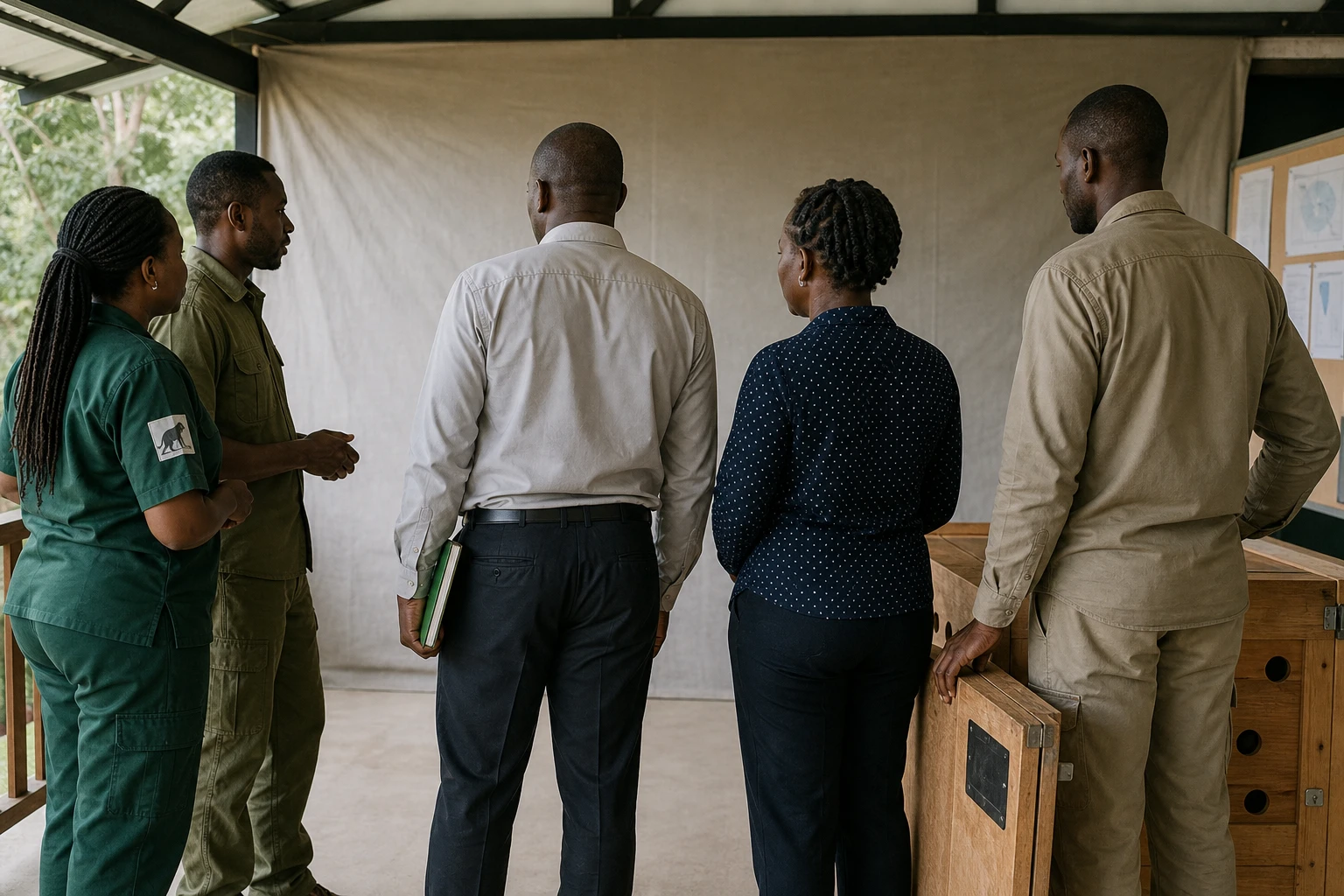
A few kilometres from Kinshasa, a Congolese organisation cares for orphaned bonobos before preparing them for their return to the forest. Its work highlights an essential truth: the survival of this species depends as much on protecting the animals as on the future of the communities living in their habitat.
A species confined to one territory
The bonobo, or Pan paniscus, lives in the wild only in the Democratic Republic of the Congo. Its range lies south of the Congo River, mainly in the equatorial forests between the Congo River and the Kasai River. This geographical boundary explains the species’ uniqueness, but also its vulnerability.
Unlike other African great apes, bonobos have no wild populations in any other country. Any lasting degradation of their habitat in the DRC would therefore have global consequences. The International Union for Conservation of Nature classifies the species as endangered.
The threats are numerous. Hunting for food or the bushmeat trade puts pressure on wild groups. Deforestation also reduces the available habitat. In some areas, displacement linked to conflict and weakened public services make it harder to monitor protected areas.
Researchers nevertheless stress that conditions vary from one area to another. In Salonga National Park, for example, illegal hunting remains a major pressure. Around inhabited forests, shifting cultivation, the need for fuelwood and limited access to other sources of income weigh more heavily on ecosystems.
Protecting bonobos without excluding communities
As head of Friends of Bonobos of the Congo, Fanny Minesi champions an approach combining care, research, education and forest protection. The organisation is best known for Lola ya Bonobo, a sanctuary on the outskirts of Kinshasa. It takes in young bonobos seized from traffickers or found after their mothers have died.
A young bonobo cannot be released immediately. It must first receive veterinary care, learn the social behaviours of its species and join a group. This process can take several years. The sanctuary is therefore more than a refuge: it is also a rehabilitation centre.
The second stage takes place in the forest. At the Ekolo ya Bonobo community reserve, north-west of the capital, rehabilitated animals can live in a managed forest environment. The reserve is co-managed with local communities. This model seeks to avoid conservation imposed from outside without regard for residents’ needs.
This dimension is crucial in the Democratic Republic of the Congo. In forest regions, families often depend on the forest for food, fuel, materials and some of their income. Banning access without offering alternatives can shift pressure to other areas. By contrast, involving residents in monitoring and decision-making can strengthen protection over the long term.
Conservation is therefore not limited to preventing poaching. It also means reducing tensions between biodiversity protection and livelihoods. Awareness programmes, forest monitoring and the development of activities compatible with conservation play a central role in this strategy.
The “gardeners” of the Congo forest
Bonobos play an important ecological role. As they move around and eat fruit, they carry seeds over long distances. Some plants therefore depend on animals to regenerate. The disappearance of large seed dispersers can gradually change the composition of the forest.
This role gives their protection wider significance. Saving bonobos is not just about preserving an iconic species. It is also about maintaining natural processes that help regenerate the forests of the Congo Basin.
The Congo Basin extends across several Central African countries, with the Democratic Republic of the Congo containing the largest share. Decisions taken in Kinshasa therefore directly affect national biodiversity, while also forming part of a regional landscape shaped by the movement of species, forest products and trafficking networks.
Regional cooperation remains essential. Animals captured in forests can be transported over long distances. Bushmeat and wildlife trade routes often cross administrative boundaries. Protecting bonobos therefore requires cooperation between Congolese authorities, judicial services, local organisations, researchers and regional partners.
Recognition beyond an individual achievement
In 2023, Fanny Minesi received the Tusk Award for Conservation in Africa. The award recognises her leadership of Friends of Bonobos of the Congo. It also highlights conservation led from within the DRC, by teams working with the country’s communities and ecosystems.
The recognition comes as African initiatives seek to make their own expertise heard more widely. Local organisations know the territories, languages, forest practices and social dynamics. Their role cannot be reduced to that of operational intermediaries for programmes designed elsewhere.
The challenge remains considerable. Sanctuaries cannot replace wild forests. Rescue work addresses an emergency, but is not enough if hunting, trafficking and habitat destruction continue. The priority is therefore to safeguard forest landscapes, support communities and strengthen the institutions responsible for enforcing the law.
For the Democratic Republic of the Congo, the stakes are ecological, social and a matter of sovereignty. Protecting bonobos helps defend a natural heritage found exclusively in the Congo. It also shows that sustainable conservation cannot be measured solely by the number of animals saved, but by the ability to preserve living forests alongside the people who live in them.



