
 Algeria
 Egypt
 Libya
 Morocco
 Sudan
 Tunisia
 Benin
 Burkina Faso
 Cabo Verde
 Côte d'Ivoire
 Ghana
 Guinea
 Guinea-Bissau
 Liberia
 Mali
 Mauritania
 Niger
 Nigeria
 Senegal
 Sierra Leone
 The Gambia
 Togo
 Cameroon
 Central African Republic
 Chad
 Equatorial Guinea
 Gabon
 Republic of the Congo
 São Tomé and Príncipe
 Burundi
 Comoros
 Djibouti
 Eritrea
 Ethiopia
 Kenya
 Madagascar
 Malawi
 Mauritius
 Mozambique
 Rwanda
 Seychelles
 Somalia
 South Sudan
 Tanzania
 Uganda
 Angola
 Botswana
 Eswatini
 Lesotho
 Namibia
 South Africa
 Zambia
 Zimbabwe
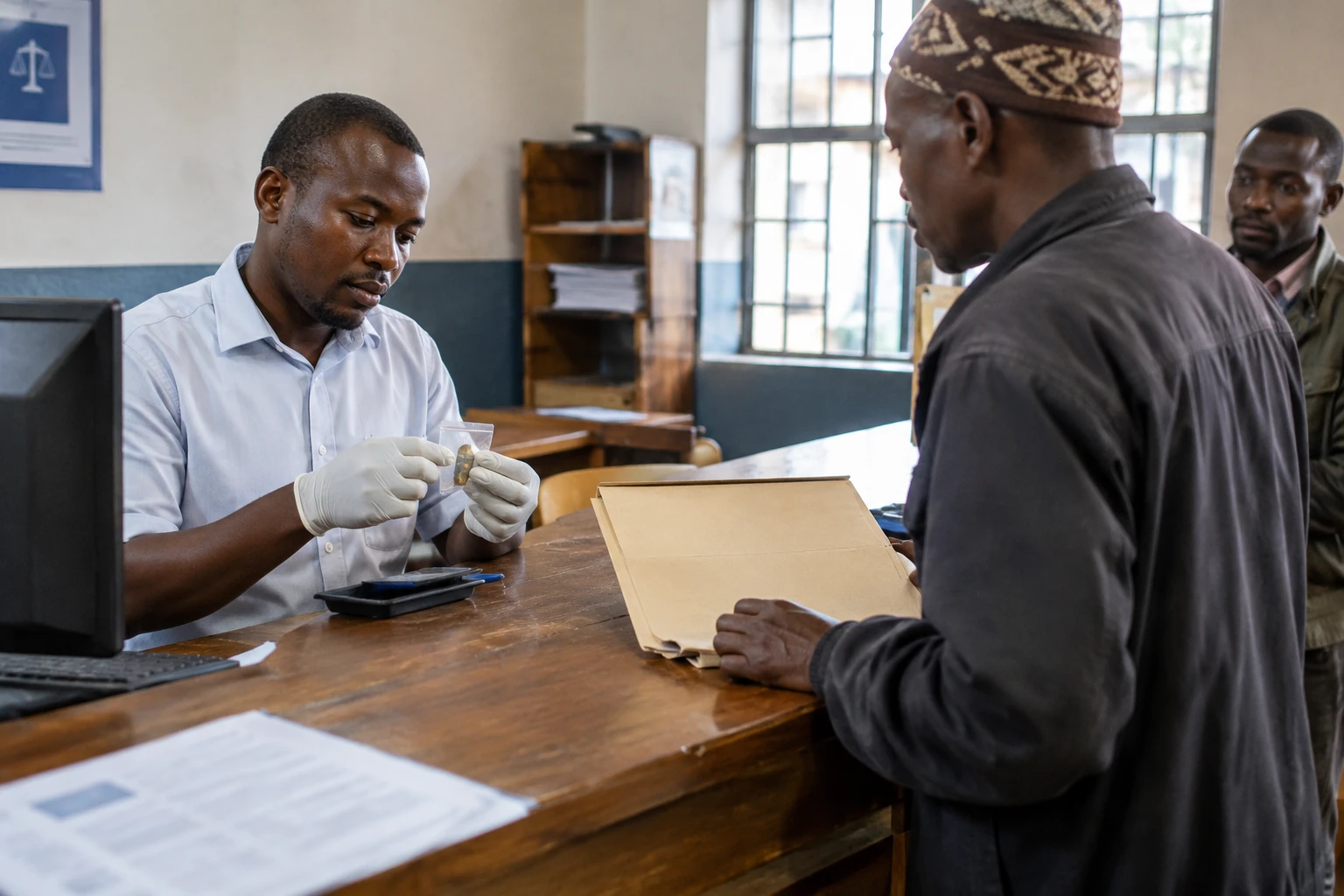
In the east of the Democratic Republic of the Congo, gold can leave a mining area through ordinary commercial channels before ending up abroad. This chain complicates efforts to combat armed financing: sanctioning financial intermediaries is not enough if buyers can still be found for the metal.
Local trade connected to regional markets
The Allied Democratic Forces (ADF), an armed group affiliated with the Islamic State organisation, operate mainly in North Kivu and Ituri. They should not be confused with M23 or with the self-defence groups known as Wazalendo, whose trajectories and alliances differ.
In eastern Congo, artisanal gold moves between extraction sites, traders and buying counters, then crosses borders to be processed or re-exported. Neighbouring Uganda is both a military partner of Kinshasa in operations against the ADF and an important link in regional refining networks. This dual reality makes security cooperation and commercial oversight closely intertwined.
Since late 2021, the Congolese and Ugandan armies have been conducting Operation Shujaa against the ADF. The operations have weakened some strongholds, but the group remains active in remote rural areas and mining corridors. The United Nations mission in the DRC documented the expansion of joint operations in Ituri in 2025, as well as retaliatory attacks attributed to the ADF.
Sanctions do not cut off every source of revenue
On 23 July 2024, the US Treasury sanctioned several people linked to Islamic State financing networks in Africa. Among them was Abubakar Swalleh, whom Washington accused of facilitating money transfers from southern Africa to the DRC. US sanctions can, among other things, freeze assets under US jurisdiction and prohibit certain transactions with designated individuals.
But they do not automatically shut down mines, monitor every purchase or block commercial channels beyond their reach. A report by the UN sanctions monitoring team, published in February 2026, estimated that the ADF relied heavily on resources generated locally and received little external funding. Extortion of local economic activity is among these resources.
An investigation published on 27 October 2026 by The Sentry describes the role of gold in this self-sufficiency. In Manguredjipa, in the Bapere sector of Lubero territory in North Kivu, the group is said to impose levies, control certain sites or regulate access to mining. These practices weigh on miners and traders, as well as communities whose livelihoods depend on the mining trade.
According to the investigation, at least 30 of the 54 buyers still active in Manguredjipa in March 2026 knowingly sourced gold from mines controlled by the ADF or other armed groups. Some of the gold was then sold to licensed buying counters in Butembo before being transported to Ugandan refineries. Passing through a legal buying counter therefore does not, in itself, prove that the metal was extracted outside any area under armed-group influence.
The Sentry estimates that the ADF could earn between $1 million and $1.6 million a year from Manguredjipa’s gold sites. This estimate is based on assumptions about levies and comparisons with other conflict settings. It concerns a specific area: it is neither a verified accounting of the group’s finances nor a measure of its total revenue.
Formalising purchases without neglecting security
Smuggling also deprives the Congolese state of revenue and undermines efforts to structure the artisanal mining sector. Since the end of its partnership with Primera Group in 2024, Kinshasa has relied in particular on DRC Gold Trading, a state-owned company responsible for buying and marketing artisanal gold. The company says it exported 3.5 tonnes in 2025. This figure, provided by the company, should be distinguished from estimates of gold that bypasses official channels.
DRC Gold Trading is seeking to make legal sales more accessible. In August 2026, it signed an agreement with the Caisse générale d’épargne du Congo to set up payment counters at its premises. The aim is to make traders’ transactions easier and more secure. The company is also expanding its buying points to reduce the journeys required to sell the metal.
These measures may help, but they cannot replace security at mining sites or sufficient cash to pay sellers promptly. For a trader, proximity, price and certainty of payment influence the choice of channel. If the informal market offers a faster or less risky transaction, the existence of a public buyer does not guarantee that the gold will be sold to it.
The consequences are not the same for everyone. The authorities lose revenue and oversight capacity. Buyers and refiners risk bringing gold linked to armed groups into their supply chains. On the ground, miners and small traders may face levies, coercion and insecurity, while the benefits of trade move away from the areas where the gold is extracted.
Tracing the chain beyond the border
The Sentry is calling for investigations into traders, exporters, refiners and financial intermediaries that may be facilitating the arrival of this gold on international markets. The challenge is to target commercial outlets, not only financial backers identified abroad. Any action against individuals or companies must, however, be based on verifiable evidence and comply with applicable procedures.
For the DRC and Uganda, the issue goes beyond the financing of the ADF. It concerns the traceability of a strategic resource, public revenue and the credibility of controls in both countries. The available data do not justify treating all gold exported by Uganda as smuggled gold; rather, they highlight the difficulty of establishing the metal’s origin when it passes through several intermediaries.
The next step will be to see whether Congolese official buying schemes can expand their presence in production areas and whether the authorities in transit countries strengthen checks on the origin of gold. As long as traceability stops at the gate of a mine or buying counter, financial sanctions risk targeting only part of the resources that enable the ADF to continue their activities.



