
 Algeria
 Egypt
 Libya
 Morocco
 Sudan
 Tunisia
 Benin
 Burkina Faso
 Cabo Verde
 Côte d'Ivoire
 Ghana
 Guinea
 Guinea-Bissau
 Liberia
 Mali
 Mauritania
 Niger
 Nigeria
 Senegal
 Sierra Leone
 The Gambia
 Togo
 Central African Republic
 Chad
 DR Congo
 Equatorial Guinea
 Gabon
 Republic of the Congo
 São Tomé and Príncipe
 Burundi
 Comoros
 Djibouti
 Eritrea
 Ethiopia
 Kenya
 Madagascar
 Malawi
 Mauritius
 Mozambique
 Rwanda
 Seychelles
 Somalia
 South Sudan
 Tanzania
 Uganda
 Angola
 Botswana
 Eswatini
 Lesotho
 Namibia
 South Africa
 Zambia
 Zimbabwe
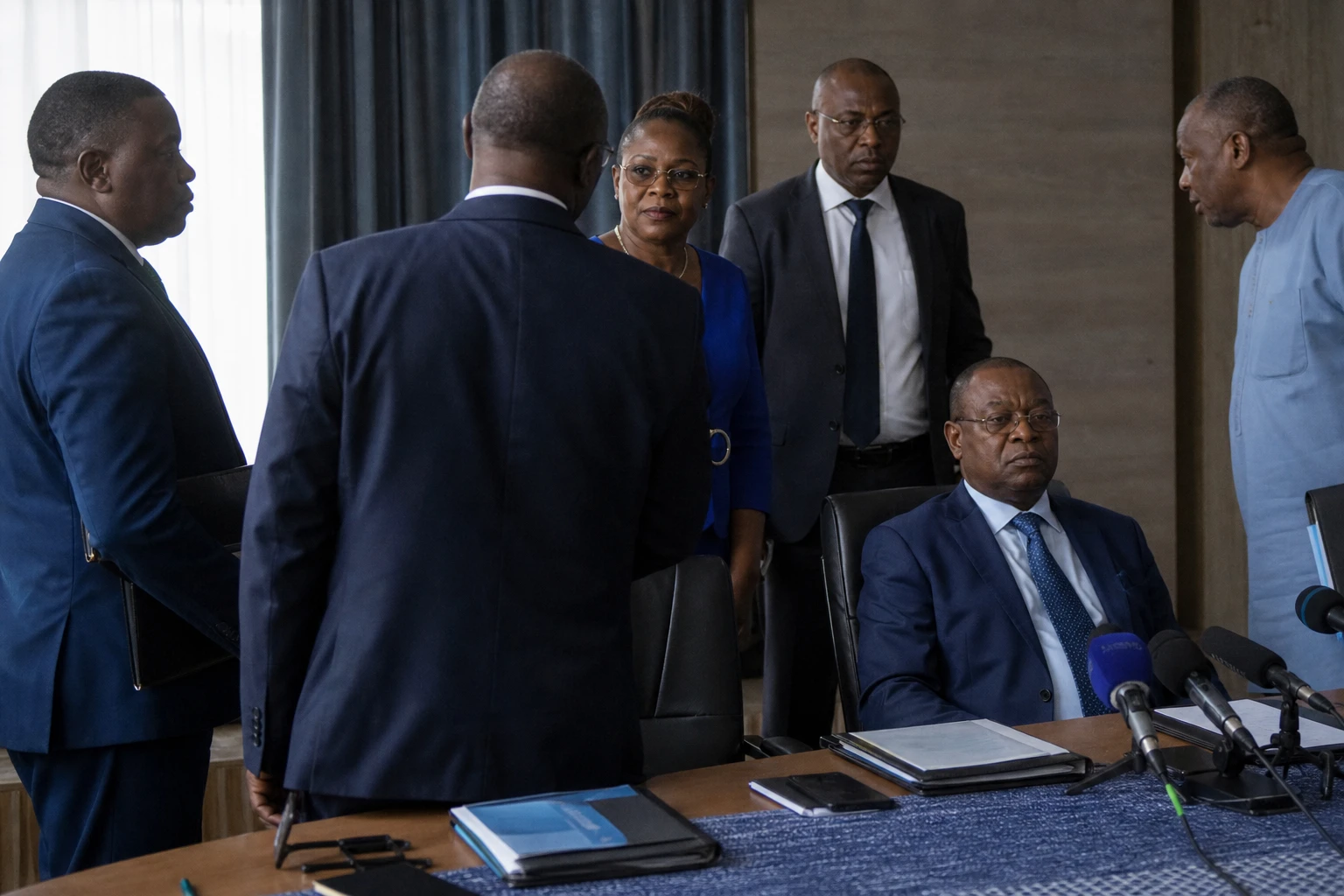
A vital route for Yaoundé, Bangui and CEMAC
Between Douala and Bangui, the road does more than link two capitals. It carries goods, customs revenue and part of the trade of Central Africa as a whole. When this route becomes congested, prices rise, delays mount and businesses pay the price. When traffic flows, an entire economic corridor can breathe easier.
The issue therefore extends beyond Cameroon alone. It also concerns the Central African Republic and, more broadly, CEMAC, the Economic and Monetary Community of Central Africa. In this region, the movement of goods remains central to regional integration. The World Bank says the Douala-Bangui corridor stretches for more than 1,400 kilometres and carries a decisive share of the Central African Republic’s external trade.
This is not a new issue. For years, Cameroonian authorities, regional partners and donors have sought to reduce costs on a route plagued by deteriorating road surfaces, logistical delays and multiple checkpoints. In 2026, the project enters a more concrete phase, with a broader funding structure than initially announced. The World Bank approved a $1.12 billion programme on 12 June 2026, including a first phase of $525 million. Cameroon’s stated share is $407 million through the IBRD, plus $18 million from IDA.
What the first phase will actually fund
The first phase is not limited to a roadworks project. It also aims to improve safety, maintenance and the flow of inspections. According to the World Bank, the programme will rehabilitate priority sections, install axle-load control stations, strengthen logistics hubs and support trade facilitation reforms. It will also tackle institutional bottlenecks that hold up trucks.
In Cameroon, the Ministry of Public Works is working on several major sections. The plan presented in 2026 covers the reconstruction of the 215-kilometre Douala-Yaoundé road, the rehabilitation of the 332-kilometre Yaoundé-Bonis-Ayos road, followed by the Bonis-Bertoua section. Together, these works form an upgrade programme covering about 800 kilometres before the junction with Garoua-Boulaï, the gateway to the Central African Republic. The ministry has confirmed that technical preparations are progressing with support from partners including the World Bank, the Islamic Development Bank, AFD, the European Union and the European Investment Bank.
This expansion has practical implications. World Bank data show that the journey currently takes 9 to 12 days under normal conditions, with transport costs reaching as much as $270 per tonne and 38 checkpoints in Cameroon, 17 of them informal. These figures explain the authorities’ focus on pre-screening heavy goods vehicles, automated weighing and tackling overloading. In Yaoundé, there is also a budgetary dimension: curbing abuses could mean more revenue and less premature wear on the road.
The project is also expected to create jobs. The World Bank estimates that the programme could generate between 2,000 and 4,000 direct and indirect jobs over its life cycle, while maintenance activities could support 150 to 250 jobs a year. These figures are modest at national level, but matter in areas where work is under way, as well as for transport services, maintenance and local subcontractors.
A test of regional integration
The Douala-Bangui corridor is also a political test. It measures Central Africa’s ability to turn talk of integration into tangible gains for businesses. CEMAC, which brings together six states sharing a common currency, has long relied on the movement of goods as a driver of convergence. But without reliable roads, regional agreements lose their force on the ground.
The Central African Republic is the main economic beneficiary of this route, since its access to the port of Douala determines a large share of its imports. For households, this affects the prices of fuel, food and manufactured goods. For hauliers, it means margins are squeezed by breakdowns, delays and extra costs. For government agencies, this is as much a matter of economic sovereignty as of road engineering.
Cameroon, for its part, is playing a broader hand. The country is consolidating its role as a Central African logistics hub centred on Douala, its main port, and Yaoundé, the political capital. If the works progress, the benefits will extend beyond roads, affecting supply chains, business competitiveness, road safety and the credibility of the institutions responsible for enforcing transit rules. If construction is delayed, hauliers and consumers will quickly bear the cost.
What happens next will depend on procurement timelines, the pace of implementation and coordination between Yaoundé, Bangui and CEMAC bodies. That is how the project will be judged: not by its announcements, but by its ability to cut the time, cost and uncertainty on a strategic corridor for Central Africa as a whole.



