
 Algeria
 Egypt
 Libya
 Morocco
 Sudan
 Tunisia
 Benin
 Burkina Faso
 Cabo Verde
 Côte d'Ivoire
 Ghana
 Guinea
 Guinea-Bissau
 Liberia
 Mali
 Mauritania
 Niger
 Nigeria
 Senegal
 Sierra Leone
 The Gambia
 Togo
 Central African Republic
 Chad
 DR Congo
 Equatorial Guinea
 Gabon
 Republic of the Congo
 São Tomé and Príncipe
 Burundi
 Comoros
 Djibouti
 Eritrea
 Ethiopia
 Kenya
 Madagascar
 Malawi
 Mauritius
 Mozambique
 Rwanda
 Seychelles
 Somalia
 South Sudan
 Tanzania
 Uganda
 Angola
 Botswana
 Eswatini
 Lesotho
 Namibia
 South Africa
 Zambia
 Zimbabwe
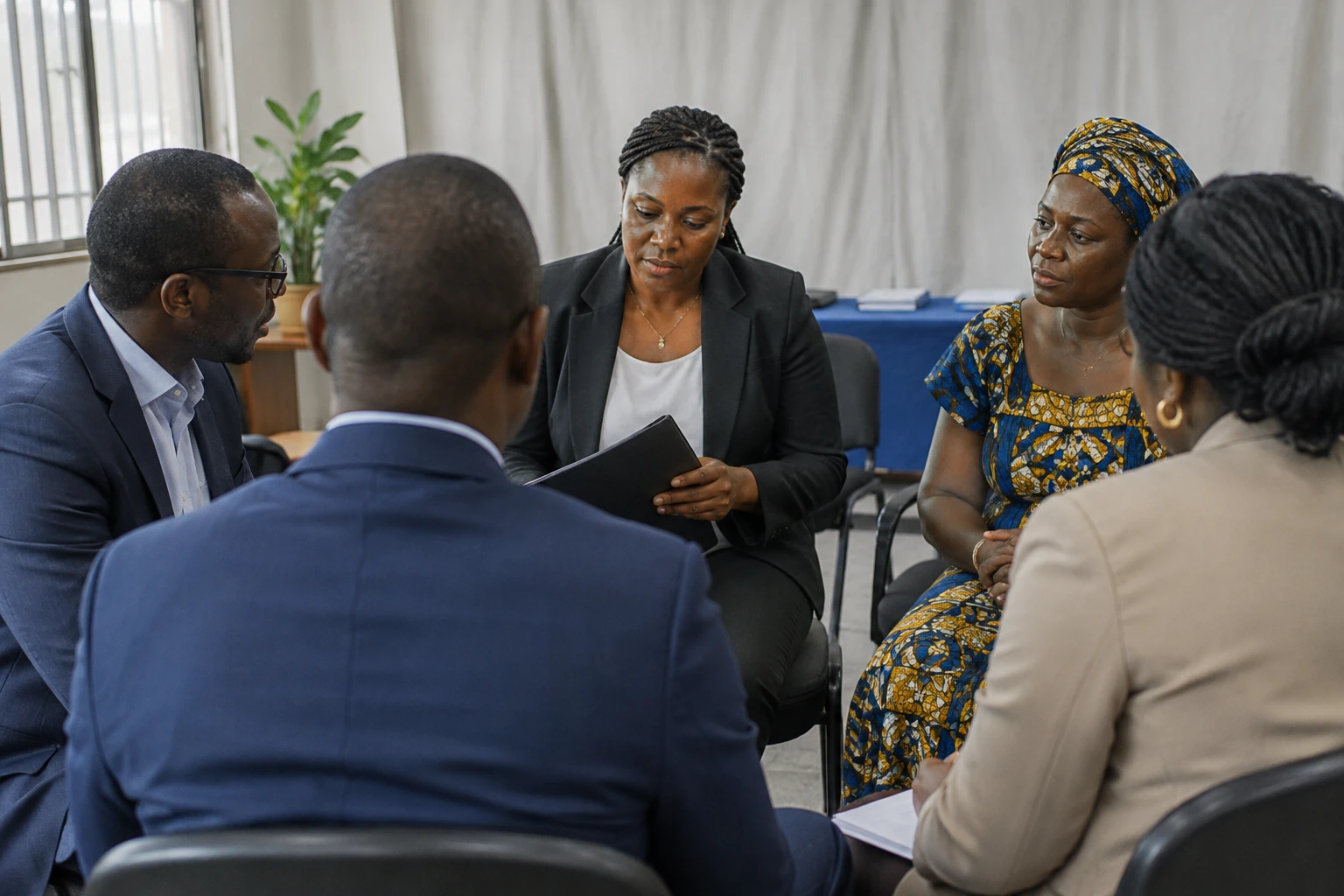
For people transferred from the United States to Cameroon, arrival in Yaoundé does not mean that a protection procedure has begun. Instead, it raises an immediate question: what status are they given, and can they challenge a possible return to a country where they say they fear persecution?
Reception without detailed public safeguards
The case is part of a US policy of transferring people to countries of which they are not nationals. Some had obtained judicial protection in the United States against being returned to their country of origin because of the risk of persecution or torture. Transfers to Cameroon therefore raise an issue distinct from ordinary immigration: protection against refoulement, the prohibition on sending someone to a place where they risk serious violations of their rights.
Cameroon is in the heart of Central Africa and is a member of the Economic and Monetary Community of Central Africa (CEMAC), which brings together several states in the sub-region. But the issue extends beyond the region. The African Commission on Human and Peoples’ Rights, an African Union body responsible for upholding fundamental rights, and United Nations mechanisms are also concerned.
The hardest point to establish remains the precise situation of the people transferred. Published figures have changed as arrivals have taken place: in September, a Cameroonian media outlet reported that 36 people had been transferred on four flights between January and May. An investigation published in October by Human Rights Watch (HRW) reported that 46 people had arrived on five flights between January and August 2026. The two counts cover different periods and therefore do not necessarily contradict each other.
According to Mandela Center International, those still in Cameroon have no clearly established legal status or ongoing asylum procedure, and are facing difficulties accessing a lawyer. The organisation also says that some people had been protected by US judges’ rulings against their return to their country of origin. These details are among the information reported by the NGO and should be distinguished from facts confirmed by the Cameroonian authorities.
Mandela Center appeals to Yaoundé and African institutions
The NGO says it sought a meeting with the Cameroonian authorities in Yaoundé before 7 October, but received no reply. It is calling for those concerned to be able to consult lawyers, access an asylum procedure and receive visits from journalists and civil society organisations. It is also urging the authorities not to return them to their country of origin, including through a return presented as voluntary.
At the African Union, Mandela Center is calling for the agreements reached with Washington to be published and for a continental monitoring mechanism to be established. It has asked the African Commission on Human and Peoples’ Rights to intervene urgently and provide concrete safeguards for those transferred. It has also petitioned United Nations bodies specialising in civil and political rights and the fight against torture.
These demands echo concerns expressed on 28 September by UN experts. They warned that transfer agreements could lead to a “cascade of human rights violations”, including detention without safeguards, insufficient access to legal advice and onward returns. According to their statement, at least 23,000 nationals of third countries had been sent by the United States to 29 countries and territories. That figure relates to the global scheme, not Cameroon alone.
Consent is central to the issue. A return can hardly be described as voluntary when a person has no regular status, cannot consult a lawyer or has no viable alternative. UN experts stress that states cannot transfer their legal obligations to another country through a bilateral agreement. The receiving country remains responsible for people present on its territory.
An issue of transparency and regional accountability
For those concerned, the lack of public information about their status and the conditions of their stay makes it harder to access an effective remedy. For the Cameroonian government, the issue is also institutional: explaining the framework of the agreement, reporting on the safeguards offered and allowing independent scrutiny. Without this, concerns about detention and the risk of return remain difficult to verify, while those affected remain in limbo.
The debate also highlights the imbalance between Washington and the states that accept these transfers. HRW notes that some agreements of this kind are negotiated in a context in which the United States can leverage aid, funding or diplomatic relations. These factors alone are not enough to establish the terms of the agreement concerning Cameroon. They nevertheless strengthen the case for transparency: publishing the text would make it possible to see what safeguards were promised and who is responsible for monitoring their implementation.
Across Africa, the case is part of a wider debate about the externalisation of migration policies: people are moved to third countries, sometimes with no ties to them, while protection and monitoring mechanisms may remain difficult to access. African states do not take a uniform position. Some accept transfers, while others reject them or challenge the diplomatic pressure that accompanies them. It would therefore be misleading to speak of a single African response.
What happens next will depend on concrete decisions: the Cameroonian authorities’ response to the NGO’s requests, access for lawyers and observers to those transferred, clarification of their status and possible intervention by regional or UN bodies. In Yaoundé and within the African Union, the test will be whether commitments to non-refoulement are translated into verifiable safeguards for each person.
Background sources: Human Rights Watch investigation into transfers to Africa, 28 September 2026 statement by United Nations experts and information published by DataCameroon on Mandela Center’s efforts.



