Algeria
 Egypt
 Libya
 Morocco
 Sudan
 Tunisia
 Benin
 Burkina Faso
 Cabo Verde
 Côte d'Ivoire
 Ghana
 Guinea-Bissau
 Liberia
 Mali
 Mauritania
 Niger
 Nigeria
 Senegal
 Sierra Leone
 The Gambia
 Togo
 Cameroon
 Central African Republic
 Chad
 DR Congo
 Equatorial Guinea
 Gabon
 Republic of the Congo
 São Tomé and Príncipe
 Burundi
 Comoros
 Djibouti
 Eritrea
 Ethiopia
 Kenya
 Madagascar
 Malawi
 Mauritius
 Mozambique
 Rwanda
 Seychelles
 Somalia
 South Sudan
 Tanzania
 Uganda
 Angola
 Botswana
 Eswatini
 Lesotho
 Namibia
 South Africa
 Zambia
 Zimbabwe
A transfer that renews questions about detention in Guinea
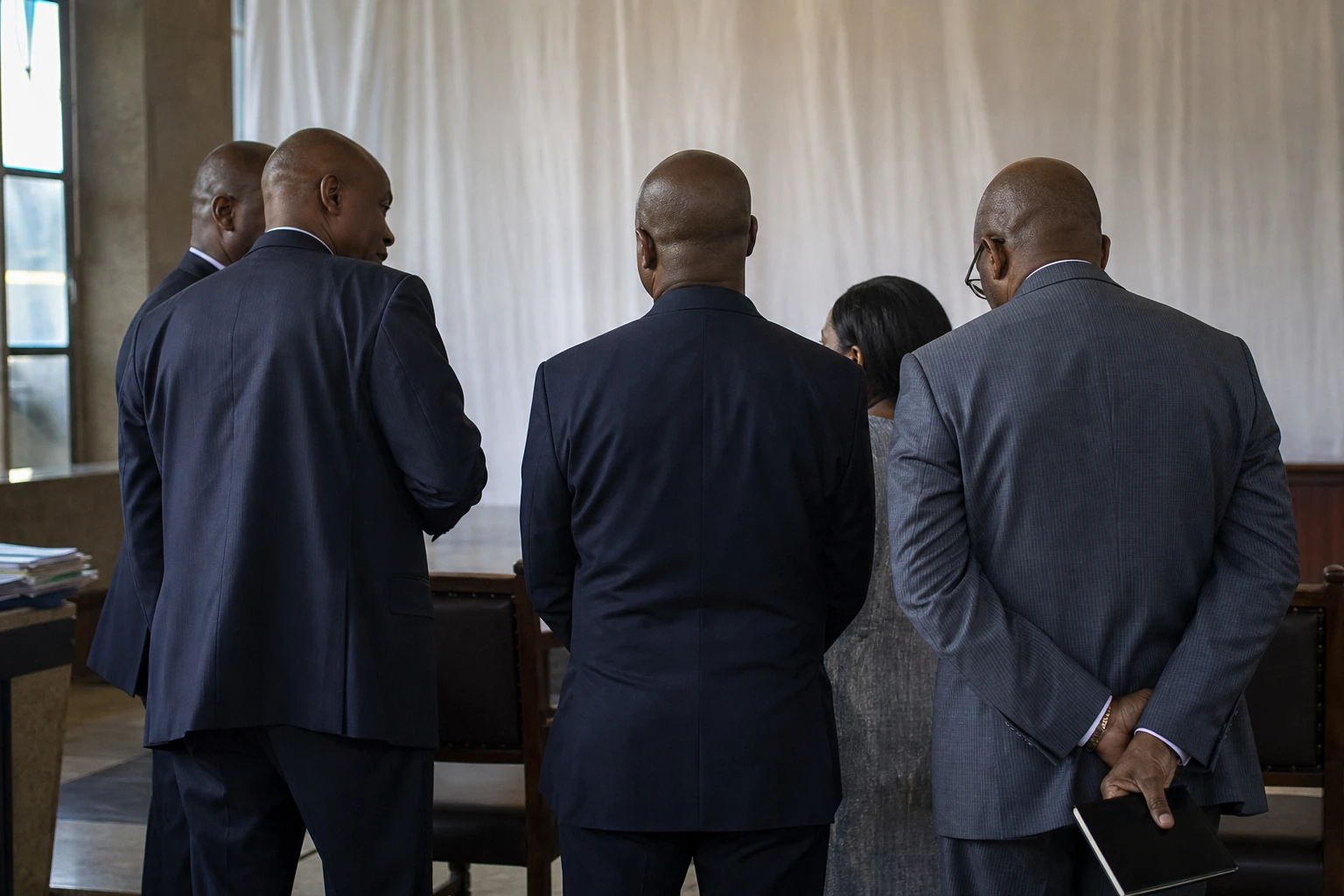
In Guinea, a prison transfer can quickly become more than a matter of prison administration. When a former magistrate is sent far from Conakry, the capital, the issue is not just where he is being held. It also concerns access to legal representation, judicial oversight and the political interpretation of the case.
The Algassimou Diallo case comes amid close scrutiny of Guinea’s justice system, as the country continues its political transition and seeks to close the exceptional period that began after the 2021 coup. At regional level, ECOWAS and the African Union are still closely monitoring institutional balances in Conakry, although the AU lifted Guinea’s suspension in January 2026 after the presidential election in December 2025.
What the judicial authorities say
According to the National Directorate of Prison Administration and Rehabilitation, Algassimou Diallo was first remanded at the Coyah detention and correctional centre after being charged and placed in pre-trial detention on 27 August 2026. The same statement says he was transferred on 5 September 2026 to the Macenta detention and correctional centre, in the Forest Region, for reasons described as relating to the administrative management of prison facilities.
The charges against him at this stage are incitement to discrimination, hatred or violence; discrimination; and participation in a criminal association. The authorities also say he remains in detention pursuant to the remand order.
The point of contention lies elsewhere. His lawyers reported that he was absent from his place of detention and described the situation as worrying. That alert put the case under pressure, before the prison administration eventually confirmed his transfer to Macenta. In Guinea, the simple movement of a detainee can therefore become an issue of transparency, especially when the case involves a former senior judicial official.
Why Macenta changes the picture
Macenta is not just a geographical detail. The town is far from Conakry, in the N’Zérékoré region in the south-east of the country. For a defence team based in the capital, the distance complicates visits, preparatory discussions and attendance at hearings. It also increases families’ transport costs. In a prison system where transfers between facilities can be ordered for disciplinary or administrative reasons, detainees and their lawyers have limited room for manoeuvre.
The transfer comes as prison conditions remain a sensitive issue in Guinea. UN documents have highlighted persistent problems linked to overcrowding, prolonged pre-trial detention and conditions in detention. In this context, moving a defendant far away can be seen in two ways: by the administration, as an ordinary logistical measure; by the defence, as a further obstacle. The political reality of the case will therefore depend on what can be verified on the ground, before the courts, and not only in official statements.
Another dimension is Algassimou Diallo’s status. Several Guinean media outlets recall that he held important judicial posts before being dismissed and then arrested. The case is therefore not only about a citizen being prosecuted. It also affects the image of an institution seeking to restore its credibility after years of suspicion over its independence and political use.
A case that goes beyond the courtroom
The current sequence comes at a time when Guinea’s transition has already passed several decisive milestones. In January 2026, the African Union welcomed the presidential election held on 28 December 2025 and decided to lift the suspension of Guinea’s participation in the organisation’s activities. ECOWAS, for its part, continues to support Guinea’s elections and institutions, as it did during the legislative and municipal elections in Conakry on 31 May 2026.
In this context, every sensitive case becomes a test of approach. The government wants to show that it applies the law without favouring anyone. The defence, meanwhile, wants to prove that proceedings remain regular, accessible and subject to scrutiny. The public is watching above all to see whether the state treats people before the courts uniformly, or whether some cases are handled through distance, delay or opacity.
The issue is also regional. In West Africa, the credibility of political transitions depends less on announcements than on the day-to-day functioning of institutions: courts, prisons, electoral commissions, security forces and local administrations. When a high-profile detainee is moved far from the political centre, the question quickly becomes one of the rule of law, the right to a defence and the relationship between central government and the periphery. This is often where the real significance of a judicial case during a transition becomes clear.
In the short term, what happens next will depend on two specific points: verification of the actual conditions of detention in Macenta and the normal resumption of proceedings before the competent chambers of the Supreme Court. Until these matters are fully clarified, the transfer will remain more than a simple change of prison address. It will remain an indicator of how Guinea handles, in 2026, cases where justice still intersects with politics.