Algeria
 Egypt
 Libya
 Morocco
 Tunisia
 Benin
 Burkina Faso
 Cabo Verde
 Côte d'Ivoire
 Ghana
 Guinea
 Guinea-Bissau
 Liberia
 Mali
 Mauritania
 Niger
 Nigeria
 Senegal
 Sierra Leone
 The Gambia
 Togo
 Cameroon
 Central African Republic
 Chad
 DR Congo
 Equatorial Guinea
 Gabon
 Republic of the Congo
 São Tomé and Príncipe
 Burundi
 Comoros
 Djibouti
 Eritrea
 Ethiopia
 Kenya
 Madagascar
 Malawi
 Mauritius
 Mozambique
 Rwanda
 Seychelles
 Somalia
 South Sudan
 Tanzania
 Uganda
 Angola
 Botswana
 Eswatini
 Lesotho
 Namibia
 South Africa
 Zambia
 Zimbabwe
A prison at the heart of a sealed-off territory
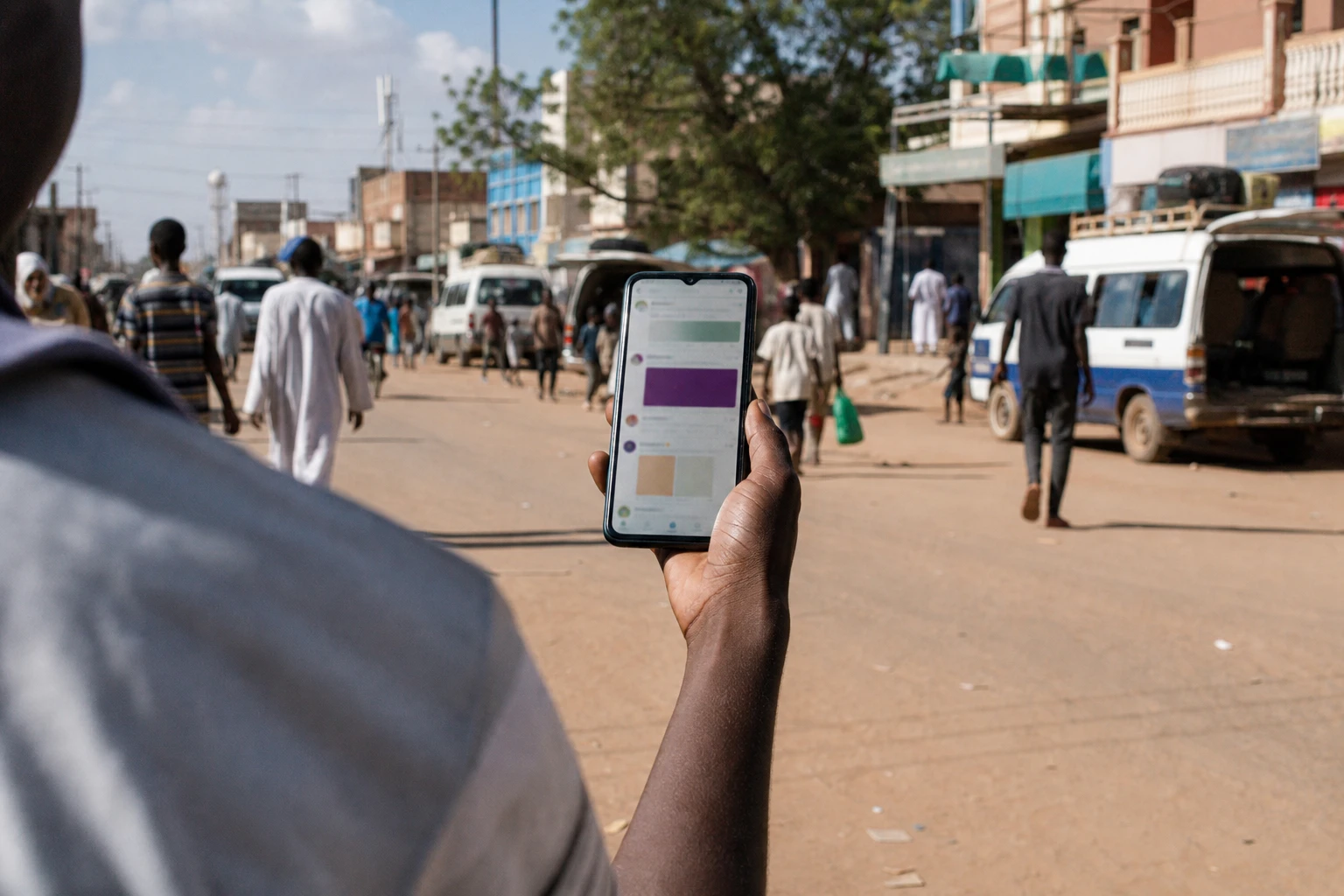
A few kilometres from Nyala, in South Darfur, a prison has become a symbol of Sudan’s war as seen from inside areas held by the Rapid Support Forces (RSF), the powerful paramilitary force fighting the regular army since April 2023. In a city already rife with rumours of ransoms, disappearances and forced transfers, the site embodies another reality of the conflict: civilians arrested, isolated and held in conditions that several organisations say amount to carceral horror.
Sudan, whose official capital remains Khartoum, has been at war for more than three years, fragmenting the state. The west of the country, particularly Darfur, has come under strong RSF influence, while the army retains centres of power in the east, notably Port Sudan. This division has fostered a parallel architecture, with rival institutions, competing administrations and areas where ordinary justice no longer plays its role. In this landscape, Nyala, the capital of South Darfur, has become a major political and security centre for the RSF and its allies.
Darkis, or Dagris: detention without meaningful oversight
The site in question is known under several transliterations, Darkis or Dagris. It lies west of Nyala. Human rights monitoring sources have described it as one of the main detention sites in areas controlled by the RSF in Darfur, Kordofan and Blue Nile. A Sudanese human rights organisation documented a rise in arbitrary arrests as early as April 2026 and raised the alarm over the condition of detainees at the prison.
According to these corroborated accounts, the prison was built in 2016 and designed to hold around 4,500 people. It is said to house many more today, with some estimates putting the number of detainees at more than 20,000. This figure should be treated with caution, as it comes from humanitarian and human rights organisations, but it is consistent with other indications: extreme overcrowding, inadequate medical care, insufficient food and transfers of civilians arrested after the fall or siege of certain cities, notably El-Fasher.
Most alarming is the very function of the site. Detention is reportedly used as a means of financial pressure. A group of lawyers has described releases being conditional on families paying substantial sums. Consistent accounts also speak of beatings, deprivation of food and medical care, and summary executions reported by detainees’ relatives. The UN has already described similar practices at other RSF-run detention sites, where prisoners are sometimes treated as hostages to be ransomed.
Deaths, children and a health crisis behind bars
On 24 June 2026, the Sudanese Doctors Network reported that more than 215 detainees had died at the prison in less than two months, between May and June. The causes cited were outbreaks of disease, torture, ill-treatment and a lack of basic care. Another humanitarian source also reported that 31 detainees, including children, had been transferred to Nyala hospital, without clarifying their full fate. These accounts remain attributed to the actors who documented them, but their convergence strengthens their credibility.
The presence of women and children among the detainees has also been reported. This changes the nature of the problem. This is no longer just a military detention centre, but a place where civilians, sometimes arrested amid displacement or territorial control, find themselves caught in a system that no longer distinguishes between combatants, suspects and ordinary residents. In a war where roads are cut off, the prison thus becomes an instrument of domination as well as a place of confinement.
The testimony of a former RSF officer, who publicly described the situation as catastrophic, gives a measure of the scale of the problem. Such public statements are rare in a conflict where camp discipline and fear of reprisals silence people. It does not replace a judicial investigation, but it confirms what survivors and relatives have been saying for months: prolonged detention, repeated violence and an organised system of extracting money from families.
What this prison says about Sudan today
The Nyala prison does not tell only a local tragedy. It reveals how Sudan’s war has become institutionalised in certain areas, with armed forces managing populations, roads, property and bodies. In the west of the country, the RSF does not control only military posts. It also administers, de facto, parts of civilian life, even as it seeks to consolidate a parallel political authority from Nyala.
For families, the impact is immediate and tangible. When a relative disappears into a detention centre, the cost is not only emotional. It is financial. Households sell possessions, go into debt or stay silent in order to obtain information. In an economy already devastated by war, this practice hits impoverished urban households, internally displaced people and families without political connections or armed protection hardest. It also strengthens a market in fear where arbitrariness is profitable.
The situation also has regional significance. Darfur lies at the crossroads of Chad, Libya and the Central African Republic, facilitating population movements, trafficking and the circulation of accounts of abuses. African and UN institutions have already warned of a rise in crimes against civilians in Sudan. The African Commission on Human and Peoples’ Rights also examined the humanitarian situation and conflict-related abuses in 2026. The Nyala case is therefore part of a broader picture: without access mechanisms for detention sites, independent oversight and sanctions for chains of command, abuses continue to move from one front to another.
There are now two things to watch. One is how the prison system evolves in areas held by the RSF, particularly after the offensives around El-Fasher. The other is the international and African response to this war of attrition, as both sides consolidate rival administrations and Sudan’s fragmentation becomes harder to reverse with each passing month.