Algeria
 Egypt
 Libya
 Morocco
 Sudan
 Tunisia
 Benin
 Burkina Faso
 Cabo Verde
 Côte d'Ivoire
 Ghana
 Guinea
 Guinea-Bissau
 Liberia
 Mali
 Mauritania
 Niger
 Nigeria
 Sierra Leone
 The Gambia
 Togo
 Cameroon
 Central African Republic
 Chad
 DR Congo
 Equatorial Guinea
 Gabon
 Republic of the Congo
 São Tomé and Príncipe
 Burundi
 Comoros
 Djibouti
 Eritrea
 Ethiopia
 Kenya
 Madagascar
 Malawi
 Mauritius
 Mozambique
 Rwanda
 Seychelles
 Somalia
 South Sudan
 Tanzania
 Uganda
 Angola
 Botswana
 Eswatini
 Lesotho
 Namibia
 South Africa
 Zambia
 Zimbabwe
When a club’s rise coincides with a player’s
Football loves rapid trajectories. Yet some stories unfold out of step with the times. At Le Mans, the return to Ligue 1 McDonald’s after 16 years away is also being written through a Senegalese striker who came into his own late: Dame Gueye. At 31, he is making his debut in France’s top flight just as his club, buoyed by two successive promotions, seeks to establish itself there for the long term.
This return is more than a simple sporting milestone. It tells the story of the patient rebuilding of a club that fell as far as the sixth tier before climbing back, season by season, towards the top. Le Mans officially confirmed its return among the elite in May 2026, then announced that it would open its Ligue 1 campaign against Brest at the Stade Marie-Marvingt on 22 August 2026.
The weight of a Senegalese career, followed by a long European detour
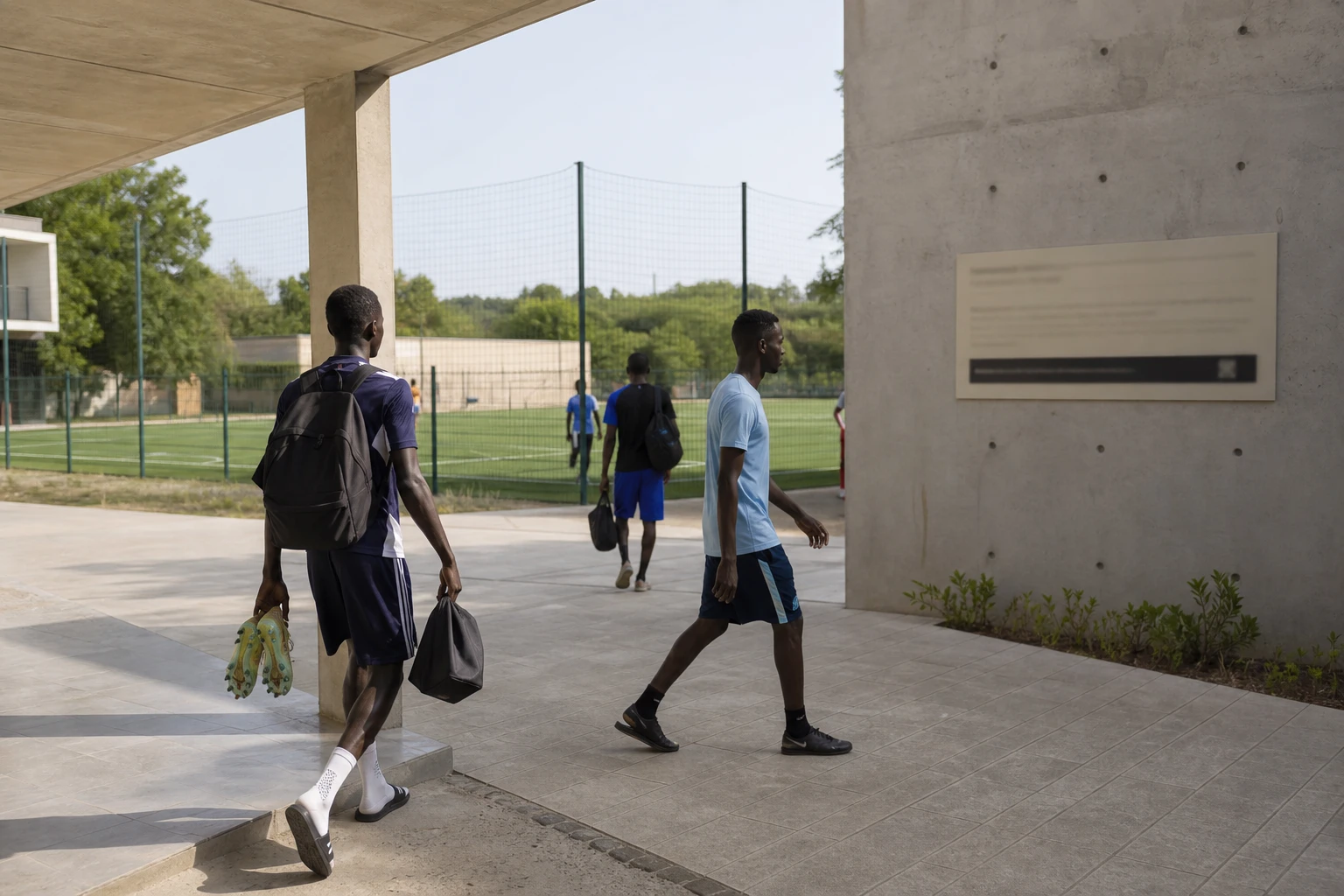
Dame Gueye is not a product of instant success. Trained in Senegal, within the Diambars system in Saly, he belongs to a generation of players shaped by centres that raised the profile of the local pathway before exporting talent to Europe. Diambars is a Senegalese sports-study institute whose first team plays in the Senegalese Ligue 1. That foundation explains a great deal: rigorous training, a strong work ethic, and an often early, but not always straightforward, departure from the country.
His first real step outside Senegal came in 2018, with spells in Latvia and then Algeria before his arrival in France. There, the path became more difficult. Le Mans itself notes that its centre-forward passed through several divisions before returning to the highest level. On this kind of journey, talent does not disappear. It moves. It waits for the right circumstances.
The goal that changed perceptions
The turning point came on 23 September 2025. Against Grenoble, Dame Gueye scored in stoppage time with a long-range shot struck from more than 30 metres out. Le Mans and the UNFP later drew the same conclusion: the goal came to symbolise his season. He was awarded the prize for the best goal in Ligue 2 BKT at the 34th UNFP Trophies ceremony in May 2026.
The award does not erase the rest. It makes it easier to see. Le Mans said the striker had finished the season with 10 league goals, in a team that secured promotion after a strong campaign and with a very stable collective. That goals tally, in a demanding league, better explains his rise than the flash of brilliance against Grenoble alone.
His own words sum up the story well: he says he came from a long way back. The phrase is not only geographical. It speaks of amateur levels, setbacks, successive clubs, fresh starts and patience. Recognition often comes early for a centre-forward. In this case it came late, and that is precisely what gives it its force.
What this journey says about Senegal and the region
For Senegal, this individual success is part of a broader picture. The country has strengthened its position in continental football, with well-structured national teams and a domestic base that continues to develop exportable talent. CAF highlights the blend of players from the Senegalese league and the diaspora, while world football’s governing body points to the renewed depth of Senegal’s talent pool globally. In this context, Gueye’s story is a reminder that a player who came through local development can still climb the ladder in Europe without following a straight path.
There is also a regional perspective. West Africa remains an essential source of talent for European clubs, but career paths are now less automatic. Academies, domestic leagues and recruitment networks are competing more intensely. For a Senegalese player, the route in is no longer just through the shop window of major foreign clubs. It can also run through intermediate leagues and lower divisions, followed by a carefully built climb. That is what Dame Gueye’s story shows.
Le Mans, for its part, is sending a useful message on several levels. The club is built on a strong collective identity, successive promotions and a sizeable fan base that filled the stadium for its return to Ligue 1. For a promoted side, that stability matters as much as the names on the team sheet. For a player from Senegal, it provides an environment in which experience can ultimately count for more than age. And for followers of African football, it is a reminder that a career can be rewritten away from the spotlight, just when many already think it is behind the player.
The next chapter will now unfold on a different pitch: in Ligue 1, against tighter defences and at a more demanding pace. Le Mans face Brest in their opening match, in a league where the promoted side will have to turn the momentum of promotion into points quickly. For Dame Gueye, the challenge is easier to express but harder to meet: to prove that his goal against Grenoble was not a brief interlude, but the beginning of a new standing.