Algeria
 Egypt
 Libya
 Morocco
 Sudan
 Tunisia
 Benin
 Burkina Faso
 Cabo Verde
 Côte d'Ivoire
 Ghana
 Guinea
 Guinea-Bissau
 Liberia
 Mali
 Mauritania
 Niger
 Nigeria
 Sierra Leone
 The Gambia
 Togo
 Cameroon
 Central African Republic
 Chad
 DR Congo
 Equatorial Guinea
 Gabon
 Republic of the Congo
 São Tomé and Príncipe
 Burundi
 Comoros
 Djibouti
 Eritrea
 Ethiopia
 Kenya
 Madagascar
 Malawi
 Mauritius
 Mozambique
 Rwanda
 Seychelles
 Somalia
 South Sudan
 Tanzania
 Uganda
 Angola
 Botswana
 Eswatini
 Lesotho
 Namibia
 South Africa
 Zambia
 Zimbabwe
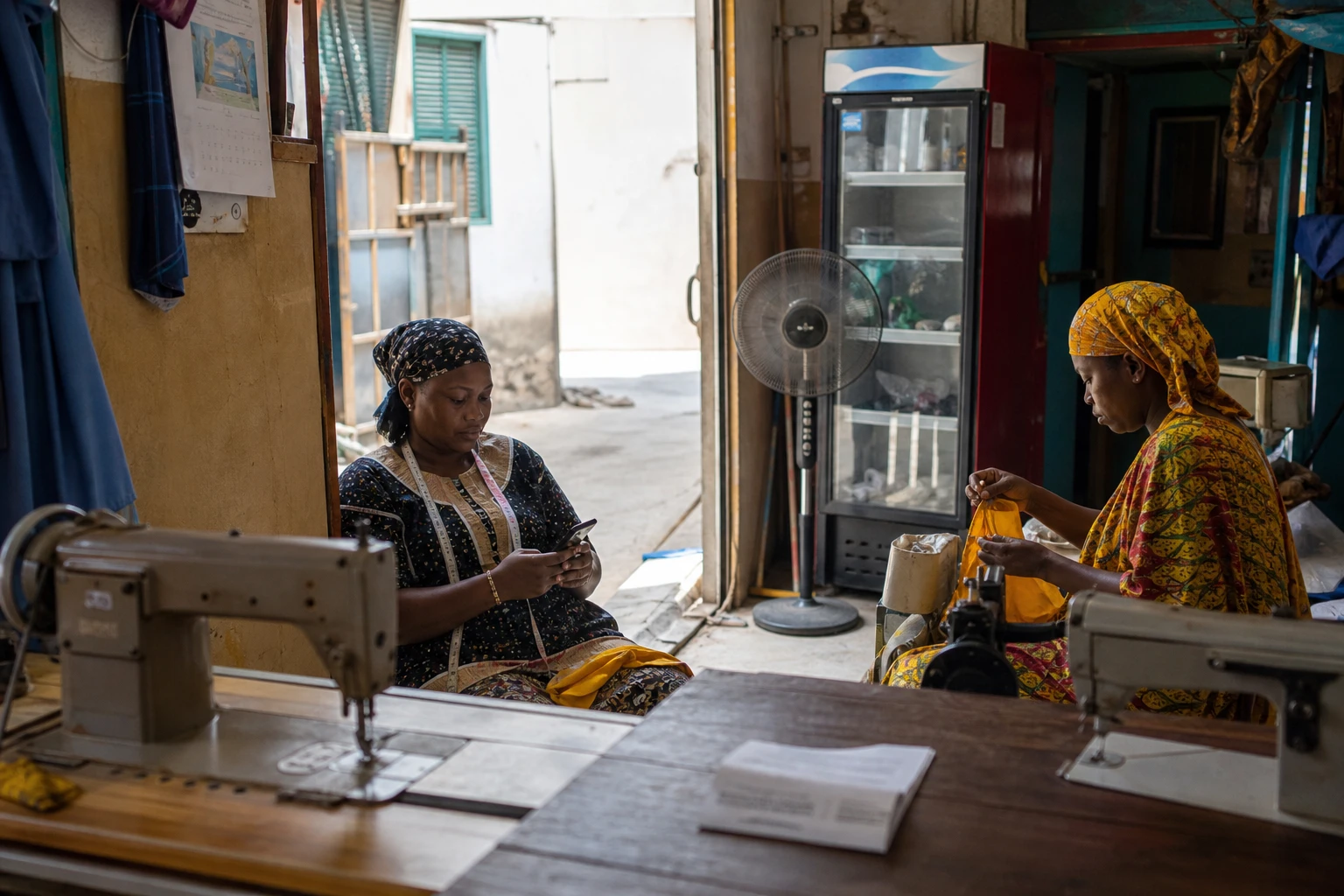
In Dakar, power cuts are no longer a minor disruption
In Dakar’s neighbourhoods, a power cut is never just a power cut. It slows down sewing work, puts a shop’s cold chain at risk and turns a hot night into an endurance test for households already facing rising prices. When the power falters in the Senegalese capital, the entire day-to-day economy is thrown off balance, especially activities operating on tight margins.
What Senegal’s electricity grid tells us
The situation reflects a heavily strained grid. According to Senelec’s 2024 annual report, peak demand reached 1,159 MW on 13 August 2024, while total output rose to 7,465.86 GWh. But that same year, the company also said that 76.63% of the electricity on the grid came from energy purchases, pointing to a structural reliance on multiple sources and a fragile balance between its own generation and supplies.
There are also occasional technical incidents. On 6 July 2026, Senelec explained that the national dispatch centre in Mbao is specifically tasked with balancing supply and demand, managing incidents and reducing automatic load-shedding. In other words, system stability depends on constant monitoring and the ability to respond quickly.
The facts: planned disruptions, followed by technical explanations
In September 2026, Senelec first announced scheduled interruptions in several areas of Dakar, Diamniadio and Rufisque, linking them to network maintenance and reinforcement work. Then, amid concern over repeated cuts in the capital, the company also acknowledged more serious constraints caused by rising demand and technical incidents at power plants.
According to explanations reported by several Senegalese media outlets, demand reached 1,400 MW in August 2026, compared with a forecast of 1,250 MW, while the shutdown of the Cap des Biches power plant on 6 and 7 September is said to have removed 240 MW from the grid. These figures should be understood as technical data attributed to Senelec and reported by the local press, not as an independent final assessment.
Why Dakar residents feel the impact more keenly
The impact is first and foremost social. In residential neighbourhoods as well as poorer areas, power cuts affect households at the same time as small businesses, workshops and fast-food outlets. A seamstress loses hours of work, a restaurant throws away some of its stock, and a household goes without a fan or air conditioner during the hot, rainy-season nights. In Dakar, these interruptions do not just affect comfort; they directly hit income, productivity and business reputations.
The economic context compounds the impact. High fuel, food and energy prices are already weighing on Senegalese households. Against this backdrop, every additional power cut adds hidden costs: replacing perishable goods, delivery delays, resorting to more expensive individual solutions such as generators, or simply losing customers. The problem is not confined to central Dakar; it also affects the suburbs, where there is often less room to absorb the impact.
A local issue, but a regional warning
For Senegal, this latest episode comes as the authorities seek to show progress towards more reliable energy and greater energy sovereignty. The energy minister’s visit to the national dispatch centre in July 2026 was specifically intended to underscore this. But repeated cuts are a reminder that a real gap remains between political ambition and service quality in major African cities heavily dependent on the grid.
The issue also matters across West Africa because Senegal is part of a connected regional electricity market, with energy exchanges and constant comparisons between coastal states and their Sahelian neighbours. The question is therefore not just about an incident in Dakar. It concerns the ability of African capitals to support urbanisation, informal economic activity, services and investment without disrupting residents’ daily lives. Users are now watching how long the disruptions last, how reliably repairs are carried out and whether Senelec can restore the predictability that has become essential.