Algeria
 Egypt
 Libya
 Morocco
 Sudan
 Tunisia
 Benin
 Burkina Faso
 Cabo Verde
 Côte d'Ivoire
 Ghana
 Guinea
 Guinea-Bissau
 Liberia
 Mali
 Mauritania
 Niger
 Nigeria
 Sierra Leone
 The Gambia
 Togo
 Cameroon
 Central African Republic
 Chad
 DR Congo
 Equatorial Guinea
 Gabon
 Republic of the Congo
 São Tomé and Príncipe
 Burundi
 Comoros
 Djibouti
 Eritrea
 Ethiopia
 Kenya
 Madagascar
 Malawi
 Mauritius
 Mozambique
 Rwanda
 Seychelles
 Somalia
 South Sudan
 Tanzania
 Uganda
 Angola
 Botswana
 Eswatini
 Lesotho
 Namibia
 South Africa
 Zambia
 Zimbabwe
In Dakar, the rain quickly became more than just a weather event. On Sunday 4 October 2026, several neighbourhoods were flooded, major roads became difficult to cross and families had to contend with rising water in their homes. The Senegalese government has since stepped up its emergency response.
A night of heavy rainfall in the capital
Rain recorded on the evening of Sunday 4 October affected Dakar and several other regions of Senegal. At Dakar-Yoff meteorological station, the total reportedly reached 137.5 millimetres in twenty-four hours. This is among the highest levels measured at the station since 1981, according to data attributed to the National Agency for Civil Aviation and Meteorology, ANACIM.
The effects were visible across several areas of the capital and its suburbs. Yoff, Grand-Yoff, Liberté 6, Parcelles Assainies, Grand-Médine, Yeumbeul, Mbao, Guédiawaye and Keur Massar were among the areas affected. Roads were submerged. Vehicles were left stranded. Traffic slowed considerably in some districts.
Essential infrastructure was also affected. Philippe Maguilen Senghor Hospital in Yoff was among the sites identified as vulnerable. Schools and several roads are also being assessed, as the start of the school year in the Dakar region could be disrupted if conditions worsen.
The full human toll has yet to be confirmed. Two deaths—that of a woman and a child—were reported overnight in Unit 7 of Parcelles Assainies. The authorities offered their condolences to the family. Further casualties have been reported in different parts of the country, but the precise number and locations have yet to be established by the relevant services.
Caution is necessary. In the hours following a disaster, casualty figures can change. Information from neighbourhoods, emergency responders and local administrations is not always immediately consolidated. For now, the available data mainly confirms the scale of the material damage and the exposure of many families.
Government activates monitoring system
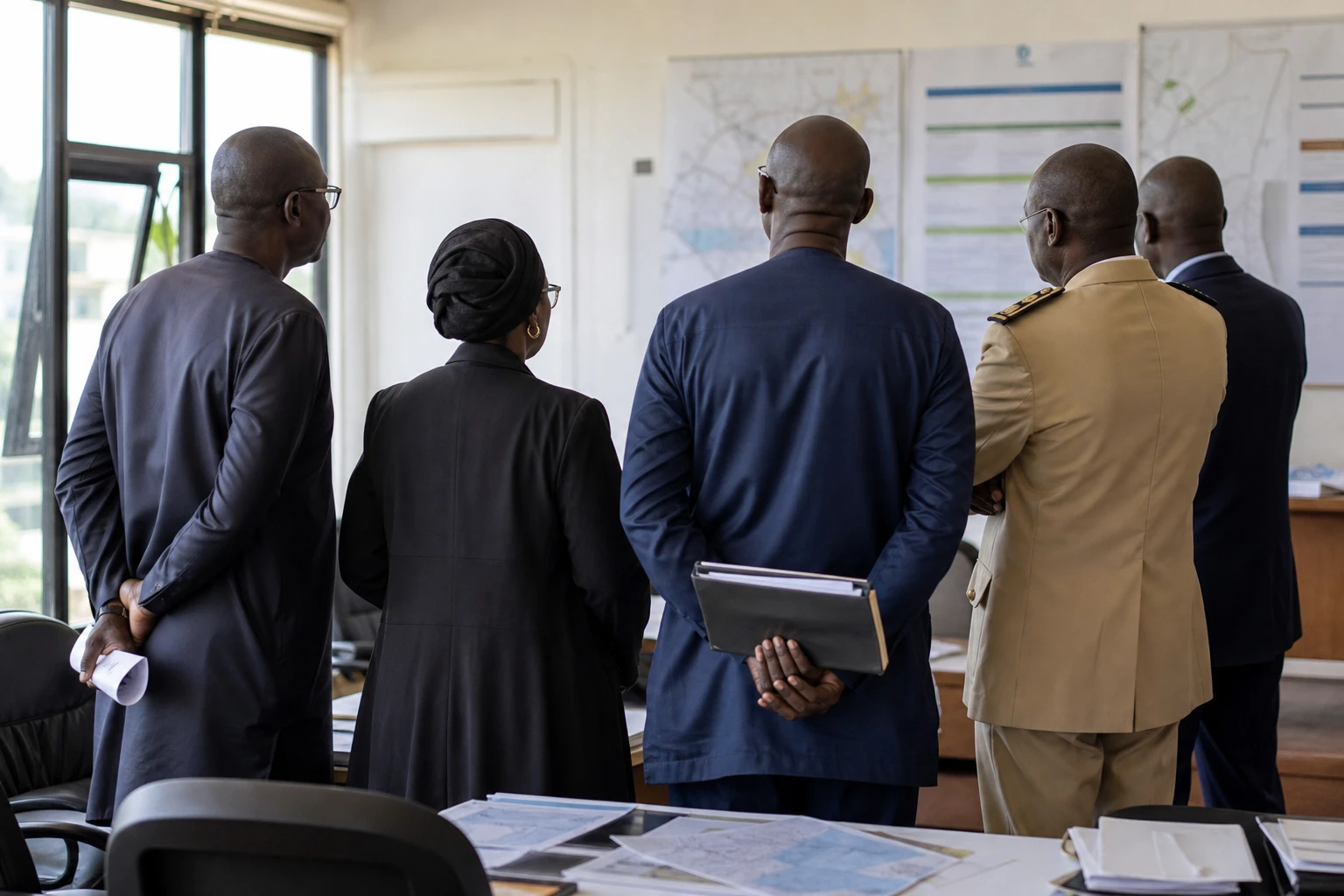
Prime Minister Ahmadou Alhaminou Lo chaired an emergency meeting at the Prime Minister’s Office on Monday 5 October. Several ministries took part, including those responsible for the Interior, Sanitation, Water, Family and Social Solidarity, National Education, Infrastructure and Transport.
Following the meeting, the head of government announced the activation of the Dakar regional emergency plan. The mechanism is intended to ensure continuous monitoring of exposed areas and faster co-ordination of interventions. A monitoring committee has also been set up alongside the operational services.
The authorities called for priority areas to be identified, particularly around the motorways, Philippe Maguilen Senghor Hospital and the catchment area. Measures must also be taken to limit the effects of any potential disruption to water and electricity supplies.
The Ministry of Family and Social Solidarity was instructed to provide rapid assistance to affected populations. This aid is to include families who have lost belongings, people temporarily displaced and residents facing difficulties accessing drinking water, healthcare or basic necessities.
The government has also announced the mobilisation of financial resources for immediate interventions. According to the Prime Minister’s Office, a structural response to flooding should also be based on a national programme valued at CFA francs 921 billion. However, the announced funding will need to be tracked over time: actual disbursement, the timetable for works, the choice of priority neighbourhoods and the maintenance of infrastructure will all be crucial.
Urban vulnerability goes beyond the rainfall
In Dakar, flooding is not determined solely by the amount of rain. It is also linked to rapid urbanisation, settlement in low-lying areas, impermeable surfaces and uneven maintenance of drains. When rainfall is intense, water runs off quickly towards the lowest-lying areas and is difficult to drain away.
The consequences are not the same for everyone. Households with solid housing and access to transport can sometimes reach safety more easily. By contrast, families living in highly exposed areas risk losing furniture, official documents, work equipment or stock for informal businesses.
Disruption also affects the day-to-day economy. Workers’ journeys are slowed. Small businesses close temporarily. Pupils and teachers may have difficulty reaching schools. Health centres, meanwhile, must continue to receive patients despite access problems or water seeping into buildings.
Dakar’s suburbs account for a significant share of these difficulties. Keur Massar, Yeumbeul, Mbao, Guédiawaye and other peripheral areas are experiencing sustained population growth. Needs for drainage, roads and community facilities are therefore growing rapidly. A one-off intervention is not always enough to reduce risk in the long term.
A test of Dakar’s preparedness
The timing gives this episode particular significance. Dakar is due to host the Youth Olympic Games from 31 October to 13 November 2026. The authorities had announced that drainage and rainwater management works at the sites concerned were to be completed by 15 October at the latest.
The heavy rain on 4 October is therefore a full-scale test of infrastructure, pumping systems and the co-ordination of public services. The issue concerns more than just sports venues. It also involves roads, transport, hospitals, schools and the neighbourhoods that will host visitors as well as residents.
The next step will be to assess the damage precisely and check whether the infrastructure can function during further episodes of rain. ANACIM has reported a high likelihood of rainfall between Tuesday 6 and Wednesday 7 October. This immediate prospect requires the authorities to combine relief, pumping, public information and monitoring of high-risk areas.
At regional level, Senegal’s response is also being watched by countries in the Economic Community of West African States, ECOWAS. Major West African cities face similar challenges: urban growth, overstretched sanitation networks and sometimes more intense rainfall. Dakar’s experience could therefore inform exchanges on prevention, weather warnings and the protection of urban populations.
For affected families, the immediate needs are tangible: finding safe accommodation, accessing healthcare, getting around and protecting their livelihoods. For the state, the challenge is now twofold. It must address this week’s damage while turning rainwater management into a lasting policy, monitored neighbourhood by neighbourhood and beyond periods of crisis.