Algeria
 Egypt
 Libya
 Morocco
 Sudan
 Tunisia
 Benin
 Burkina Faso
 Cabo Verde
 Côte d'Ivoire
 Ghana
 Guinea
 Guinea-Bissau
 Liberia
 Mali
 Mauritania
 Niger
 Nigeria
 Sierra Leone
 The Gambia
 Togo
 Cameroon
 Central African Republic
 Chad
 DR Congo
 Equatorial Guinea
 Gabon
 Republic of the Congo
 São Tomé and Príncipe
 Burundi
 Comoros
 Djibouti
 Eritrea
 Ethiopia
 Kenya
 Madagascar
 Malawi
 Mauritius
 Mozambique
 Rwanda
 Seychelles
 Somalia
 South Sudan
 Tanzania
 Uganda
 Angola
 Botswana
 Eswatini
 Lesotho
 Namibia
 South Africa
 Zambia
 Zimbabwe
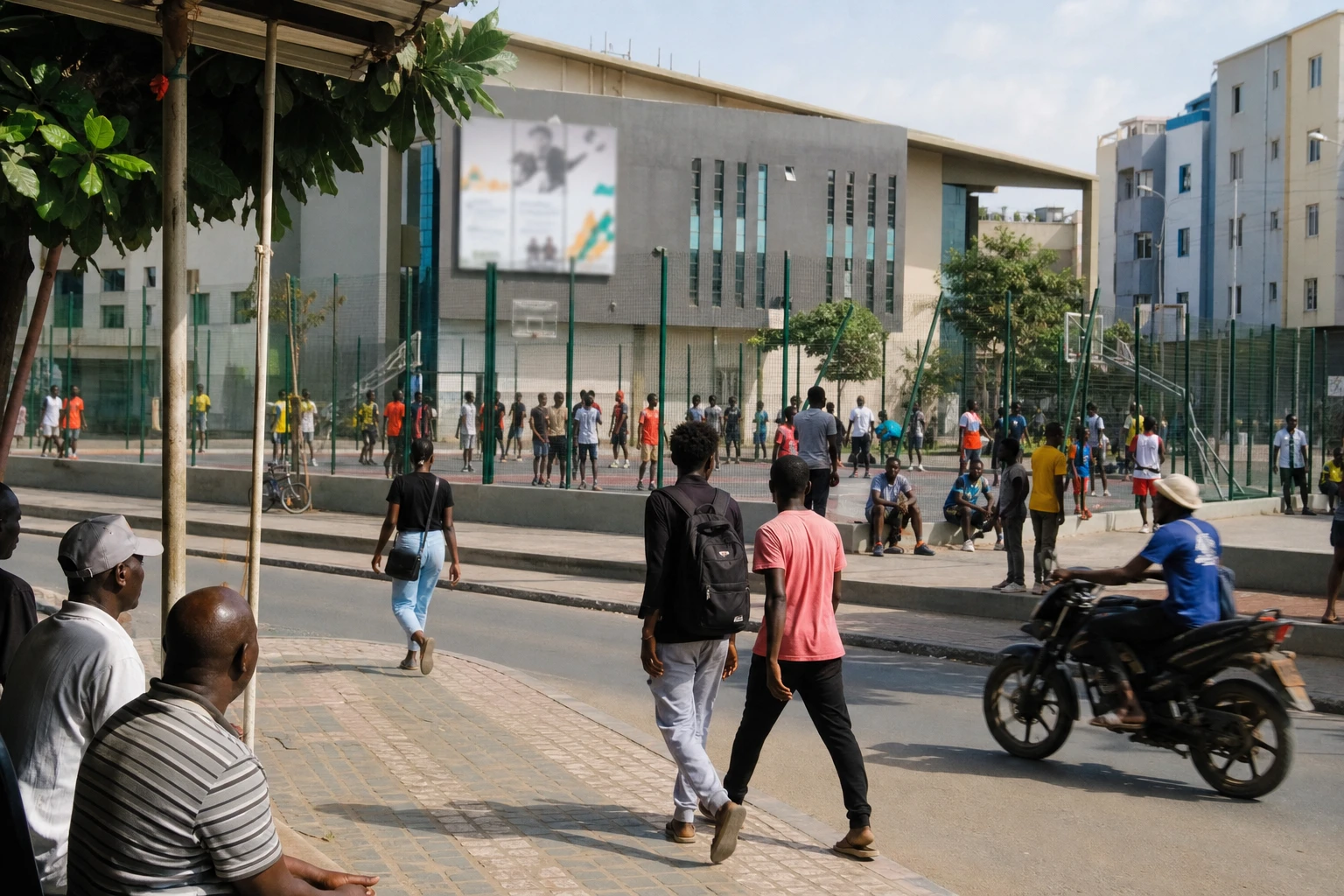
Just weeks before the opening, Dakar 2026 is already about more than a competition for teenagers. From 31 October to 13 November 2026, Senegal will host the first Olympic event on African soil. For Dakar, the challenge will therefore be twofold: to stage a successful sporting event and show that a major international gathering can leave a lasting mark on everyday life.
An Olympic first, but not Africa’s first in sport
The Dakar Youth Olympic Games will be the first event held under the Olympic rings to take place in Africa. The Senegalese capital will thus enter a history long marked by the continent’s absence among the host territories of the Olympic movement.
This contrasts with the role played by African athletes in the history of the Games. Athletics, boxing, swimming and team sports have regularly produced champions from the continent. Several African cities have also explored the possibility of hosting the Summer Olympic Games at various times. So far, none has cleared the final hurdle.
Dakar’s selection was announced in October 2018. The event was initially due to take place in 2022, before being postponed amid the Covid-19 pandemic. The final schedule now provides for 13 days of competitions and activities, across Dakar, Diamniadio and Saly.
The programme will include 25 competitive sports, alongside participatory disciplines and activities. About 2,700 young athletes, mainly aged 15 to 18, are expected. The precise figures may still change, depending on registration rules and quotas set by international federations.
An event designed for Senegalese young people
The Youth Olympic Games are not simply a scaled-down version of the Olympic Games. Their approach combines sport with education, culture and exchanges among young people. This gives Dakar 2026 particular significance on a continent where young people play a central role in demographic, social and economic dynamics.
For young Senegalese, the event is expected to reach beyond the sporting venues. Activities open to the public should encourage people to discover less familiar sports. They could also bring the competitions closer to neighbourhoods, schools and local sports associations.
This proximity will be crucial. An event focused on foreign delegations and official guests would have a limited impact on the population. By contrast, accessible facilities, school programmes and regular activities could strengthen participation in sport over the long term.
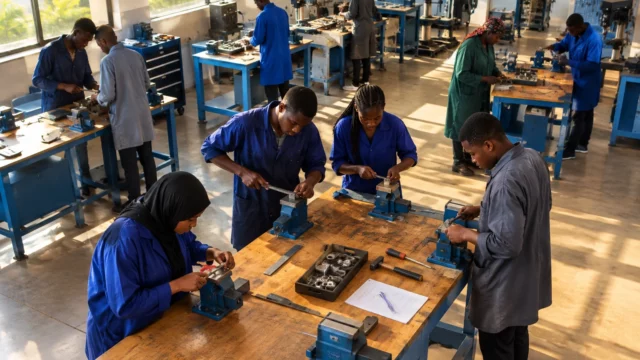
Preparations also include a skills-training component. The Dakar 2026 Learning Academy is to train more than 400 young professionals in sports event management. Logistics, technology, accreditation, venue management and operational organisation are among the fields covered.
Volunteers from several countries, mostly African, will also help welcome visitors and run the Games. This network is a professional testing ground. It could encourage the exchange of expertise between Senegal, other West African countries and the rest of the continent.
Senegal’s model faces the infrastructure challenge
Dakar 2026 is based on a decentralised model. Competitions will not be concentrated in a single Olympic complex. They will be spread across Dakar, Diamniadio and Saly, three hubs with different urban and economic realities.
This approach addresses a question that accompanies every major sporting event: what happens to the infrastructure after the closing ceremony? Senegal is seeking to limit facilities with no regular use. The stated aim is instead to rely on existing sites, either renovated or designed for long-term use.
The test will therefore concern mobility as much as sporting venues. Delegations will have to travel between the capital, Diamniadio and the Petite-Côte. For residents, success will also be measured by transport conditions, security, access to services and the continuity of economic activity.
In August 2026, the Senegalese government stepped up its monitoring of preparations. The prime minister called for daily checks on bottlenecks, while the Senegalese National Olympic and Sports Committee urged organisers to speed up work on the “last mile”. These statements show that preparations are entering their most operational phase.
Mobility remains a particularly sensitive issue. Dakar is already facing heavy pressure on its roads. The influx of athletes, officials, journalists and visitors will therefore require a reliable plan. Measures put in place will have to avoid disrupting Senegalese people’s day-to-day journeys.
A cultural showcase, but above all a legacy to measure
Senegal wants to showcase its culture, creativity and hospitality. “Teranga”, often associated with Senegalese hospitality, is expected to play a major role in the event’s identity. This emphasis will only have real meaning if it is accompanied by genuine participation from local audiences.
Organisers have also lined up well-known figures to raise the Games’ profile. Senegalese footballer Kalidou Koulibaly, French-Senegalese actor Omar Sy and content creator Khaby Lame have all been associated with the promotion of Dakar 2026. Their involvement may attract attention, but it cannot replace work carried out in schools, clubs and local authorities.
The Olympic movement also wants this edition to have an inclusive dimension. A team of young refugees identified in East Africa is due to take part, in a format inspired by the Refugee Olympic Team. This participation combines competition, educational support and assistance for the wellbeing of the young people concerned.
For the Senegalese authorities, the question of legacy is now central. President Bassirou Diomaye Faye has called for the infrastructure to become, beyond the Games, permanent places for people to gather, create jobs and pursue economic activities.
A signal for West Africa and the Olympic movement
Dakar 2026 comes as West Africa is undergoing major political, economic and social changes. Senegal remains a member of ECOWAS, the regional organisation that coordinates several economic and mobility policies in West Africa. The country’s ability to host a continental and global event will therefore be watched well beyond its borders.
The event’s significance will not be limited to medals. It will depend on the ability to create opportunities for young people who have been trained, keep facilities open to the public and develop sports that are still not widely practised. It will also be measured by the place given to cities and regions far from Dakar.
On 13 November 2026, the closing ceremony will mark the end of a historic first. But the real assessment will begin afterwards. If the venues remain active, skills acquired are shared and young Senegalese continue to embrace the sports on offer, Dakar 2026 could become more than a symbol. Senegal will then have turned an Olympic first into a tool for sporting, professional and regional development.