Algeria
 Egypt
 Libya
 Morocco
 Sudan
 Tunisia
 Benin
 Burkina Faso
 Cabo Verde
 Ghana
 Guinea
 Guinea-Bissau
 Liberia
 Mali
 Mauritania
 Niger
 Nigeria
 Senegal
 Sierra Leone
 The Gambia
 Togo
 Cameroon
 Central African Republic
 Chad
 DR Congo
 Equatorial Guinea
 Gabon
 Republic of the Congo
 São Tomé and Príncipe
 Burundi
 Comoros
 Djibouti
 Eritrea
 Ethiopia
 Kenya
 Madagascar
 Malawi
 Mauritius
 Mozambique
 Rwanda
 Seychelles
 Somalia
 South Sudan
 Tanzania
 Uganda
 Angola
 Botswana
 Eswatini
 Lesotho
 Namibia
 South Africa
 Zambia
 Zimbabwe
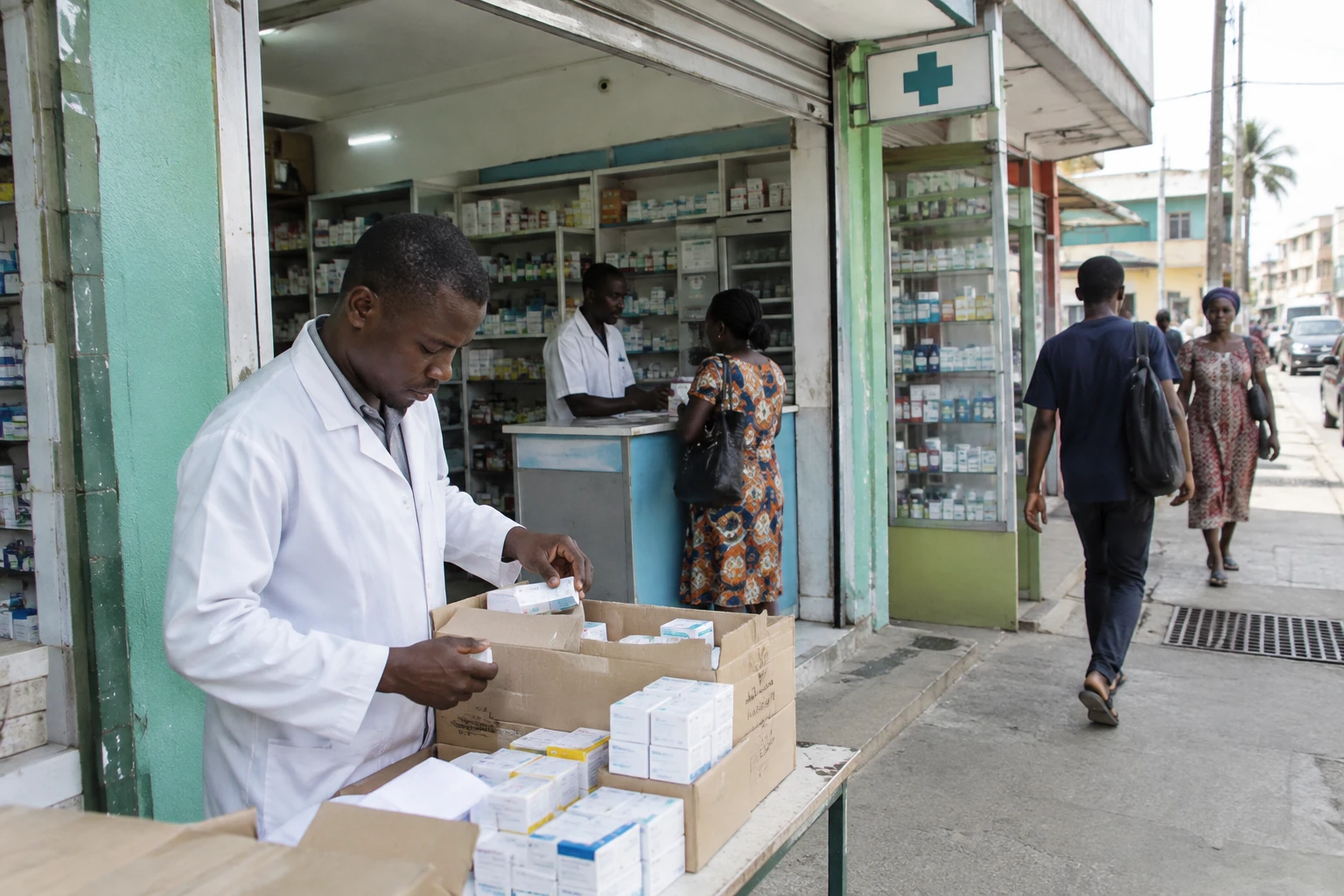
For a pharmacy, financing stock, replacing equipment and paying expenses are not just matters of day-to-day management. These decisions also affect the continuity of services offered to patients. In Abidjan, the National Order of Pharmacists of Côte d’Ivoire’s annual days brought these issues back to the centre of discussions between professionals and financial sector players.
A profession in transition, at the heart of the health system
The 13th edition of the National Order of Pharmacists of Côte d’Ivoire’s annual days (JONPCI) took place from 15 to 17 October 2026 in Abidjan. The programme put training at the centre of discussions, focusing on the transformation of pharmaceutical services. The edition therefore linked questions of skills and quality of care with the economic realities of pharmacies and other health facilities.
The private sector plays an important role in Côte d’Ivoire’s pharmaceutical provision. According to data from the Ministry of Health cited by the Ivorian economy’s public portal, the country had 1,217 private pharmacies at the end of August 2025. The same source estimates that the private pharmaceutical sector supplies between 80 and 90% of medicines. These figures highlight the issue: the financial health of facilities can have tangible consequences for their ability to maintain operations and serve their customers.
However, pharmacies do not all face the same constraints. The needs of a high-volume urban pharmacy differ from those of a facility in a secondary city or a less well-served area. Supply costs, payment times and access to credit can also have a different impact depending on the size of the business. Discussions between professionals, banks and the authorities are useful if they bring these differences to light, beyond announcements of commercial offers.
Bank highlights dedicated offer
NSIA Banque Côte d’Ivoire says it took part in the event with a stand dedicated to health professionals. The bank says it spoke with pharmacists, pharmacy managers and representatives of health facilities about their financing needs and banking support. This participation, as well as the number of people met, is based on information provided by the institution.
The bank presented the Pack Pharma & Co, a professional account package for pharmacies and several other medical facilities. The offer’s official page lists banking services, remote management tools and financing facilities, including invoice advances, overdrafts and leasing. The published offer also specifies eligibility requirements and fees: professionals should therefore examine the criteria, guarantees and total cost before signing up.
“Health professionals play a decisive role in the well-being of the population and in the development of our economy,” said Carine Domoraud, identified as NSIA Banque’s director of SMEs. She described the bank’s aim as supporting projects and business growth. This statement expresses the institution’s position; on its own, it is not an independent assessment of pharmacies’ actual access to credit.
The event also continued with a gala dinner, according to information provided by the bank. Such networking occasions can bring together players from the same sector. But their impact will depend above all on what follows the discussions: suitable financing terms, transparency on costs and the ability to meet the needs of facilities of different sizes.
Beyond the product, the question of access to finance
A sector-specific offer can simplify procedures by bringing together several services. It does not automatically solve financing difficulties. Pharmacies need working capital to replenish stock, as well as investment to modernise equipment or develop services. Credit can support these projects; it can also increase costs if repayments do not match the business’s actual cash flow.
The question arises in a sector where the availability of medicines depends on several links in the chain: importers and producers, wholesalers, transporters, pharmacies, public procurement systems and regulation. Bank financing is therefore just one lever among others. Continuing professional development, a central theme of JONPCI 2026, also matters: staff skills and evolving practices influence the quality of pharmaceutical advice and patient safety.
For the population, the issue is indirect but tangible. A pharmacy able to manage its supplies and investments can help ensure continued access to health products. However, financing announcements are not enough to conclude that medicines will become more accessible or that regional disparities will diminish. This also depends on regulation, the organisation of the supply chain and the distribution of professionals across the country.
An Ivorian issue that forms part of West African debates
For Côte d’Ivoire, the event brings together two priorities: strengthening health services and supporting the businesses that contribute to them. The issue also concerns players across West Africa, where trade and supply chains often extend beyond national borders. ECOWAS, the Economic Community of West African States, is one framework for regional cooperation. But financing conditions and the organisation of pharmacies remain closely tied to each country’s institutions and circumstances.
Progress will be measured less by the stands than by the results: which facilities actually gain access to financing, on what terms, and with what effect on their ability to invest? For pharmacists based outside major urban centres as well as those in Abidjan, proximity to a bank is valuable only if accompanied by accessible and appropriate solutions. The impact of closer ties between banks and the profession will be judged on this practical basis.
Background sources: official presentation of NSIA Banque’s Pack Pharma & Co ; public data on Côte d’Ivoire’s private health sector ; report on JONPCI 2026 and its training theme ; programme for the National Order of Pharmacists’ annual days.