Algeria
 Egypt
 Libya
 Morocco
 Sudan
 Tunisia
 Burkina Faso
 Cabo Verde
 Côte d'Ivoire
 Ghana
 Guinea
 Guinea-Bissau
 Liberia
 Mali
 Mauritania
 Niger
 Nigeria
 Senegal
 Sierra Leone
 The Gambia
 Togo
 Cameroon
 Central African Republic
 Chad
 DR Congo
 Equatorial Guinea
 Gabon
 Republic of the Congo
 São Tomé and Príncipe
 Burundi
 Comoros
 Djibouti
 Eritrea
 Ethiopia
 Kenya
 Madagascar
 Malawi
 Mauritius
 Mozambique
 Rwanda
 Seychelles
 Somalia
 South Sudan
 Tanzania
 Uganda
 Angola
 Botswana
 Eswatini
 Lesotho
 Namibia
 South Africa
 Zambia
 Zimbabwe
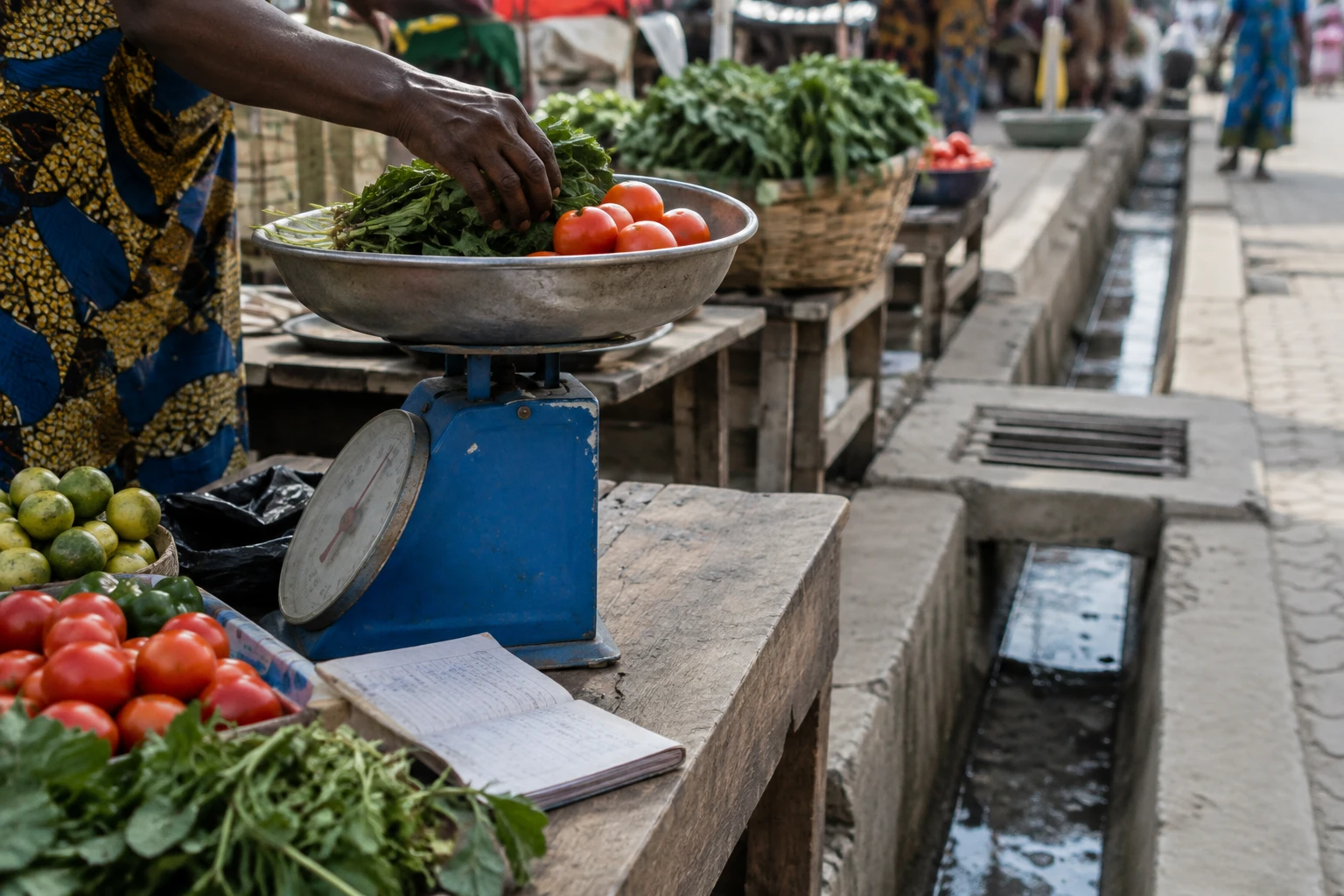
In Cotonou, rainwater puts more than roads to the test. When neighbourhoods are flooded, journeys to school, healthcare and work become more difficult. Drainage projects therefore seek to address both a climate risk and the everyday provision of public services.
A city exposed to several types of flooding
Benin’s economic capital lies between Lake Nokoué and the Atlantic Ocean. According to the World Bank, flooding can result from intense rainfall that overwhelms drains, rising lake levels, groundwater or high tides. These phenomena can coincide, making it harder to drain the water.
The Cotonou Rainwater Sanitation Programme, launched in 2020, covers 34 of the city’s 50 catchments and sub-catchments. It is funded by several partners, including the African Development Bank (AfDB), the World Bank, the West African Development Bank and the French Development Agency. The AfDB supports a specific component, the Programme Support Project, which combines drainage with community-level facilities.
The needs therefore go beyond building drains. The infrastructure’s effectiveness also depends on maintenance, waste management and the protection of areas where water can flow or be retained. The French Development Agency emphasises, in particular, the role of wetlands in regulating floods and maintaining urban balance.
Schools, roads and healthcare facilities
An AfDB supervision mission took place from 12 to 15 October, according to information provided about the project. The available material does not specify the year of the visit. On the ground, the teams examined drainage and flood-protection infrastructure, as well as social facilities in the Vèdoko area.
The works presented include the reconstruction and equipping of the Benin School for the Deaf and Vèdoko 2 public primary school, the construction of a laboratory attached to a municipal health centre, and the installation of public toilets. The project also includes improvements to urban roads. These facilities are linked to sanitation: passable streets and safer access to services are especially important when rain disrupts travel.
At Vèdoko 2 school, a canteen worker quoted in the project report describes a dining hall that now allows her to work under cover and welcome children in better conditions. Her testimony illustrates a tangible benefit, but is not enough on its own to measure the overall impact of the investments or how long they will last. Monitoring will also need to assess actual access to the facilities and their maintenance.
The AfDB’s initial project includes, among other things, a retention basin with a capacity of 220,500 cubic metres and 33 kilometres of drains and drainage channels. These figures describe the targets of the component funded by the Bank, not a confirmed tally of infrastructure completed by the time of the October mission. A government statement published in 2024 said the wider programme covered 34 catchments and sub-catchments.
The crucial question: who benefits from the infrastructure?
Drainage networks can reduce standing water and improve mobility. But their effects vary between neighbourhoods, households and businesses. For children and deaf people, the quality and accessibility of a school matter as much as its building. For women traders, informal workers and small businesses, passable roads can make it easier to travel and conduct business, but do not in themselves guarantee higher incomes.
The municipality must also be able to monitor the infrastructure and organise its maintenance. The mission report says the teams welcomed progress and asked contractors and supervision teams to maintain their efforts on quality and deadlines. This recommendation highlights a central issue: infrastructure inaugurated today will provide lasting protection only if it works, remains accessible and is maintained.
Regionally, the issue reflects a challenge shared by West African coastal cities, although their circumstances are not identical. Urbanisation, intense rainfall and rising water levels require better coordination between drainage, urban planning and municipal services. Benin’s secondary cities sanitation programme, supported by the AfDB and launched in 2024, is also extending investment to Porto-Novo, Ouidah, Abomey and Bohicon.
In Cotonou, the next steps will be to verify the infrastructure delivered, its ability to function during heavy rainfall and how benefits are distributed between neighbourhoods. The available information does not allow an independent assessment of the mission or confirmation of the nearly 100,000 beneficiaries cited in the project presentation. The challenge, then, is to distinguish announced achievements from results measured over successive rainy seasons.