
 Algeria
 Egypt
 Libya
 Morocco
 Sudan
 Tunisia
 Benin
 Burkina Faso
 Cabo Verde
 Ghana
 Guinea
 Guinea-Bissau
 Liberia
 Mali
 Mauritania
 Niger
 Nigeria
 Senegal
 Sierra Leone
 The Gambia
 Togo
 Cameroon
 Central African Republic
 Chad
 DR Congo
 Equatorial Guinea
 Gabon
 Republic of the Congo
 São Tomé and Príncipe
 Burundi
 Comoros
 Djibouti
 Eritrea
 Ethiopia
 Kenya
 Madagascar
 Malawi
 Mauritius
 Mozambique
 Rwanda
 Seychelles
 Somalia
 South Sudan
 Tanzania
 Uganda
 Angola
 Botswana
 Eswatini
 Lesotho
 Namibia
 South Africa
 Zambia
 Zimbabwe
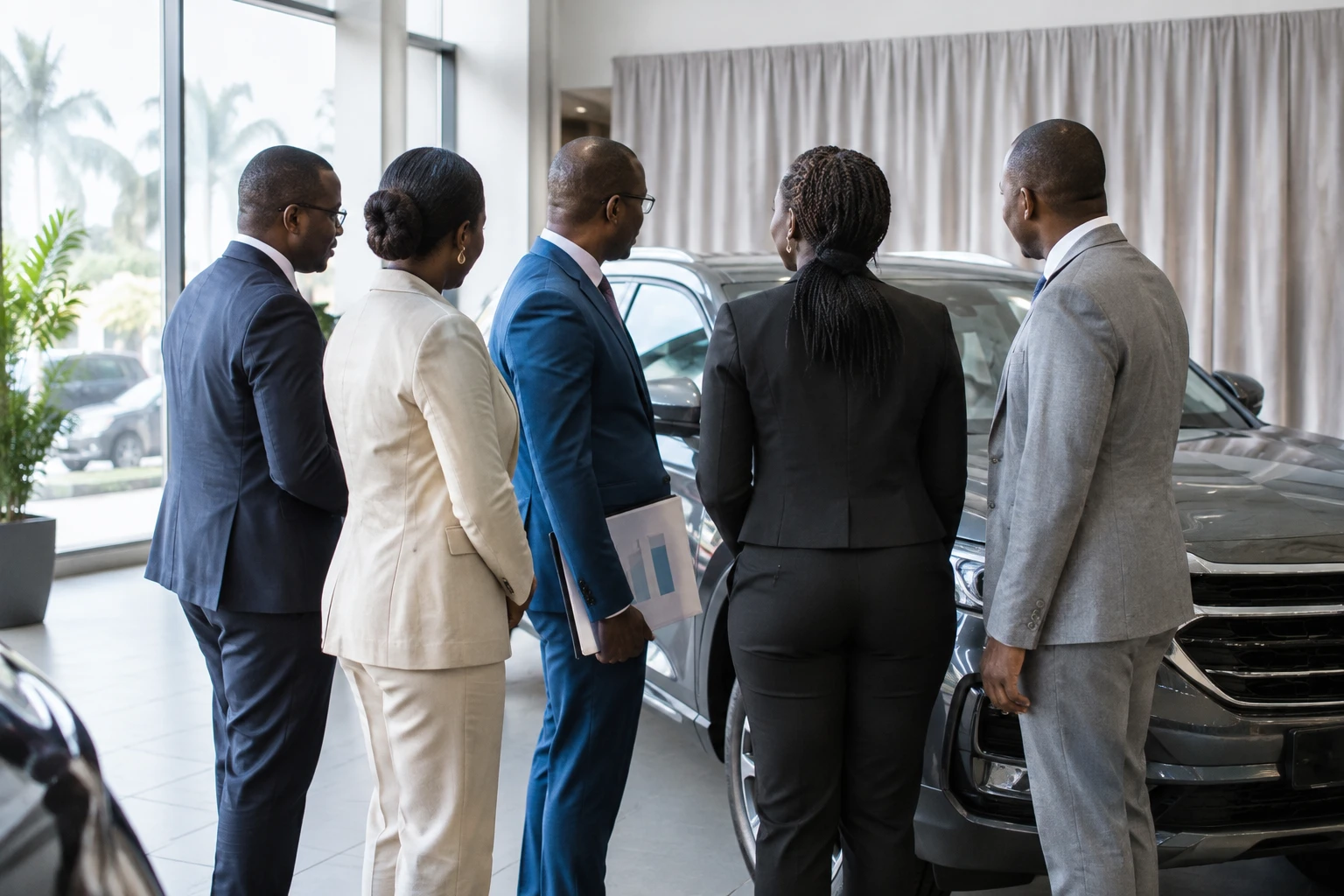
A new vehicle can become a tool of the trade, but its purchase price can be a major burden at the time of acquisition. In Côte d’Ivoire, a new leasing offer from NSIA Banque and Rimco Motors aims to lower that barrier through payments spread over time. It does not, however, eliminate the cost of financing or the assessment of the application.
A temporary offer, subject to conditions
The Easy Leasing offer is available from 26 October to 23 December 2026. It is aimed at individuals and businesses choosing a new vehicle sold by Rimco Motors. According to the terms presented by the partners, financing can cover up to 100% of the price, with no upfront payment, subject to eligibility.
The term can be up to 60 months. At the end of the contract, the customer can become the vehicle’s owner by paying a residual value of between 1% and 5% of the purchase price. This sum is in addition to the payments already made: no upfront payment therefore does not mean that the vehicle comes with no initial or final cost.
The advertised rates are 9% inclusive of tax for individuals. For businesses, they are 8.5% inclusive of tax for terms of up to 36 months, then 9% inclusive of tax for longer terms. Monthly payments will depend in particular on the vehicle, the term and the assessment of the application. The published information does not detail the total cost for each customer profile.
The range covered includes passenger cars, SUVs, pick-ups and lorries. The customer must first choose a vehicle from Rimco Motors and obtain a pro forma invoice. They then submit an application at an NSIA Banque branch. An initial decision is promised within a maximum of ten working days, provided the application is admissible. Financing remains subject to the bank’s assessment and approval.
Leasing: use versus ownership
Leasing allows a customer to use an asset in exchange for regular payments, with an option to buy at the end of the contract. In other words, the customer does not automatically become the owner by making the monthly payments. They must exercise the option and pay the agreed residual value.
This arrangement can help a business acquire a vehicle quickly without committing all its capital at the outset. For a transport company or a service business, a lorry or van can be put to work while payments are spread over time. But monthly payments remain an expense to be set against expected revenue, and the contract terms determine each party’s obligations.
For individuals, the arrangement can make a purchase possible without substantial savings in advance. In return, the interest rate, term and final payment all affect the budget. It is therefore essential to compare the total cost of the contract with the cash price, as well as to check insurance requirements, any additional fees and the consequences of missed payments. These terms should be confirmed in the contractual offer.
A market regulated across the union
Côte d’Ivoire is part of the West African Economic and Monetary Union (WAEMU), which brings together eight countries that share, among other things, a currency and a common financial framework. Leasing is governed by a harmonised legal framework there. The uniform law adopted in 2017 sets out the rights and obligations of the parties; it distinguishes leasing from the transfer of ownership and establishes the conditions for the purchase option.
This regulation provides a framework for contracts that commit customers for several years. It does not, however, guarantee that an application will be approved or that credit will be affordable for all households and businesses. Eligibility criteria, the ability to repay and the precise clauses remain decisive.
The partnership brings together a bank and a car distributor, two parties involved at different stages: the sale of the vehicle and its financing. This type of arrangement can simplify the process, as the customer starts at the dealership before submitting an application to the bank. The challenge will be to make the costs and responsibilities sufficiently clear, particularly for small businesses whose cash flow varies with activity.
A tangible issue for the Ivorian economy
In Côte d’Ivoire, where Abidjan accounts for a large share of economic activity while Yamoussoukro is the political capital, demand for transport serves a wide range of purposes. A passenger car meets a travel need; a van or lorry can be used directly to produce, deliver or transport goods. The effects of a financing offer will therefore differ for an employee, an SME and a transport operator.
Financed vehicles can support business activity, but access to credit also depends on regular income and guarantees, which applicants do not all have in the same way. The advertised 100% financing lowers the upfront-payment barrier for approved applications; it does not remove the risk of debt or running costs such as maintenance, fuel and insurance.
Borrowers should therefore pay attention to the total cost, residual value, associated fees and the rules that apply in the event of late payment or termination. Businesses will also need to assess whether the revenue generated by the vehicle can cover the payments on a sustained basis. The full terms available at branches and sales outlets will clarify these points.
The offer runs until 23 December 2026. Its success will depend on the number of applications approved and customers’ ability to meet payments until the end of the contract. At regional level, the initiative is part of a market where the WAEMU framework makes leasing possible across national borders, but effective access to financing remains subject to each institution’s criteria.
Easy Leasing presentation by NSIA Banque Côte d’Ivoire · Advertised terms of the NSIA Banque-Rimco Motors offer · Legal framework for leasing in WAEMU · BCEAO regulatory definition of leasing.



