Algeria
 Egypt
 Libya
 Morocco
 Sudan
 Tunisia
 Benin
 Burkina Faso
 Cabo Verde
 Ghana
 Guinea
 Guinea-Bissau
 Liberia
 Mali
 Mauritania
 Niger
 Nigeria
 Senegal
 Sierra Leone
 The Gambia
 Togo
 Cameroon
 Central African Republic
 Chad
 DR Congo
 Equatorial Guinea
 Gabon
 Republic of the Congo
 São Tomé and Príncipe
 Burundi
 Comoros
 Djibouti
 Eritrea
 Ethiopia
 Kenya
 Madagascar
 Malawi
 Mauritius
 Mozambique
 Rwanda
 Seychelles
 Somalia
 South Sudan
 Tanzania
 Uganda
 Angola
 Botswana
 Eswatini
 Lesotho
 Namibia
 South Africa
 Zambia
 Zimbabwe
When language is lacking, access to healthcare is put at risk
In Abidjan, a simple ache can become a complex ordeal for a deaf Ivorian. At a pharmacy, they may have to improvise with gestures, wait for a video call, and then finally find someone to interpret. This takes time. Above all, it creates an invisible barrier in a country where information is still too rarely conveyed through sign language.
Côte d’Ivoire does, however, have a legal framework on disability dating back to the 1998 framework law. In 2025, the state also reaffirmed its commitment to protecting the rights of people with disabilities by moving towards ratification of the corresponding African protocol. On paper, the direction is clear. In practice, services needed in everyday life remain unevenly accessible.
The daily reality for deaf people in Côte d’Ivoire
The case of Gildas, a deaf carpenter, illustrates a wider problem. Without an interpreter, a medical appointment, buying medicines or even a simple administrative procedure can become difficult, or may not be completed at all. Ivorian associations that defend the rights of deaf people have described the same difficulty for years: the lack of interpretation blocks access to hospitals, police stations, schools and public services.
Public authorities also recognise this need. Training sessions in sign language, braille and differentiated teaching have been organised for teachers, supervisors and social workers. The government also cites the existence of specialist institutions, such as the Ivorian School for the Deaf in Yopougon, which has just received a new school building in April 2026. These signs point to growing awareness. They are not yet enough to make up for the shortage of interpreters in everyday settings.
The issue is all the more sensitive because it affects access to healthcare, as well as to justice and administrative identity. At a police station or before a prosecutor’s office, a misunderstanding can change a name, an age or an account of events. For a deaf person, the error is not merely technical. It can have social and legal consequences, sometimes lasting ones. That is why the demand for interpreters is not a matter of convenience. It concerns the protection of rights.
What the shortage of interpreters reveals
The problem extends beyond Abidjan. It also affects inland areas, where specialist services are scarcer and travel costs more. Families often have to rely on a relative, a child or an association contact to find an interpreter. This makes demands on households, especially when the person concerned needs several appointments or has to travel to a distant government office. Exclusion is therefore not theoretical. It comes at the cost of time and transport, and sometimes means giving up altogether.
Côte d’Ivoire has, however, begun to put responses in place. The government cites employment quotas, a fund to support the professional integration of people with disabilities, and awareness campaigns. But the specific issue of interpretation remains less visible than other public policies. Sign language is not an auxiliary tool. It is a language in its own right, with its own grammar, vocabulary and logic. Recognition in practice must therefore be accompanied by a system for training, recruiting and paying interpreters.
The figure of 75,000 deaf people in Côte d’Ivoire, often cited in accounts from the field, appears in several reports but should be treated with caution, given the lack of robust statistical corroboration in the public sources consulted. By contrast, the government’s official figures refer to 500,000 people with disabilities across all categories. This is a reminder of an essential point: deafness does not affect a marginal group, but a significant part of the population that needs adapted services.
An Ivorian issue, but also a West African one
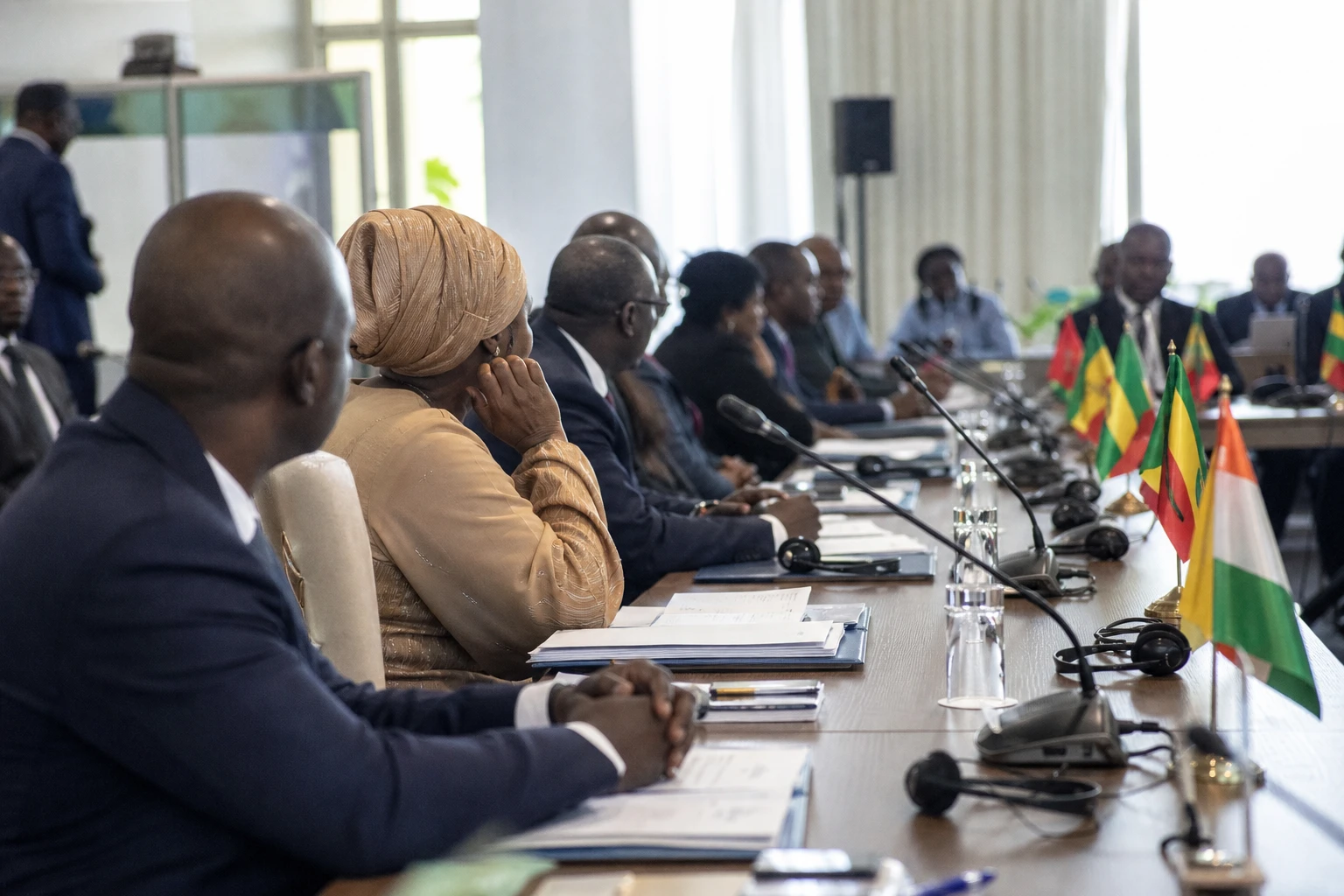
In the ECOWAS region, where free movement and regional integration are often emphasised, accessibility still depends too heavily on local initiatives. Côte d’Ivoire can play a leading role, provided it moves from announcements to practical organisation. Training more interpreters, placing them in hospitals, town halls, courts and police stations, and including them in public budgets would do more to change daily life than long speeches about inclusion.
The continental implications are clear. In Africa, the rights of people with disabilities advance when states turn legal texts into accessible services. The announced ratification of the African protocol on the rights of people with disabilities fits this approach. It presents Côte d’Ivoire with a simple requirement: to ensure that a deaf citizen can make themselves understood in Yamoussoukro as well as in Abidjan, without depending on a favour or a video call. This is where inclusion is measured in practical terms.