Algeria
 Egypt
 Libya
 Morocco
 Sudan
 Tunisia
 Benin
 Burkina Faso
 Cabo Verde
 Ghana
 Guinea
 Guinea-Bissau
 Liberia
 Mali
 Mauritania
 Niger
 Nigeria
 Senegal
 Sierra Leone
 The Gambia
 Togo
 Cameroon
 Central African Republic
 Chad
 DR Congo
 Equatorial Guinea
 Gabon
 Republic of the Congo
 São Tomé and Príncipe
 Burundi
 Comoros
 Djibouti
 Eritrea
 Ethiopia
 Kenya
 Madagascar
 Malawi
 Mauritius
 Mozambique
 Rwanda
 Seychelles
 Somalia
 South Sudan
 Tanzania
 Uganda
 Angola
 Botswana
 Eswatini
 Lesotho
 Namibia
 South Africa
 Zambia
 Zimbabwe
In several regions of Côte d’Ivoire, clandestine mining operations no longer move only by motorbike or along tracks. They also use pumps, dredgers and networks set up along waterways. To regain control of these areas, the Ivorian state is launching a new phase in its strategy against illegal gold mining.
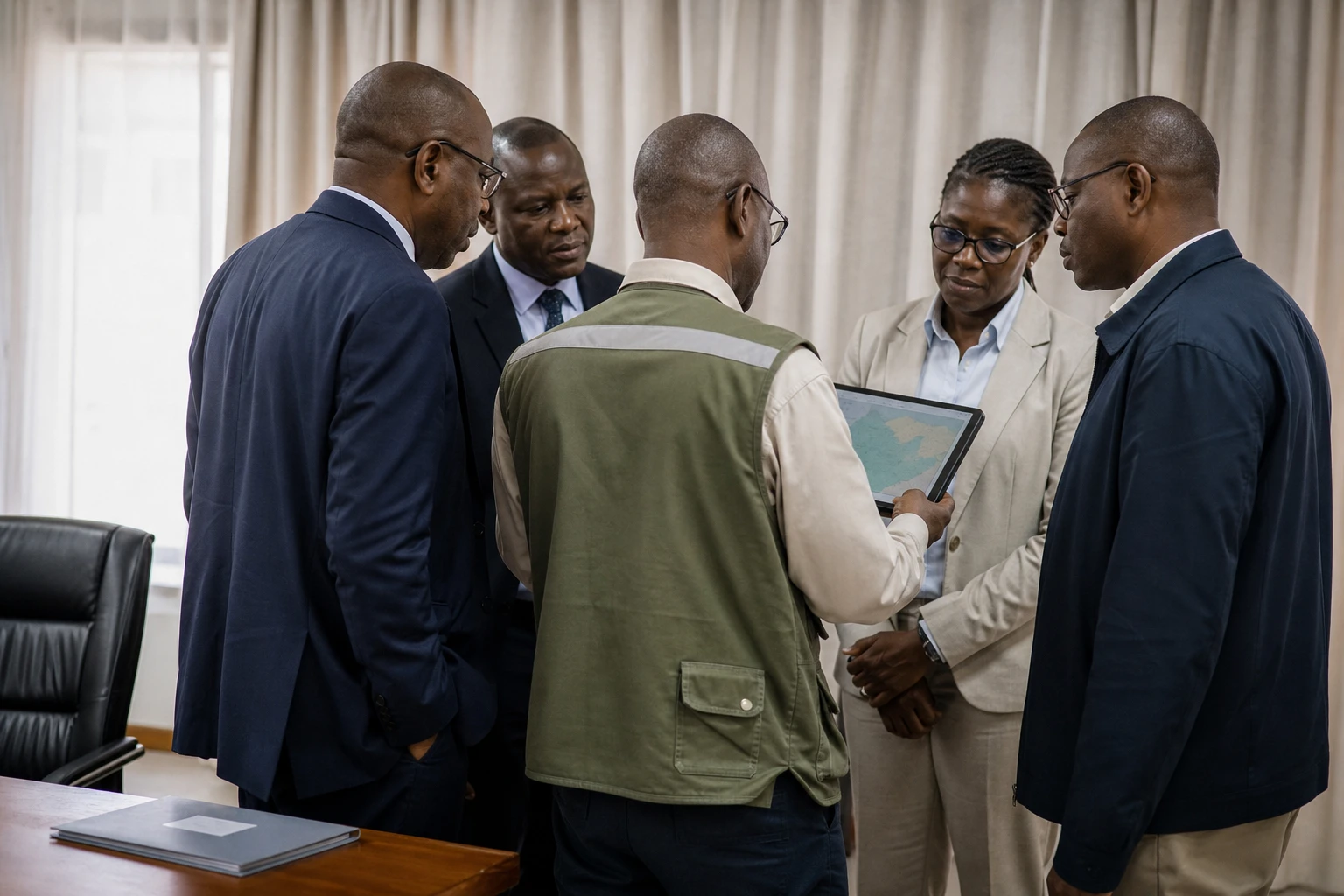
In Yamoussoukro, the authorities have set a six-month deadline for measurable results. This puts regional prefects, security forces and technical administrations under the same obligation: to identify sites more effectively, cut off their supplies and prevent them from reopening.
An operation built around mobility
The Special Group for Combating Illegal Gold Mining, or GS-LOI, now has additional resources. Established in 2021, the unit is receiving 300 motorbikes, 30 pick-up trucks, 12 boats and drones. The aim is to enable rapid operations in hard-to-reach areas, on land and water, by day and night.
This reinforcement responds to operational realities. Clandestine sites are often far from major roads. Some are set up near rivers or in forested areas. Others quickly change location after an operation. Motorbikes make it easier to travel along tracks. Boats allow waterways to be monitored. Drones can help map areas being mined and track how they change.
The equipment was handed over as part of the measures presented by the Ivorian authorities in September 2026. The Ivorian National Security Council also announced closer coordination between the services involved and regular monitoring of operations.
From ad hoc responses to a national strategy
The government no longer presents illegal gold mining as simply a mining issue. It classifies it as a national security concern. This broadens the scope of the response, involving the gendarmerie, armed forces, Water and Forests authorities, territorial administration, the judiciary and environmental services.
In practice, clandestine mining affects several sectors at once. It deprives the state of revenue. It degrades soil and forests. It disrupts waterways. It can also encourage child labour, the circulation of dangerous products and the formation of financing networks that are difficult to control.
Operations conducted in recent months illustrate the geographical spread. The GS-LOI has operated in Bagoué, Worodougou, Hambol, Iffou, Moronou, Sud-Comoé, Gontougo, Kabadougou and Béré. In the department of Dabakala, 181 people were reportedly arrested and referred to prosecutors between January and August 2026, according to information reported by the Ivorian Press Agency.
These operations have also led to the destruction of large quantities of equipment. In Dabakala, the authorities reported that crushers, motor pumps, motorbikes, tricycles and suction pipes had been seized or destroyed. These figures illustrate the scale of the logistics needed to operate clandestine sites.
Heavier penalties aimed at the networks
The new approach does not rely solely on destroying installations. The Ivorian government has adopted a draft bill to toughen penalties. The text targets operators, but also those who commission the activity, receivers of stolen goods, financiers and owners of sites involved in illegal operations.
Fines could reach 50 million to 100 million CFA francs, while prison terms for several offences would range from two to five years. Where a public official is involved, the sentence could reach 20 years in prison. The bill must still go through the legislative process before it can come into force.
The change is intended to move beyond an approach focused only on workers present at the sites. Closing a camp is not enough if the equipment is replaced a few weeks later. The authorities therefore want to trace the networks financing, transporting and marketing the gold.
The draft bill presented by the government also provides for new offences. This approach could strengthen financial investigations, provided arrests lead to robust court proceedings and judgments that are actually enforced.
The challenge of communities and territories
The announced crackdown nevertheless puts the authorities up against a local challenge. In some rural areas, gold mining provides quick income to people with few economic alternatives. Dismantling sites may therefore interrupt an activity without addressing the reasons it resumes.
The situation varies from place to place. In remote regions, residents may depend on markets linked to mining sites. In towns, the effects are felt more through the circulation of gold, equipment and money. Communities living near rivers, meanwhile, bear the consequences of muddy water and damage to farmland.
The public response will therefore need to combine enforcement, restoration and alternatives. For several years, the Ministry of Mines has discussed formalising artisanal mining, setting up training sites and organising legal gold-buying channels. This does not remove the need to penalise clandestine operations. It could, however, reduce the economic space that allows them to return.
An issue that extends beyond Côte d’Ivoire’s borders
Côte d’Ivoire shares borders with Ghana, Burkina Faso, Mali, Guinea and Liberia. Several mining areas are located in places where human, commercial and river movements do not stop at administrative boundaries. National monitoring must therefore be accompanied by exchanges with neighbouring countries.
This dimension also concerns the Economic Community of West African States, ECOWAS, which coordinates its members’ policies in economic and security matters. Combating the trafficking of gold, mercury, fuel and mining equipment requires more consistent border checks and better intelligence-sharing.
The next step will be to assess results at the end of the announced six months. This will require measuring the number of sites actually closed, whether mining operations reappear, the legal proceedings initiated and the condition of degraded areas. For affected communities, the effectiveness of this policy will be judged less by the number of announced operations than by its ability to restore security, land and livelihoods.