Algeria
 Egypt
 Libya
 Morocco
 Sudan
 Tunisia
 Benin
 Burkina Faso
 Cabo Verde
 Ghana
 Guinea
 Guinea-Bissau
 Liberia
 Mali
 Mauritania
 Niger
 Nigeria
 Senegal
 Sierra Leone
 The Gambia
 Togo
 Cameroon
 Central African Republic
 Chad
 DR Congo
 Equatorial Guinea
 Gabon
 Republic of the Congo
 São Tomé and Príncipe
 Burundi
 Comoros
 Djibouti
 Eritrea
 Ethiopia
 Kenya
 Madagascar
 Malawi
 Mauritius
 Mozambique
 Rwanda
 Seychelles
 Somalia
 South Sudan
 Tanzania
 Uganda
 Angola
 Botswana
 Eswatini
 Lesotho
 Namibia
 South Africa
 Zambia
 Zimbabwe
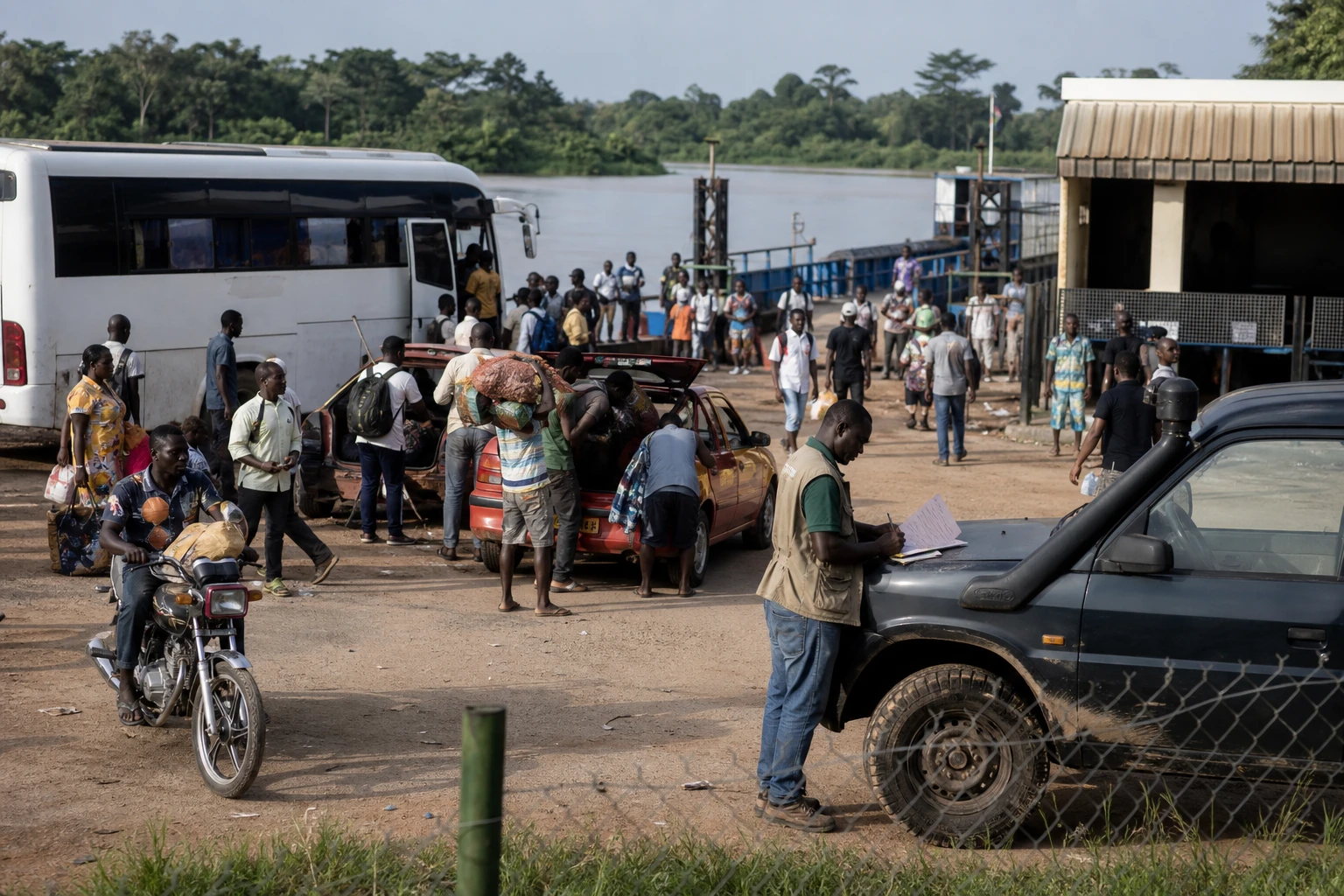
In several regions of Côte d’Ivoire, illegal gold mining is no longer confined to pits dug into the ground. It also affects waterways, forests, local security and public revenue. In response, the Ivorian authorities now want to measure their efforts against a specific deadline: six months.
A national operation under the responsibility of prefects
On 30 September 2026, the National Security Council handed over new equipment to units engaged in combating clandestine gold mining. The ceremony took place at the Agban gendarmerie barracks in Abidjan, chaired by Téné Birahima Ouattara, Deputy Prime Minister and Minister of Defence.
The equipment includes 30 pick-up trucks, 35 troop transport vehicles, 300 motorbikes, 12 Zodiac-type boats and several drones. These resources are intended to strengthen the Special Group for Combating Illegal Gold Mining, the Special Surveillance and Intervention Brigade, and local gendarmerie and water and forestry units. The official Ivorian government portal provides details on how these resources will be allocated.
Eleven regions are directly covered by this allocation: Bagoué, Bounkani, Cavally, Gbêkê, Hambol, Iffou, Indénié-Djuablin, Moronou, Nawa, Sud-Comoé and Worodougou. The response is therefore not limited to the gold-mining areas of the north-east. It also covers the centre, west and south-east of the country, where clandestine activities affect farmland and forest areas.
Regional prefects have assumed responsibility for a six-month period, beginning on 30 September 2026. Their task is to coordinate security forces, forestry services and territorial intelligence. The announced deadline is therefore intended to provide an operational framework, rather than serve as a mere political declaration.
A strategy prepared over several weeks
This acceleration follows several meetings devoted to coordinating the campaign. On 5 September 2026, a national action plan was adopted in Yamoussoukro. It provides for an increased presence by the Special Group for Combating Illegal Gold Mining, the scheduling of operations by prefects and the creation of 21 river security platoons.
These river units are to monitor the country’s main waterways. This approach addresses a practical challenge: some clandestine sites move quickly to hard-to-reach areas, particularly along rivers and borders. The Ivorian Press Agency reported on the adoption of this national plan.
On 23 September, the government also announced a draft law aimed at increasing penalties for instigators, financiers, receivers of stolen goods and owners of illegal sites. This marks a shift in the focus of enforcement. The authorities no longer want to target only the miners present at the sites. They are also seeking to identify those who finance and organise the operations and sell the gold extracted.
This approach is important to avoid a response limited to site closures. Without action against financial and commercial networks, a destroyed site can quickly reappear elsewhere. The Ivorian government outlines the main provisions of the draft law.
An environmental, economic and security issue
Illegal gold mining degrades soil and sometimes turns farmland into abandoned extraction zones. Waterways are also exposed to silt, hydrocarbons and chemicals used to separate gold. In affected communities, the consequences therefore extend beyond mining alone. They affect access to water, agricultural production and the health of riverside populations.
The Ivorian authorities also link the phenomenon to territorial security. In the northern and border regions, clandestine sites can provide routes for criminal networks. Earlier analyses have raised the possibility of financial levies or protection services operating around some sites. These claims must nevertheless be established on a case-by-case basis, without automatically equating every gold miner with a criminal actor.
The social dimension is equally significant. Artisanal mining attracts Ivorian and foreign workers, particularly in rural areas where formal employment remains limited. An administrative closure without an economic alternative risks shifting the problem to another locality. The announced tough approach will therefore need to be accompanied by support for workers, land restoration and dialogue with communities.
Rehabilitation initiatives are already under way. In Bouaflé, in the Marahoué region, a project launched in May 2026 combines site mapping with the restoration of degraded land. This is essential: securing an area is not enough if the soil remains unusable and people have no way to return to sustainable work.
An issue that extends beyond Côte d’Ivoire’s borders
Côte d’Ivoire shares border areas with Liberia, Mali, Burkina Faso and Ghana. Gold, equipment and labour move more easily than authorities can sometimes monitor remote sites. The national plan therefore provides for cooperation with neighbouring countries.
This coordination directly involves the Economic Community of West African States, ECOWAS, which works on regional mobility, security and the fight against cross-border networks. Action taken solely within Côte d’Ivoire’s borders could push these activities into a neighbouring country without durably reducing the clandestine trade.
The six-month timetable will be assessed on several fronts. This will mean measuring the number of sites actually closed, whether activities reappear, the protection of waterways and the ability of judicial services to prosecute financiers. The use of drones and watercraft will also need to deliver verifiable results on the ground.
Côte d’Ivoire faces a dual challenge. The country wants to protect its natural resources and strengthen its authority over territories that are sometimes far from Abidjan. But it must also ensure that the fight against illegal gold mining does not become a succession of one-off operations. Success will depend on sustained intelligence gathering, regional cooperation, justice and the solutions offered to rural communities.