Algeria
 Egypt
 Libya
 Morocco
 Sudan
 Tunisia
 Benin
 Burkina Faso
 Cabo Verde
 Ghana
 Guinea
 Guinea-Bissau
 Liberia
 Mali
 Mauritania
 Niger
 Nigeria
 Senegal
 Sierra Leone
 The Gambia
 Togo
 Cameroon
 Central African Republic
 Chad
 DR Congo
 Equatorial Guinea
 Gabon
 Republic of the Congo
 São Tomé and Príncipe
 Burundi
 Comoros
 Djibouti
 Eritrea
 Ethiopia
 Kenya
 Madagascar
 Malawi
 Mauritius
 Mozambique
 Rwanda
 Seychelles
 Somalia
 South Sudan
 Tanzania
 Uganda
 Angola
 Botswana
 Eswatini
 Lesotho
 Namibia
 South Africa
 Zambia
 Zimbabwe
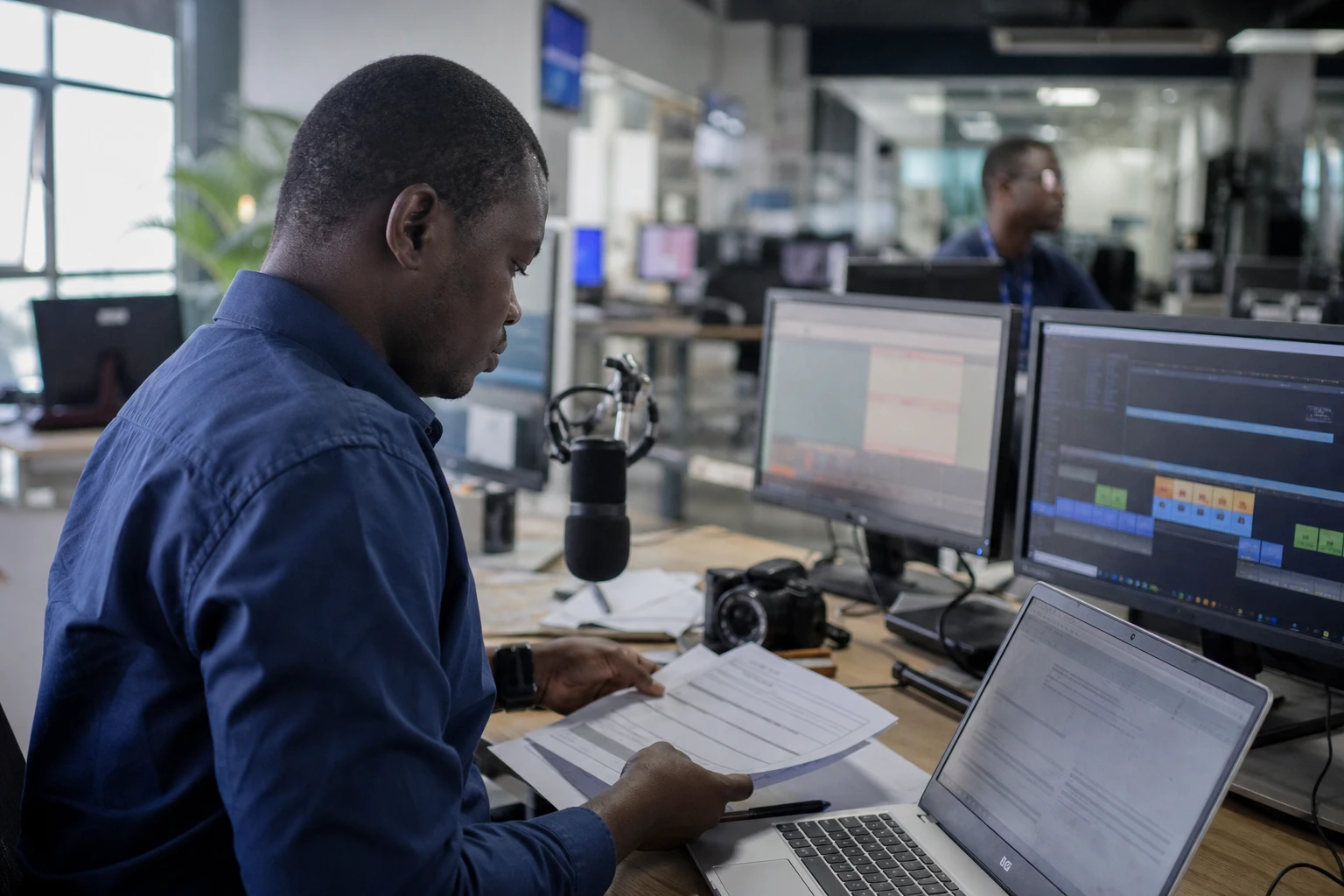
The memory of a trophy, the reality of a new cycle
In Côte d’Ivoire, the great stories of football are not defined by the name of a coach alone. They are also written over time, through a national team that has become a source of pride and a vehicle for collective aspiration. The continental triumph of 2015 with Hervé Renard remains an important landmark, but the Elephants’ present is now being shaped by another pair of hands: those of Emerse Faé. The distinction matters because it says something simple: in Ivorian football, the legacy carries weight, but the current cycle is already well under way.
Côte d’Ivoire, whose capital is Yamoussoukro, is emerging from a very busy sporting period. African champions in 2023, the country has since secured its place at the 2026 World Cup. FIFA’s official sources recall that Emerse Faé’s men finished their qualifying campaign unbeaten and returned to the World Cup for the first time since 2014. In the West African context, this sporting stability matters as much as the results themselves. It fosters a sense of continuity in a region where national teams often serve as a barometer of political and social life.
The real issue: managing a team with expectations
The central issue, then, is not a change of coach. It is how Côte d’Ivoire is learning to live with heavier expectations. FIFA presents Emerse Faé as the man behind the revival: appointed in January 2024, he turned a campaign that seemed to be faltering into a victorious run at the Africa Cup of Nations, followed by a comfortable qualification for the 2026 World Cup. This kind of trajectory requires the Ivorian Football Federation to strike a delicate balance: preserving the memory of triumph while establishing a lasting approach.
In this context, Hervé Renard’s name remains important, but as a historical reference, not a current figure. FIFA recalls that he remains one of the few coaches to have won the Africa Cup of Nations with two different countries, Zambia and then Côte d’Ivoire. This is a piece of sporting history that helps explain why his time in Abidjan still resonates. But the Ivorian team of 2026 is already following a different path, with a younger core of players more exposed to the highest level of European football.
The cases of Oumar Diakité, Amad Diallo and Guéla Doué illustrate this transformation. FIFA notes that several young players have made an impact in friendly matches and during the World Cup qualifying campaign. For now, the message sent to Abidjan is clear: the team no longer depends on a single generation or one man. It has a broader pool of talent, which is also changing how football is viewed nationally. The public expects less of a one-off achievement and more sustained performance.
Beyond the pitch, a question of approach and image
For both the state and the federation, football remains a means of securing international visibility. A strong performance at the 2026 World Cup would reinforce the image of a Côte d’Ivoire that has regained its competitiveness in a fiercely contested African arena, where Morocco, Senegal, Ghana, Algeria, Cape Verde and the Democratic Republic of the Congo are also making their mark on the world stage. The competition is therefore not only sporting. It is symbolic, economic and media-driven. In an ECOWAS region where mobility, trade and prestige rivalries are constant, the Elephants embody a form of popular diplomacy.
This momentum also has a domestic impact. In the major cities, particularly Abidjan, the national team affects the public mood, the screen economy, bars, transport and informal trade on match nights. In the regions, it often provides a shared story that transcends local affiliations. Football then becomes a shared national language, a rare thing in periods of political tension or social pressure. That is precisely why the team’s stability matters as much as its results.
The contrast with other news from the continent is a reminder, however, that an African week is never just about sport. While Côte d’Ivoire fine-tunes its path to the world stage, the Democratic Republic of the Congo is still facing an Ebola outbreak caused by the Bundibugyo virus. The WHO said in July 2026 that the outbreak remains active, with confirmed cases and deaths continuing to rise, and called for the response to be sustained. Here too, the response depends on national institutions and regional co-ordination, with support from the WHO and Africa CDC.
What to watch in the coming months
For Côte d’Ivoire, the next test will be whether it can turn a brilliant generation into a lasting programme. The 2026 World Cup will show whether the Elephants have merely ridden the momentum of a tournament or established genuine continuity. The question matters across the continent, because the rise of African national teams no longer depends solely on raw talent. It also rests on stable coaching teams, development, the management of dual-nationality talent and the quality of domestic competitions.
From this perspective, Hervé Renard’s name belongs above all to the memory of a victory. The present is being shaped by Emerse Faé and an Ivorian team that now has to deliver. This transition from a glorious memory to higher expectations neatly sums up the challenge: in West Africa, great teams are no longer judged only by their past, but by their ability to endure.