Algeria
 Egypt
 Libya
 Morocco
 Sudan
 Tunisia
 Benin
 Burkina Faso
 Cabo Verde
 Ghana
 Guinea
 Guinea-Bissau
 Liberia
 Mali
 Mauritania
 Niger
 Nigeria
 Senegal
 Sierra Leone
 The Gambia
 Togo
 Cameroon
 Central African Republic
 Chad
 DR Congo
 Equatorial Guinea
 Gabon
 Republic of the Congo
 São Tomé and Príncipe
 Burundi
 Comoros
 Djibouti
 Eritrea
 Ethiopia
 Kenya
 Madagascar
 Malawi
 Mauritius
 Mozambique
 Rwanda
 Seychelles
 Somalia
 South Sudan
 Tanzania
 Uganda
 Angola
 Botswana
 Eswatini
 Lesotho
 Namibia
 South Africa
 Zambia
 Zimbabwe
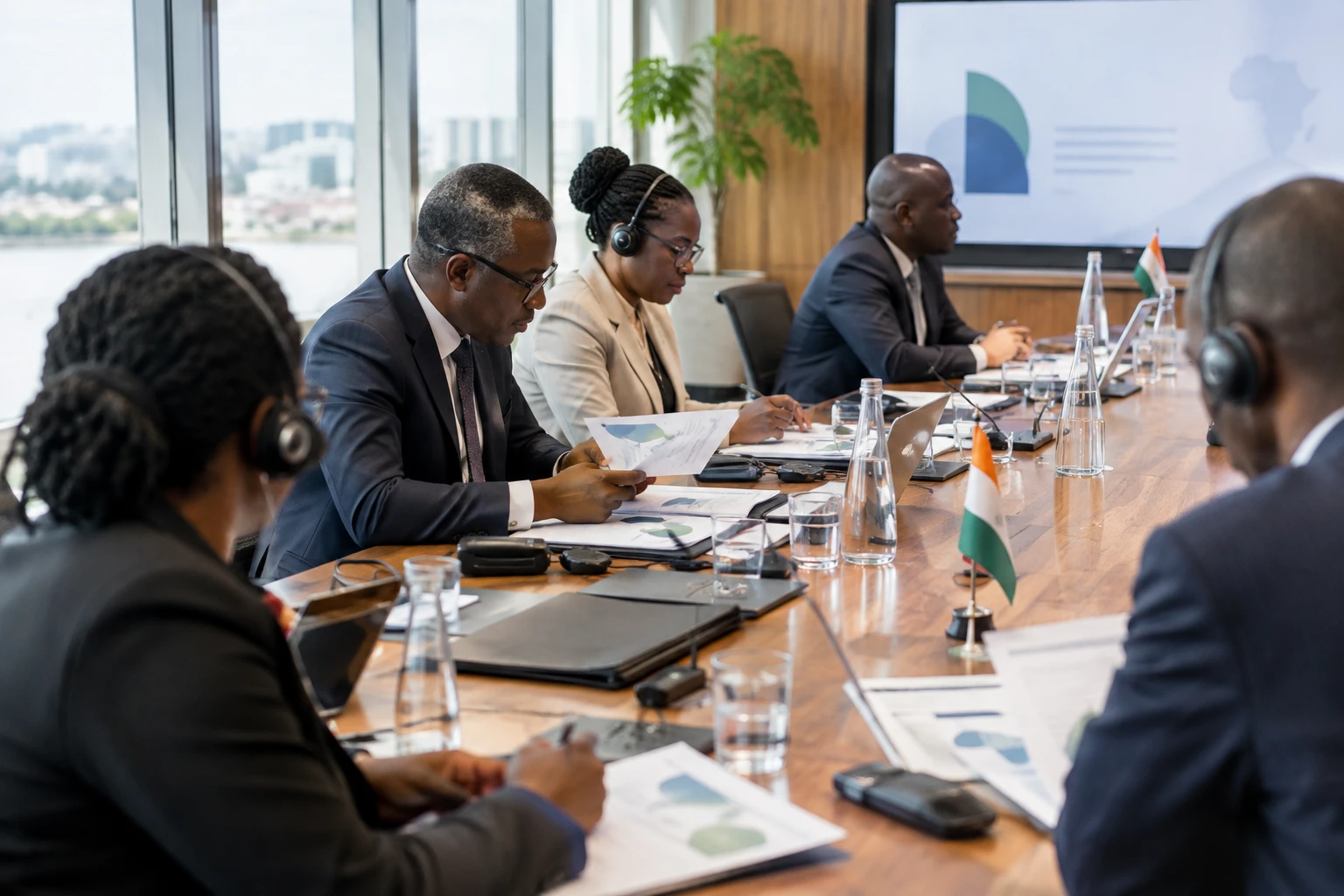
In Yamoussoukro and Abidjan, the energy challenge is measured by what actually reaches the grid: a connected power plant, a selected local company, funding released. Côte d’Ivoire’s ambitions are high. Their credibility will now depend on implementation.
The second edition of the International Exhibition of Extractive Resources and Energy (SIREXE), scheduled to take place from 18 to 22 November 2026 at the Abidjan Exhibition Centre, aims to put infrastructure at the centre of discussions. For Ivorians, the stakes go beyond a business event: they concern access to electricity, business activity and the share of extractive revenues that remains in the country.
Increasing output without locking the energy mix into hydrocarbons
Côte d’Ivoire must meet rising demand for electricity while diversifying its energy sources. The authorities have announced that the contribution of new solar power plants is to rise from 42 megawatts in 2026 to 925 megawatts in 2030. These are announced capacity targets, not results already achieved. The Ministry of Energy has also reported agreements covering four solar power plants with a total capacity of 210.3 megawatt-peak, a measure of the panels’ maximum power under standardised conditions.
These projects form part of a wider balancing act. The country is developing its oil and gas resources, while also aiming to increase the share of renewables in its electricity supply. Hydrocarbons can support output and public revenues; they also expose the economy to market fluctuations and the costs of the transition. Infrastructure choices will therefore weigh on public finances as well as energy security.
SIREXE 2026 is expected to bring together public-sector players, operators, investors and businesses to discuss these issues. The organisers are highlighting, in particular, a programme devoted to infrastructure and an initiative, SIREXE Invest, designed to bring project sponsors and financiers together. The exhibition is scheduled to take place in Abidjan, the country’s main economic city; Côte d’Ivoire’s political capital remains Yamoussoukro.
2024 announcements put to the test of implementation
The government credited the first edition, in 2024, with nearly CFAF 4,000bn in investment contracts. The figure is an indicator of activity at the exhibition, but on its own it does not show how much was actually disbursed, how many projects were completed or how many jobs were created. The shift from commitments to delivery will determine the economic significance of the November edition.
The investment context is ambitious: the 2026-2030 National Development Plan envisages substantial spending in several sectors, including energy and transport. For extractive projects, logistics infrastructure — roads, storage, ports and networks — determines the cost and speed of moving resources. It can also support other activities, provided the needs of local communities and businesses are taken into account from the outset.
In April 2026, the government also established the Strategic Sovereign Fund for the Development of Côte d’Ivoire, intended to help finance projects and manage strategic assets. Its creation does not yet guarantee its resources or results. The fund’s governance, the transparency of its investments and the publication of its commitments will be crucial in assessing its actual contribution.
Local content, a practical test of economic sovereignty
Another indicator will be reflected in contracts: the place given to Ivorian expertise, suppliers and companies. The 2022 law on local content in oil and gas activities aims to increase their participation, particularly through training, employment, technology transfer and the use of goods and services produced in the country. The 2023 implementing decree sets out how the framework will operate.
This approach will only have an impact if companies can access contracts and have the financing, certifications and skills required by operators. Large international companies can bring capital and expertise. But without accessible subcontracting opportunities and skills development, most of the value may remain concentrated in major contracts. Conversely, predictable rules and balanced partnerships can strengthen Côte d’Ivoire’s economic fabric.
SMEs do not face the same obstacles as large groups. Credit, payment times and the ability to respond to complex tenders weigh particularly heavily on smaller companies. In areas where power plants and mining sites are being built, local benefits will also depend on sustainable jobs, training and work awarded to local suppliers — not just the temporary presence of construction sites.
A West African role to be tested on the ground
Côte d’Ivoire is a member of ECOWAS, the Economic Community of West African States, whose countries are seeking to strengthen trade and energy interconnections. More diversified Ivorian output could contribute to regional supply. But this ambition depends on reliable networks, clear sharing rules and a balance between domestic needs and exports.
The announced co-operation with Botswana also serves as a reminder that African partnerships can cover mining, energy and skills. Their value will be measured by the projects financed and the capabilities transferred. The central question at SIREXE will therefore not simply be the value of the intentions announced, but whether they translate into operational infrastructure, broader access to electricity and contracts open to African businesses.
The next steps to watch are clear: progress on solar power plants, the actual mobilisation of capital, the sovereign fund’s first results and the implementation of local-content rules. These factors will show whether the announced energy expansion benefits users, Ivorian businesses and regional partners.