Algeria
 Egypt
 Libya
 Morocco
 Sudan
 Tunisia
 Benin
 Burkina Faso
 Cabo Verde
 Ghana
 Guinea
 Guinea-Bissau
 Liberia
 Mali
 Mauritania
 Niger
 Nigeria
 Senegal
 Sierra Leone
 The Gambia
 Togo
 Cameroon
 Central African Republic
 Chad
 DR Congo
 Equatorial Guinea
 Gabon
 Republic of the Congo
 São Tomé and Príncipe
 Burundi
 Comoros
 Djibouti
 Eritrea
 Ethiopia
 Kenya
 Madagascar
 Malawi
 Mauritius
 Mozambique
 Rwanda
 Seychelles
 Somalia
 South Sudan
 Tanzania
 Uganda
 Angola
 Botswana
 Eswatini
 Lesotho
 Namibia
 South Africa
 Zambia
 Zimbabwe
A battle over process before the battle at the ballot box
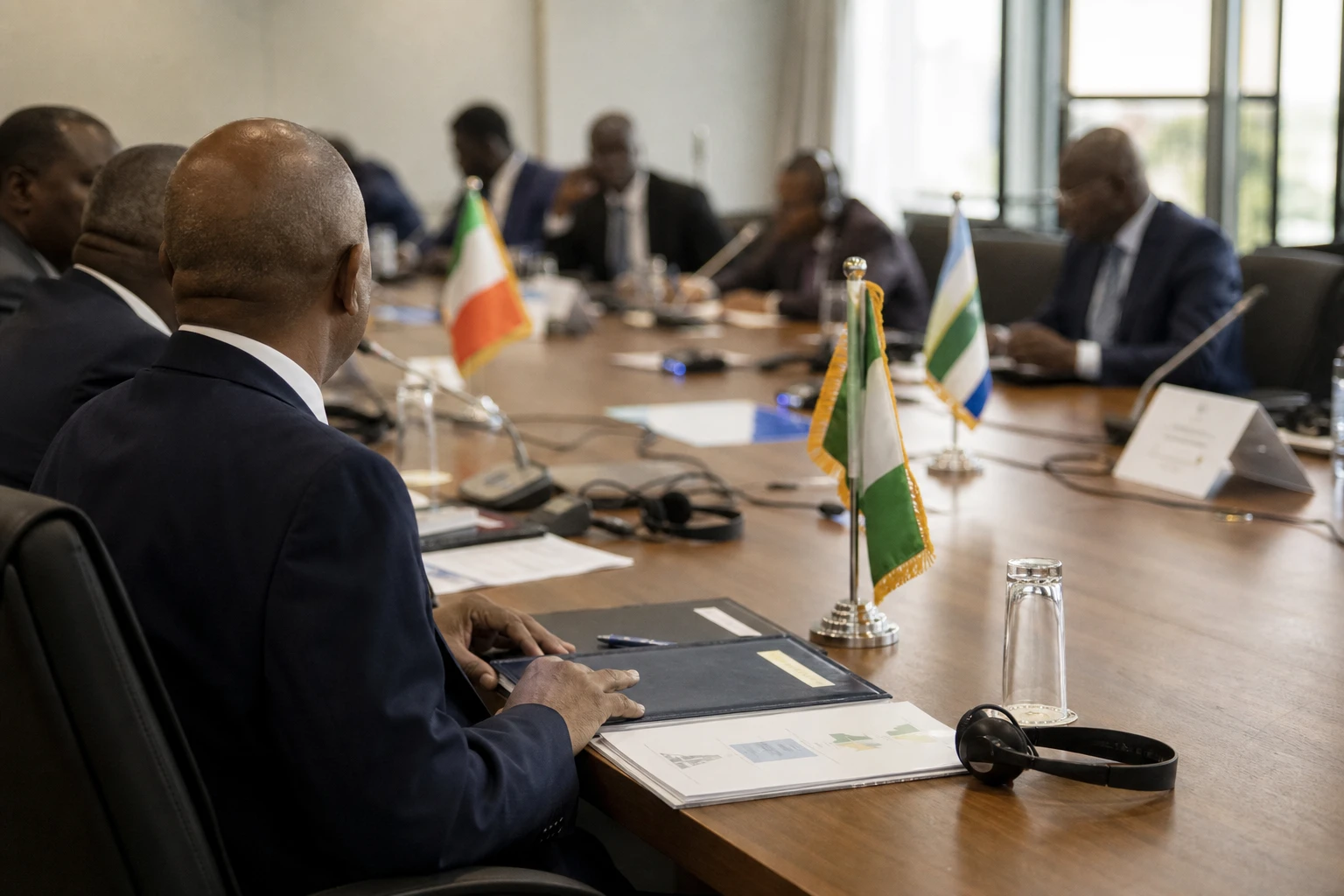
In Côte d’Ivoire, the electoral question is not decided only at polling stations. It begins with the trust political actors place in the referee. Since the Independent Electoral Commission was dissolved on 6 May 2026, the opposition has been seeking to influence the shape of the future body responsible for organising elections.
The issue is sensitive because it goes to the very mechanics of pluralism. In Yamoussoukro, the country’s political capital, and Abidjan, where institutions and public debate are concentrated, the discussion goes beyond a partisan dispute. It affects the credibility of the next electoral cycle in a country where every reform of the electoral framework is scrutinised as a test of stability.
A new body to build after 20 years of the CEI
On 6 May 2026, the Ivorian government approved the dissolution of the Independent Electoral Commission, which was established in 2001 to organise and supervise national elections and referendums. The executive presented the decision as the opening of a mechanism “better able to reassure” political actors and ensure more peaceful elections.
But this chapter did not close without debate. As soon as the dissolution was announced, several political forces called for a genuinely independent body, an audit of the electoral register, a transparent revision of the list and consensus-based appointments of officials. The PDCI-RDA called for inclusive dialogue. The ruling RHDP, by contrast, welcomed a decision “attentive to national concerns”.
Against this backdrop, the coalition for peaceful alternation in Côte d’Ivoire, CAP-CI, has stepped up discussions. On 1 September and then 9 September 2026, several major opposition parties met to align their positions before submitting a joint proposal to the government. The aim is clear: to avoid each party speaking separately and increase their influence in negotiations.
What the opposition wants to lock in
At heart, the opposition is not just discussing seats on a commission. It wants to prevent a future electoral body from repeating the failings attributed to the former CEI, which critics often considered too close to the government. That is why allied parties want to put forward a common position on the composition, appointment rules, guarantees of independence and working methods of the future system.
The government, for its part, is proceeding in stages. On 9 September 2026, spokesman Amadou Coulibaly said the electoral register would be revised after the structures intended to replace the CEI had been set up. The sequence matters: it puts reform of the management body first, followed by an update of the register, whereas the opposition would have preferred a broader consultative framework at an earlier stage.
Civil society is also following the issue closely. In July 2026, several organisations presented a white paper on electoral governance. They advocate a more inclusive management body, with representatives of the ruling majority and opposition selected on the basis of their expertise. Such proposals show that the debate goes beyond the confrontation between parties and also concerns the quality of electoral administration.
A political as well as an institutional issue
For the government, the challenge is to close a longstanding dispute without appearing to give in to pressure. For the opposition, it is about securing concrete guarantees ahead of the next electoral period. For voters, especially young people and urban residents engaged in debates about voter registration, the question is simple: who will guarantee that votes count and that the contest is transparent?
The implications are economic and social too. In Côte d’Ivoire, electoral tensions can quickly affect business activity, movement in major cities, investor confidence and the climate in the regions. A contested electoral body can fuel mistrust. By contrast, a body seen as balanced can ease tensions and safeguard the political timetable. This matters in a country that is a driving force in West Africa and a key member of ECOWAS, where institutional stability remains a regional benchmark.
That is what will determine what happens next. The future commission will be judged not only on the text establishing it, but on its ability to learn from past elections, produce a register accepted by all and operate without suspicion of being captured. In Côte d’Ivoire, electoral reform is therefore no technical interlude. It is a balancing point between political competition, public trust and national stability.