Algeria
 Egypt
 Libya
 Morocco
 Sudan
 Tunisia
 Benin
 Burkina Faso
 Cabo Verde
 Côte d'Ivoire
 Ghana
 Guinea
 Guinea-Bissau
 Liberia
 Mali
 Mauritania
 Niger
 Nigeria
 Senegal
 Sierra Leone
 The Gambia
 Cameroon
 Central African Republic
 Chad
 DR Congo
 Equatorial Guinea
 Gabon
 Republic of the Congo
 São Tomé and Príncipe
 Burundi
 Comoros
 Djibouti
 Eritrea
 Ethiopia
 Kenya
 Madagascar
 Malawi
 Mauritius
 Mozambique
 Rwanda
 Seychelles
 Somalia
 South Sudan
 Tanzania
 Uganda
 Angola
 Botswana
 Eswatini
 Lesotho
 Namibia
 South Africa
 Zambia
 Zimbabwe
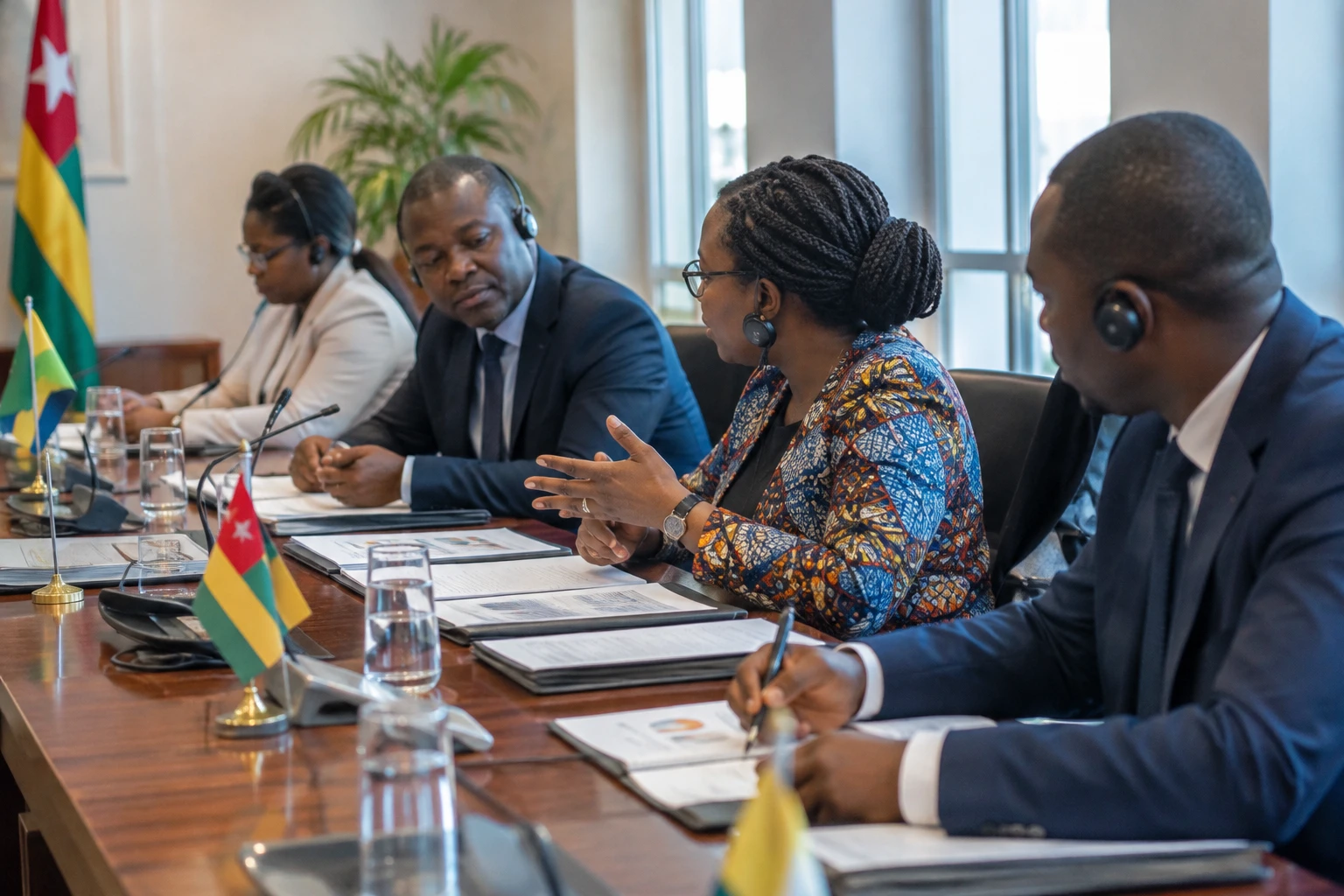
In Lomé, a bank’s progress is also measured by its ability to finance businesses and widen access to financial services. Coris Bank International Togo is changing its chief executive as its balance sheet and customer base grew in 2025. The succession marks a new stage, but the announced appointment still awaits public institutional confirmation.
A contested Togolese market at the heart of WAEMU
Togo’s banking sector operates within the West African Monetary Union (WAMU), which shares a currency and a banking supervisory framework. Togo is also part of the West African Economic and Monetary Union (WAEMU), an economic integration area comprising eight countries in the region.
This membership places Togolese banks in a competitive regional market. Banks seek to attract deposits, lend to businesses and households, and develop digital payments. At the end of 2025, Coris Bank International Togo was among the country’s three largest banks by balance-sheet size, behind Orabank Togo and Ecobank Togo, according to figures reported by Togo First.
The Central Bank of West African States (BCEAO), the common central bank for WAMU countries, supervises the sector alongside the Union’s Banking Commission. This regional framework matters for financial institutions: their commercial choices must comply with prudential rules, particularly those governing capital and credit risks.
Succession announced, awaiting official confirmation
On 23 October 2026, Togolese media outlet Actu Togo announced the appointment of Togolese national Michel Kodzo Gafan as chief executive of Coris Bank International Togo. He would succeed Alassane Kaboré, who is expected to take charge of the group’s Ivorian subsidiary. Other financial publications have reported Kaboré’s move to Abidjan.
However, the publicly available information consulted does not independently confirm that Gafan has taken up the post. Ecobank Togo’s page still lists him as acting director of its Personal and Commercial Banking division. This discrepancy is not enough to invalidate the announcement; rather, it highlights the absence, in the sources located, of an accessible official statement from Coris or Ecobank. The appointment is therefore reported as announced, not presented as confirmed by either bank.
According to published information about him, Gafan has more than 25 years’ experience in banking and finance. His career includes commercial and regional responsibilities at Ecobank within the WAEMU area. He is also described as holding an Executive MBA from HEC Paris. Coris is said to have appointed Jean-Marie Kompaoré, formerly deputy chief executive of its Beninese subsidiary, as deputy chief executive in Togo; this appointment, too, has not been confirmed in any official announcement located.
Growth raises the question of financing
The 2025 figures give a sense of the stakes. Coris Bank International Togo reported total assets of CFAF 615.5bn, up 10% year on year. Customer deposits reached CFAF 366.1bn, while loans stood at CFAF 244.6bn. Reported net profit was about CFAF 7.1bn, an increase of 23.1%.
These figures, published by Togolese business media, point to expanding activity. On their own, they do not show how loans are divided between large companies, small and medium-sized enterprises, and individuals. Nor do they measure access-to-credit terms, which vary according to borrowers’ size, collateral and location.
The bank’s customer base is said to have grown from 79,419 in 2024 to 90,983 in 2025. It has also expanded digital services and Islamic finance. These offerings can diversify payment and savings options. Their reach, however, depends on their accessibility, cost and availability beyond Lomé, particularly in secondary cities and underserved areas.
For the new chief executive, if the appointment is confirmed, the challenge will therefore be twofold: to sustain growth while directing finance towards a broader cross-section of the economy than just large corporate clients. An increase in deposits does not automatically translate into more loans for small businesses. Credit risk management will remain central, as it determines both the bank’s resilience and its capacity to support economic activity.
Leadership within a regional strategy
The movement of executives between subsidiaries in Togo, Benin and Côte d’Ivoire illustrates the regional organisation of WAEMU banking groups. Appointments can facilitate the transfer of expertise and the spread of commercial practices. They also take place amid competition in which pan-African banks and groups operating in several countries seek to consolidate their positions.
In Togo, the next step will first depend on official confirmation of the new team. It will then be necessary to monitor the development of loans, deposits, the branch network and digital services, as well as how they are distributed between Lomé and the rest of the country. Across WAEMU, these indicators will show whether the expansion of regional groups is translating into more accessible finance for businesses and households, beyond balance-sheet growth.