Algeria
 Egypt
 Libya
 Morocco
 Sudan
 Tunisia
 Benin
 Burkina Faso
 Cabo Verde
 Côte d'Ivoire
 Ghana
 Guinea-Bissau
 Liberia
 Mali
 Mauritania
 Niger
 Nigeria
 Senegal
 Sierra Leone
 The Gambia
 Togo
 Cameroon
 Central African Republic
 Chad
 DR Congo
 Equatorial Guinea
 Gabon
 Republic of the Congo
 São Tomé and Príncipe
 Burundi
 Comoros
 Djibouti
 Eritrea
 Ethiopia
 Kenya
 Madagascar
 Malawi
 Mauritius
 Mozambique
 Rwanda
 Seychelles
 Somalia
 South Sudan
 Tanzania
 Uganda
 Angola
 Botswana
 Eswatini
 Lesotho
 Namibia
 South Africa
 Zambia
 Zimbabwe
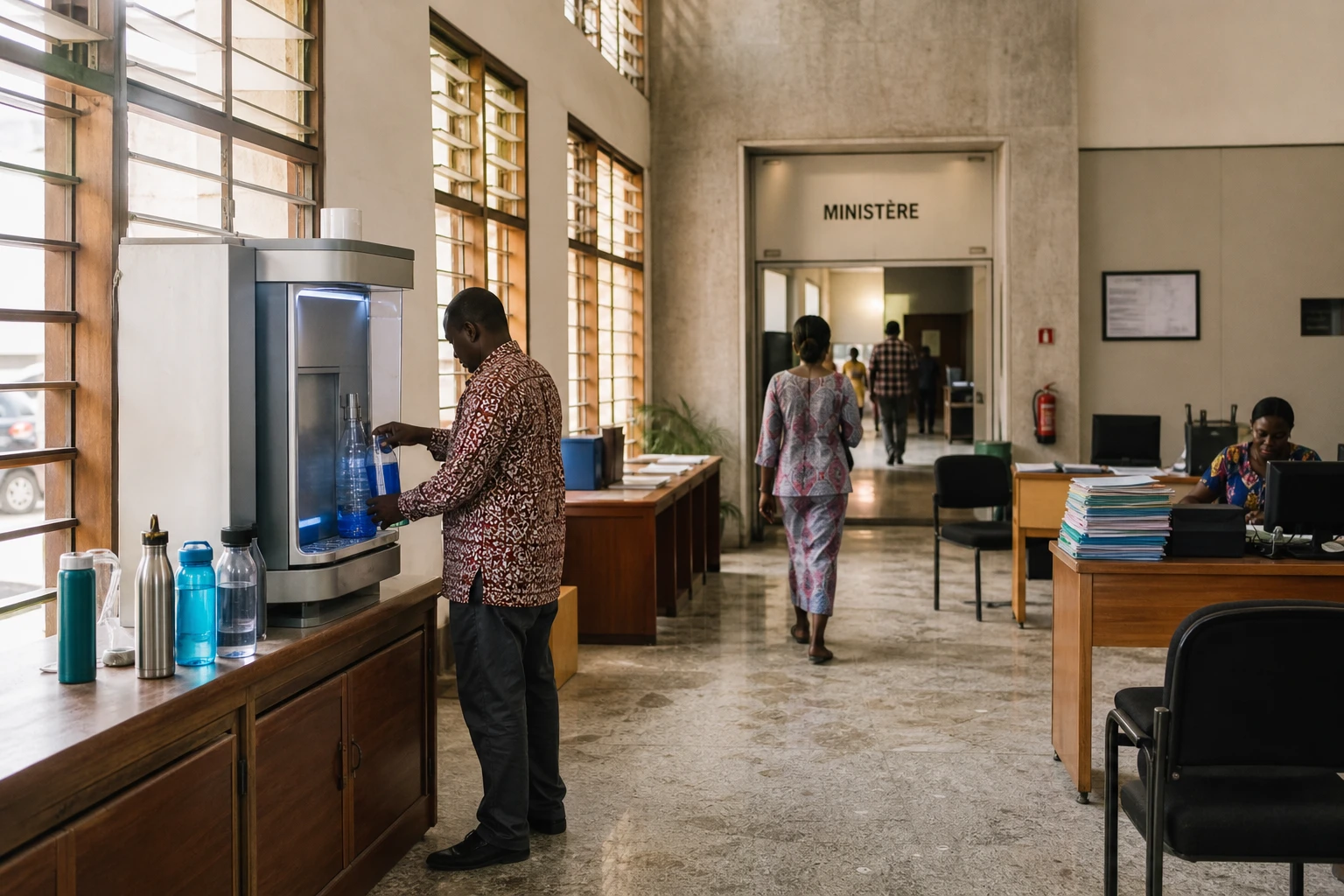
In Conakry, something as simple as drinking water has become more expensive since late September. The small 40-centilitre sachet, sold cheaply in neighbourhoods and markets, has almost disappeared from many outlets. For households unable to buy bottled water regularly, this disruption is immediately changing their habits.
A ban designed to reduce waste
Guinea has introduced a wide-ranging ban on single-use plastic packaging and items. The measure targets shopping bags, sachets for water and other drinks, cups, straws, disposable cutlery and certain food trays.
The Guinean decree also bans the manufacture, import, possession for commercial purposes and use of these products. The authorities justify the decision by pointing to the build-up of waste in streets, drains and waterways. In Conakry, this waste makes sanitation more difficult and can worsen flooding during the rainy season.
20 September 2026 is the stated deadline for the measure’s commercial implementation. However, field observations made on 24 September in Tombolia, in the capital, reported that it had taken effect from 21 September. This one-day difference reflects the transition between the regulatory date and the first inspections in neighbourhoods.
The implementing text published by the Guinean authorities confirms that sachets used to sell water are among the products covered. It does, however, provide for several exceptions, including certain medical and agricultural uses and waste collection. The Guinean regulation on single-use plastics also specifies the categories of products concerned.
In Conakry, water supplies have yet to catch up
In several neighbourhoods of the capital, vendors have stopped selling water sachets. Bottles are now the most visible alternative. But they cost more and are not equally available in every area.
In Tombolia, the Guinean Press Agency found that some consumers were switching to bottled water, while others were returning to the network supplied by the Société des eaux de Guinée. The latter option is not equally accessible everywhere, however. In some neighbourhoods, supply is irregular or depends on households’ ability to store water.
This situation creates a gap between the measure’s environmental aim and its immediate consequences. Disposable plastic is disappearing faster than replacement options are emerging. Families with a fridge, storage capacity or a stable income can still adapt. For precarious workers, street vendors and households that buy water day by day, the expense is becoming harder to bear.
In restaurants and small shops, this pressure means longer searches and stock shortages. Residents of Kipé have said they have to visit several shops before finding water. Some are even considering replacing water with sugary drinks when no bottled water is available.
Health risks shift to the most vulnerable
The issue is therefore not just the cost of plastic or the cleanliness of the streets. It also concerns daily access to water considered safer than some locally available sources.
Consumers say they are being forced to drink tap water despite doubts about its quality. Cases of diarrhoea have been mentioned in accounts gathered in Conakry. These reports alone cannot establish a direct medical link to the disappearance of the sachets. They do, however, point to a real concern, particularly among people without a regular income.
Infants, older people and those already in poor health are most at risk from contaminated water or inadequate hydration. Severe diarrhoea can quickly cause dehydration, especially when access to a health centre is difficult or costly.
The priority, then, is to ensure that the ban does not reduce the supply of accessible water. This requires effective health checks on bottled water and distribution points. It also calls for clear information on storage methods, cleaning containers and safe storage conditions.
Producers, vendors and consumers call for a transition
The measure also affects a local economic chain. Packaging plants, wholesalers, retailers, transporters and street vendors all depended, to varying degrees, on the water-sachet trade.
Before the ban came into force, the Union of Mineral Water Producers of Guinea had urged its members to organise the sale of their stocks. The industry body acknowledged the damage caused by plastic waste while calling for dialogue with the authorities. The water producers’ organisation’s statement illustrates this desire to reconcile environmental protection with business continuity.
The Guinean Consumers’ Defence Union, for its part, is calling for a one-year moratorium on the ban on water sachets. The aim would be to give the authorities, producers and importers time to put affordable solutions in place. The Guinean consumers’ call for a moratorium stresses the lack of an immediately accessible alternative for part of the population.
A moratorium would not, by itself, solve plastic pollution. It could, however, allow several options to be tested: reusable bottles with a deposit scheme, monitored public water fountains, refill points in markets and containers made from genuinely biodegradable materials.
A test for environmental policy in West Africa
Guinea is not alone in seeking a balance between reducing plastic use and ensuring affordable access to water. Several West African countries have adopted similar restrictions, with varying levels of enforcement. Across the region, water sachets often compensate for weak public networks, irregular supply and the cost of bottled water.
The issue therefore goes beyond environmental policy alone. It touches on urban services, public health, protection of purchasing power and the ability of states to support informal businesses. It also concerns the Economic Community of West African States, ECOWAS, which is seeking to strengthen regional coordination on trade, standards and urban resilience.
The next steps will be decisive for Guinea. The authorities will have to show whether the ban is accompanied by a more reliable water network, affordable solutions and credible health checks. Without such support, the measure risks reducing visible waste while increasing pressure on the poorest households. With it, the ban could become the starting point for an environmental transition better suited to the realities of Conakry and other Guinean cities.