Algeria
 Egypt
 Libya
 Morocco
 Sudan
 Tunisia
 Benin
 Burkina Faso
 Cabo Verde
 Côte d'Ivoire
 Ghana
 Guinea
 Guinea-Bissau
 Liberia
 Mali
 Mauritania
 Niger
 Nigeria
 Senegal
 Sierra Leone
 The Gambia
 Togo
 Cameroon
 Central African Republic
 Chad
 DR Congo
 Equatorial Guinea
 Gabon
 Republic of the Congo
 São Tomé and Príncipe
 Burundi
 Djibouti
 Eritrea
 Ethiopia
 Kenya
 Madagascar
 Malawi
 Mauritius
 Mozambique
 Rwanda
 Seychelles
 Somalia
 South Sudan
 Tanzania
 Uganda
 Angola
 Botswana
 Eswatini
 Lesotho
 Namibia
 South Africa
 Zambia
 Zimbabwe
A bank account dispute that goes beyond an internal row
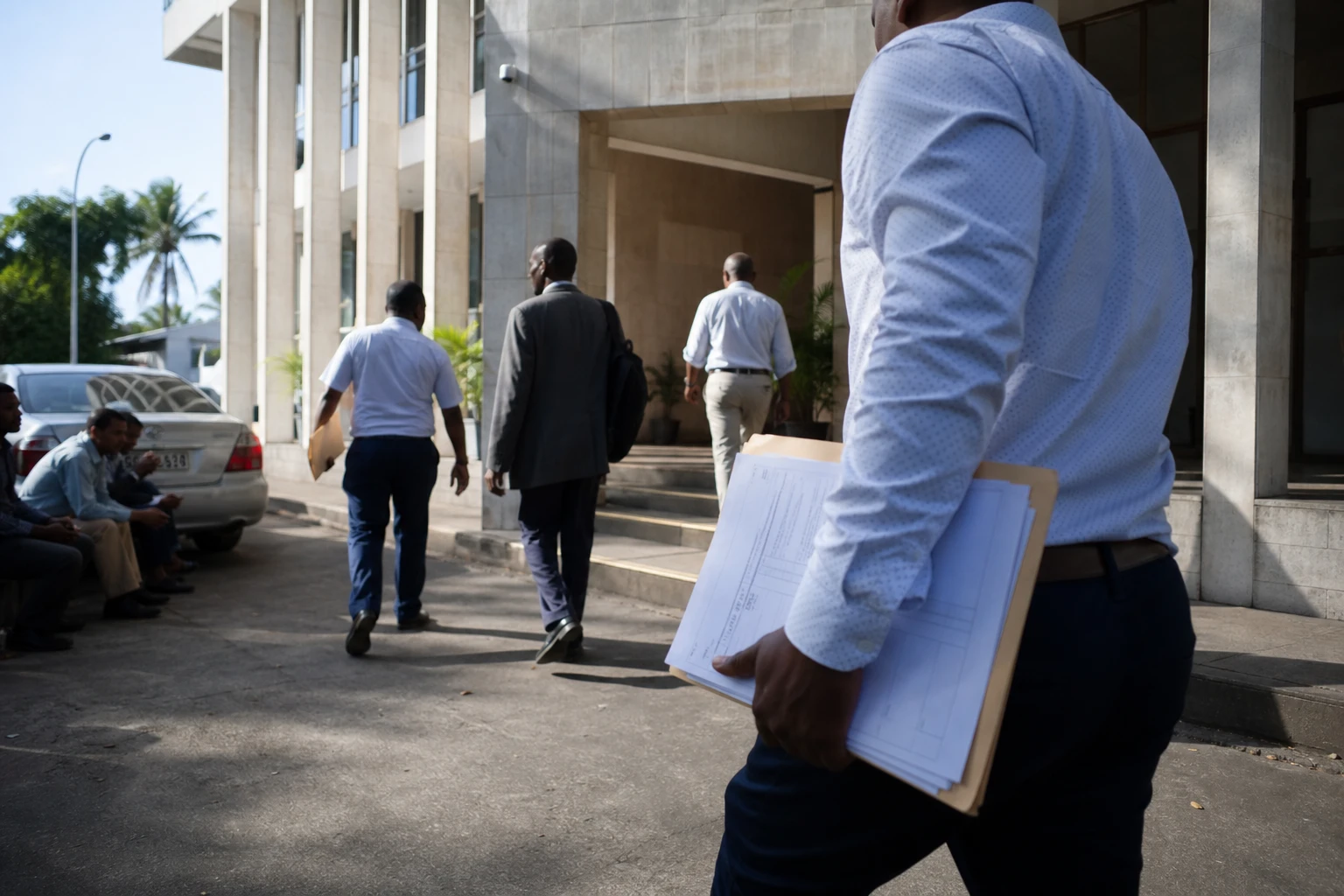
In Moroni, a party dispute is taking on the character of a political test. When a dominant political formation faces questions over the movement of its funds, the issue is not merely accounting. It touches on internal discipline, the trust of party members and the credibility of a government that already occupies the entire institutional landscape.
In the Comoros, this kind of crisis quickly resonates beyond party circles. The country is emerging from an electoral period in which the Convention for the Renewal of the Comoros consolidated its dominance, with a large parliamentary majority in January 2025, according to the IPU’s data platform, and an executive strengthened since Azali Assoumani’s re-election in 2024. In this context, a financial controversy within the ruling party becomes a matter of public interest, not simply a dispute between former comrades. The parliamentary make-up resulting from the 2025 election consolidated this position, while the 2024 presidential re-election confirmed the continuity of power.
The core of the case is clear: a former minister says he examined bank transactions he considers suspicious over a period from 2023 to 2025. He accuses two party officials, referring to large payments and redistribution to certain party cadres. Those concerned deny the allegations and have launched legal proceedings for defamation, insults and the dissemination of false news. The man accusing them, for his part, says he will not attend the summons set for 24 September in Moroni.
In the archipelago, the question of political funding is far from theoretical. The Comorian electoral code requires every candidate, party or group of candidates to open a bank account with an institution in the Union of the Comoros, and also regulates the use of external funding during campaigns. The text specifies, in particular, that foreign funding may not exceed half of the authorised spending ceiling for the campaign in question. The Comorian legal framework therefore gives particular weight to any allegation concerning a party account or the flow of funds.
What the law says, and what the case reveals
Judicially, the dispute is unfolding in an environment where public speech and reputation remain strictly regulated. The Comorian information code provides for prosecution in cases of defamation, while criminal and procedural laws govern such cases before the competent courts. The legal framework for defamation shows that the Comorian authorities treat these cases seriously, particularly when they involve public figures.
But the case also has political significance. The CRC is not an ordinary party at present. It controls most elected positions, from Parliament to local executives resulting from the latest electoral cycle. This concentration of power makes even the slightest internal rift more sensitive. An embezzlement allegation does not merely call individuals into question. It may also expose funding practices, networks of loyalty and the way resources flow between the party apparatus, election campaigns and networks of party cadres.
That is the sensitive point: in a system where the party, the state and the parliamentary majority are closely intertwined, the boundary between political money, organisational funds and campaign funds is difficult for the general public to discern. Yet Comorian law specifically stipulates that a party must have identifiable accounts and clear rules for electoral transactions. In this context, any grey area fuels suspicion and weakens claims of transparency.
The ongoing proceedings will therefore have an impact beyond the fate of the protagonists. If evidence is lacking, the defence may portray the case as an episode of score-settling. If irregular bank transactions are established, even without a final criminal offence being proven at this stage, the question of governance within the ruling party will take on a different dimension. Either way, the public will remember that political resources circulate not only in speeches, but also through accounts, approvals and signatures.
A signal for Moroni, and for East Africa as a whole
For Comorians, the immediate issue goes beyond a quarrel between former allies. It concerns how parties manage their finances in a country where the courts are often called on to arbitrate political crises. In Moroni, this case is a reminder that the strength of a majority is measured not only by the number of seats it holds or its score in an election. It is also measured by the government’s ability to provide clarity about its internal workings.
Across the region, the case resonates in several capitals. The Union of the Comoros is part of East Africa, a region where relations between executive power, dominant parties and institutional opposition remain a recurring concern. African partners, within the Indian Ocean Commission and the bodies of the African Union, generally follow such tensions closely because they affect political stability, public trust and the quality of transfers of power. The CRC’s parliamentary strength makes compliance with internal rules and judicial procedures all the more important.
The next step is the judicial process in Moroni. The hearing announced for 24 September will show whether the case remains a battle over legitimacy or opens up a broader debate about the traceability of party funds in the Comoros. In a country where the political arena is narrow and institutions are intertwined, every bank document can become an instrument of power, or of truth.
And that is perhaps where the real issue lies: not merely in finding out who is accusing whom, but in understanding how a ruling party funds its machinery, keeps its cadres in check and answers before the courts for the grey areas surrounding its own resources.