Algeria
 Egypt
 Libya
 Morocco
 Sudan
 Tunisia
 Benin
 Burkina Faso
 Cabo Verde
 Ghana
 Guinea
 Guinea-Bissau
 Liberia
 Mali
 Mauritania
 Niger
 Nigeria
 Senegal
 Sierra Leone
 The Gambia
 Togo
 Cameroon
 Central African Republic
 Chad
 DR Congo
 Equatorial Guinea
 Gabon
 Republic of the Congo
 São Tomé and Príncipe
 Burundi
 Comoros
 Djibouti
 Eritrea
 Ethiopia
 Kenya
 Madagascar
 Malawi
 Mauritius
 Mozambique
 Rwanda
 Seychelles
 Somalia
 South Sudan
 Tanzania
 Uganda
 Angola
 Botswana
 Eswatini
 Lesotho
 Namibia
 South Africa
 Zambia
 Zimbabwe
A vast park, but a very tangible issue for north-eastern Côte d’Ivoire
In north-eastern Côte d’Ivoire, Comoé National Park is more than a picture-postcard savannah. It is at the centre of a very tangible challenge: protecting water, wildlife and land use in an area where agricultural pressures, human movement and the effects of climate change increasingly converge. In a country whose capital is Yamoussoukro but whose economic activity is heavily concentrated in Abidjan and the inland regions, the park is a reminder that a protected area is never isolated from its human environment.
Comoé also holds a special place in West Africa. It belongs to the rare category of large natural reserves that cross administrative boundaries and provide refuge for species that have become vulnerable elsewhere. For Côte d’Ivoire, the site is at once a natural heritage, a marker of ecological sovereignty and a laboratory for shared management with the Ivorian Office of Parks and Reserves (OIPR), which oversees the protection of the country’s protected areas.
A listed site, removed from the danger list, and put back to work
Comoé National Park was established in 1968. It was inscribed on UNESCO’s World Heritage List in 1983. The site covers about 1,149,450 hectares, or nearly 11,500 km², making it one of the largest protected areas in West Africa. UNESCO describes it as an area in north-eastern Côte d’Ivoire, comprising savannahs, gallery forests and plains crossed by the Comoé River.
The river that gives the park its name rises in Burkina Faso before flowing through Côte d’Ivoire. This matters because it is a reminder that biodiversity management does not stop at a country’s borders. The river basin shapes soils, moisture, wildlife corridors and landscape resilience. Within the park, these dynamics create a mosaic of habitats that supports remarkable biodiversity.
The site has nevertheless gone through a dark period. Inscribed on the List of World Heritage in Danger in 2003, it was removed on 4 July 2017. UNESCO and the IUCN then welcomed the progress made, including the restoration of more effective management, the resumption of scientific monitoring and stronger surveillance. The decision did not resolve every problem, but it confirmed that restoring a major African park is possible when the state, technical experts and conservation partners work towards the same goals.
Rich biodiversity, but exposed to human pressures
Comoé stands out first for the variety of its environments. UNESCO points to a wide range of plants and habitats, while documents relating to the site note the presence of savannahs, grasslands, gallery forests and forest islands. According to the park’s published data, it is home to more than 500 plant species, about 135 mammal species and more than 500 bird species. These figures should be understood as estimates based on site monitoring, but they are enough to demonstrate the park’s biological importance.
The park is still home to iconic species such as elephants, hippos and lions, as well as antelopes, buffalo and numerous birds associated with wetlands and gallery forests. For researchers, Comoé is a rare place to study, as it allows them to track the transition between Sudanian savannah and the more southerly forest formations. For people living on its outskirts, it is also an area where access to certain resources, water regulation and wildlife movements are at stake.
But this wealth comes at a cost to protect. Poaching, agricultural encroachment, pressure on the park’s boundaries and insecurity during certain periods have weakened the protected area. Comoé’s recent history shows that a site can gain international recognition while remaining vulnerable locally. Major conservation decisions will hold only if field surveillance, funding and community support are in place.
What Comoé says about Côte d’Ivoire and West Africa
The park’s significance extends beyond Côte d’Ivoire. Across the ECOWAS region, protected areas play a strategic role amid the loss of certain habitats, demographic pressure and climate hazards. Comoé is a useful example because it brings together biodiversity, research and public governance. It shows that a protected area is not merely a no-go zone; it is also a tool for ecological stability and a source of knowledge for the region.
The site also has symbolic value for the continent. Its removal from the List of World Heritage in Danger in 2017 was presented as a collective success in West and Central Africa. The episode showed that an African park can reverse a trajectory of decline when the state, technical partners and local managers align around concrete objectives. This matters at a pan-African level: conservation policies are often judged by their crises, even though lasting results are also being achieved on the ground.
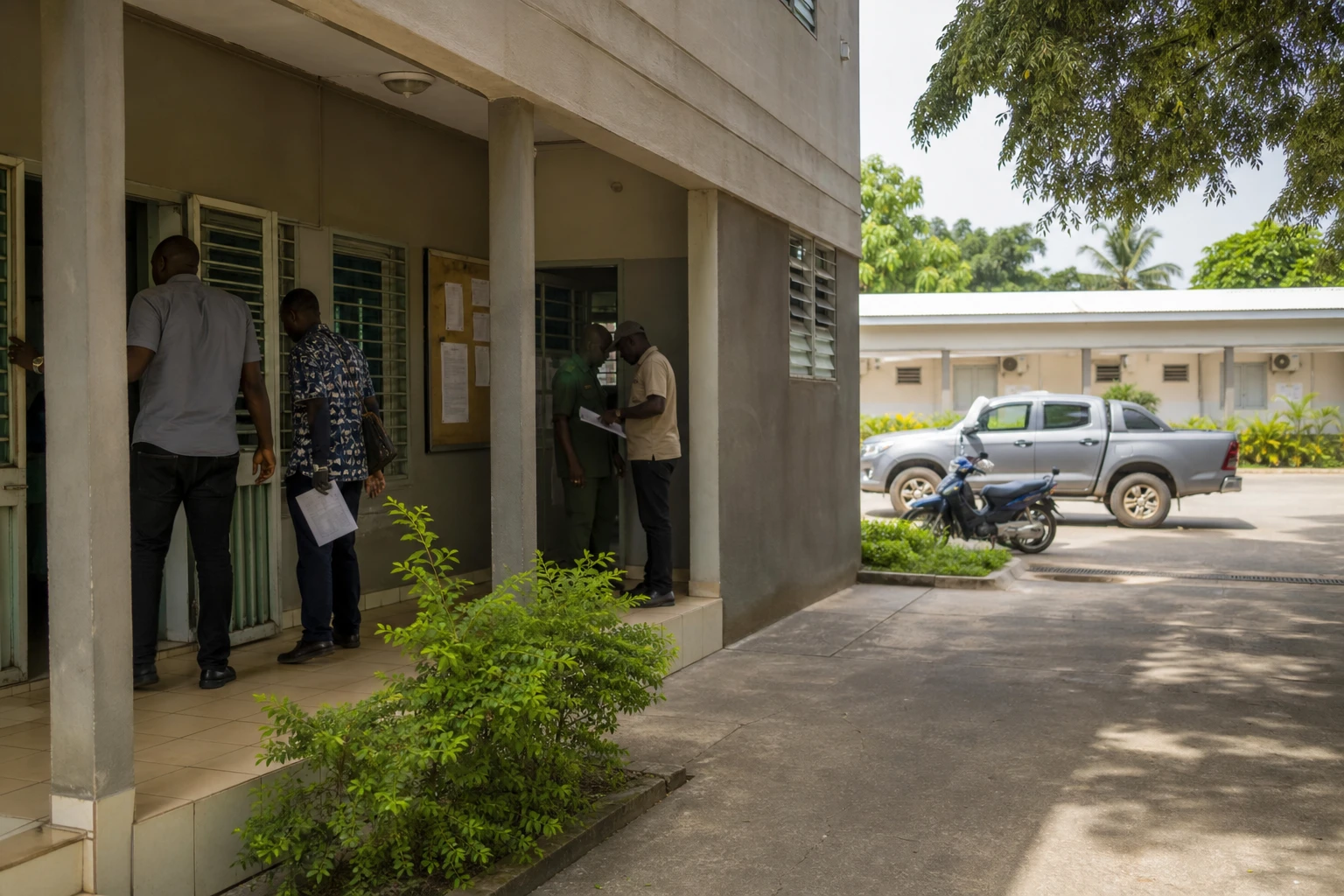
The future will depend on sustained efforts. In April 2026, the OIPR’s north-eastern regional office brought together stakeholders involved in managing the park in Bouna, a sign that local governance remains active and monitoring must continue regularly. This is where Comoé’s future will be decided: in the ability to maintain a balance between conservation, human activities on the outskirts and stable funding. For Côte d’Ivoire, the park remains a test of environmental credibility. For West Africa, it remains a benchmark.