
 Algeria
 Egypt
 Libya
 Morocco
 Sudan
 Tunisia
 Benin
 Burkina Faso
 Cabo Verde
 Ghana
 Guinea
 Guinea-Bissau
 Liberia
 Mali
 Mauritania
 Niger
 Nigeria
 Senegal
 Sierra Leone
 The Gambia
 Togo
 Cameroon
 Central African Republic
 Chad
 DR Congo
 Equatorial Guinea
 Gabon
 Republic of the Congo
 São Tomé and Príncipe
 Burundi
 Comoros
 Djibouti
 Eritrea
 Ethiopia
 Kenya
 Madagascar
 Malawi
 Mauritius
 Mozambique
 Rwanda
 Seychelles
 Somalia
 South Sudan
 Tanzania
 Uganda
 Angola
 Botswana
 Eswatini
 Lesotho
 Namibia
 South Africa
 Zambia
 Zimbabwe
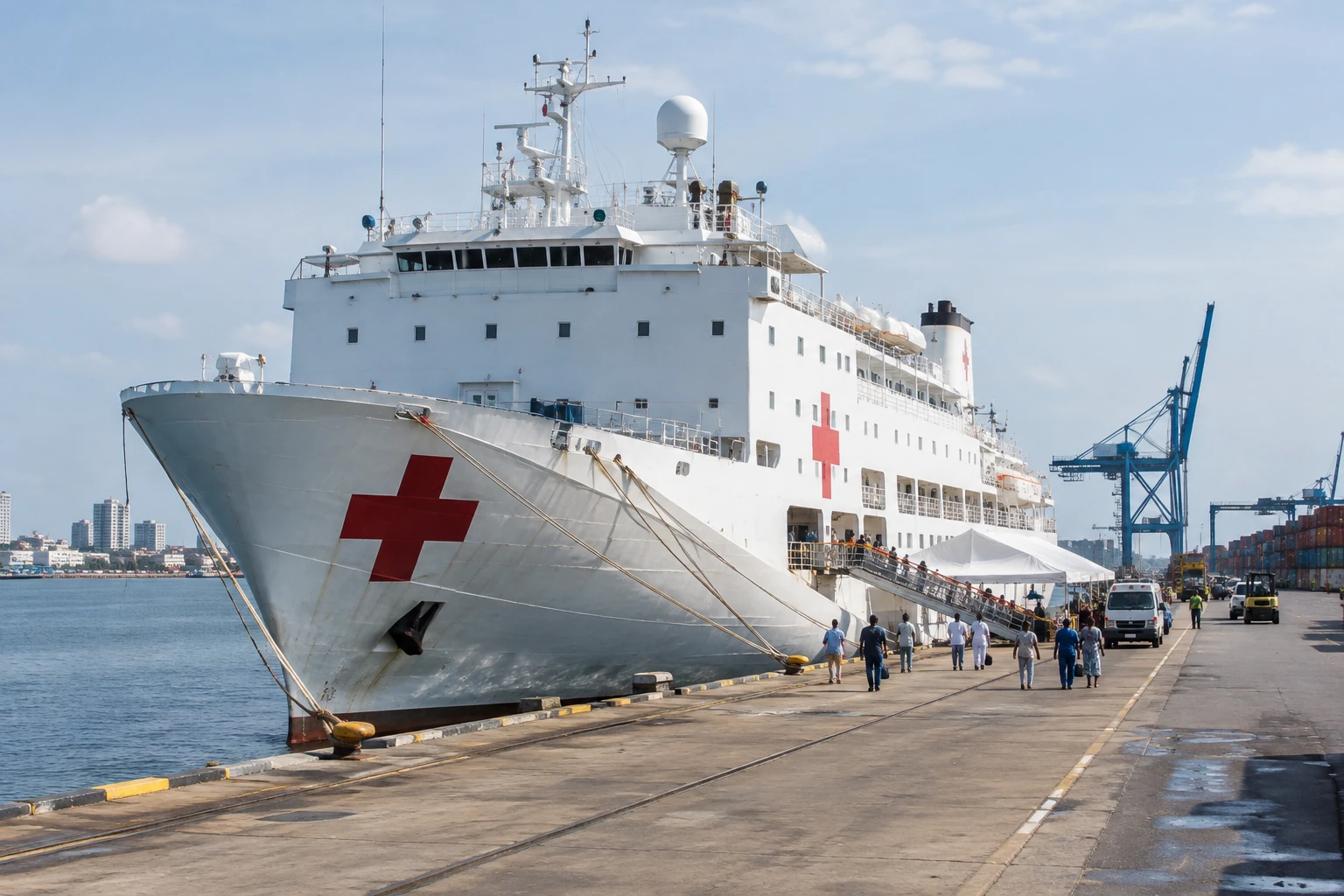
For patients waiting for a specialist examination, access to care often comes down to proximity, cost and the availability of equipment. In Abidjan, a medical team from China is offering a temporary response: consultations on board a hospital ship, free of charge, until 21 October 2026.
A medical stopover in the Gulf of Guinea
The Chinese navy vessel docked at the port of Abidjan on 14 October. Ivorian and Chinese media say the visit is part of the “Harmony 2026” mission. The stopover is due to last seven days. It combines medical consultations, cooperation between military personnel and contact with local residents.
Côte d’Ivoire, whose political capital is Yamoussoukro, is an important player in the Gulf of Guinea. Its exchanges with Beijing extend beyond the health sector. The visit nonetheless gives the bilateral partnership a tangible dimension: a military vessel is also being used as a platform for healthcare and training.
For navies, such missions fall under “naval diplomacy”: port calls that combine official relations, cooperation and services for local populations. Ivorian Vice-Admiral Célestin N’guessan Kouame described the initiative as a way to showcase another role for military vessels in the region.
Consultations, tests and referrals
The ship, referred to in reports from Abidjan as the “Peace Ark”, is offering 17 specialties. The list includes cardiology, diabetology, nephrology, neurology, paediatrics, obstetrics and gynaecology, ophthalmology and general surgery. The teams plan to receive about 600 patients a day. This figure represents the stated capacity, not a tally of consultations already carried out.
Registration was organised in advance, from 1 to 30 September, at several health facilities. Abidjan Military Hospital and health centres run by the security forces were among the locations named. This preparation helps manage demand, but also means that access to the campaign depends on arrangements put in place before the ship’s arrival.
Accounts from patients on board illustrate both the value of specialist examinations and the limits of a one-off intervention. One patient, Kassoum Azoumana, said he was impressed by the welcome and the equipment. Another patient, Sonian Magouba, was told she had cataracts. According to her account, her high blood pressure meant she could not have surgery immediately; she was to continue her follow-up with her doctor in the city.
The latter case is a reminder that a diagnosis does not replace continuity of care. After the ship’s stopover, patients in need will require follow-up at local facilities, whether to monitor a chronic condition, prepare for surgery or continue treatment. Available information does not yet provide a final tally of the number of people seen, procedures performed or medical referrals made.
Useful support, but temporary
A free campaign can reduce financial barriers and waiting times for tests for a few days. It can also identify conditions that require long-term care. For patients in the economic capital, its value will therefore depend as much on the consultation on board as on their ability afterwards to secure an appointment, medicines and appropriate follow-up.
The issue also concerns people who cannot easily travel to Abidjan. The operation is taking place at an urban port and relies on advance registration. On its own, it does not provide access across the whole of Côte d’Ivoire, particularly for rural populations or those far from major healthcare centres.
This distinction matters as Côte d’Ivoire seeks to expand effective use of its Universal Health Coverage (CMU), the national scheme that organises coverage of some healthcare costs. In April 2026, the World Bank announced $225 million in funding to support health services, nutrition and early childhood development. The programme is intended in particular to strengthen staffing, equipment and access to primary care.
The contrast is significant: the ship brings concentrated resources for one week, while the national system must provide regular care over time and across the country. The stopover can complement local services and encourage the exchange of expertise. It cannot, however, replace a permanent network of professionals, equipped facilities and financial coverage mechanisms.
Measuring cooperation beyond the stopover
Ivorian and Chinese authorities present the mission as an opportunity for medical teams and navies to share experience. The extent of this cooperation will depend on what follows: training delivered, collaboration maintained and coordination with Ivorian services after the vessel departs. So far, published information sets out objectives but does not establish lasting results.
In the Gulf of Guinea, the visit is a reminder that external partnerships are also built through operations that are visible to local populations. For Ivorians, the immediate benefit will be measured by consultations and care actually delivered. For the authorities, the challenge is to turn the contacts made into useful support for local capacity, without confusing a temporary operation with a structural response to healthcare needs.
The ship is due to leave Abidjan on 21 October. The expected review — patients seen, tests carried out and referrals offered — will help clarify the health impact of the stopover. It also remains to be seen whether the announced exchanges between the Chinese and Ivorian teams will lead to lasting cooperation beyond this mission in the Gulf of Guinea.



